


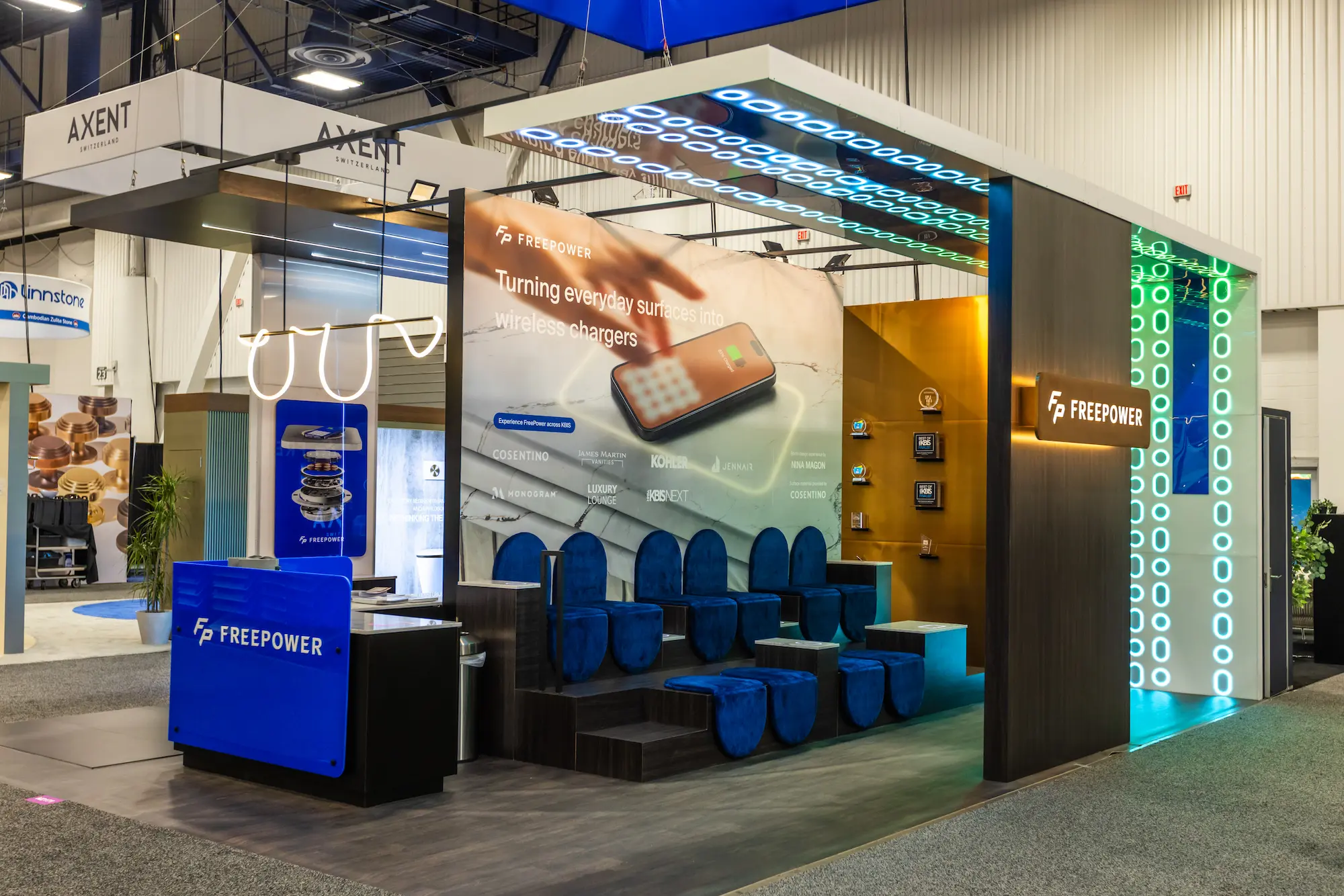
Trade show exhibit design is the discipline that separates brands that show up from brands that stand out. It is the strategy, spatial planning, creative direction, fabrication thinking, and real-world execution behind a booth that actually performs on a crowded show floor.
A well-designed exhibit does not just look impressive. It pulls the right people in, tells the brand story fast, supports the sales team, and creates the kind of conversations that justify the investment. A poorly designed exhibit can look expensive and still fail to generate a single qualified lead.
This guide covers everything exhibitors need to know about trade show exhibit design, from the foundational principles and the process behind them to the specific decisions that separate a booth people walk past from one they walk into.
Table of Contents
- What Is Trade Show Exhibit Design?
- How Exhibit Design Affects Booth Performance
- Brand Strategy and the Exhibit Design Process
- Traffic Flow, Layout, and Space Planning
- The Visual Elements That Drive Attention
- Technology, Interactivity, and Lighting
- Designing for Specific Goals
- Avoiding the Most Common Mistakes
- How Design and Fabrication Work Together
- What Great Exhibit Design Actually Looks Like
- Frequently Asked Questions
What Is Trade Show Exhibit Design?
Trade show exhibit design is the process of turning booth space into a physical brand experience. It combines brand strategy, spatial planning, graphics, materials, lighting, product displays, technology, and logistics into one cohesive exhibit that works for attendees and for the team operating it.
The job of exhibit design is not decoration. It is performance. A well-designed exhibit answers three questions in seconds: who is this brand, what does it do, and why should someone stop. When those answers are clear, the booth has a fighting chance on a floor packed with competitors.
What separates exhibit design from basic interior design is strategy. Design focuses on how a space looks and flows. Exhibit design connects that space to business objectives. It answers what people should understand the moment they enter, what the sales team needs to do their job, and how the physical environment should reflect the brand’s standards and positioning.
When exhibit design is treated as a strategic investment rather than a production task, the result is a space that attracts the right people, supports better conversations, and makes the show floor investment easier to justify.
How Exhibit Design Affects Booth Performance
Trade show exhibit design affects booth performance by controlling attention, movement, messaging, engagement, sales support, and brand perception. It determines whether the booth works with the team or against them.
First impressions happen fast on a crowded show floor. Attendees are scanning dozens of brands in seconds and deciding whether any of them are worth stopping for. The structure, lighting, graphics, messaging, and overall presence of an exhibit either earn that attention or surrender it before a conversation begins.
Layout controls how people move through the space. A smart layout creates natural pathways, clear entry points, and purposeful zones for different types of engagement. A poor layout creates bottlenecks, dead zones, and awkward interactions that cost the team valuable conversations throughout the day.
Messaging determines whether the right people recognize the booth is relevant to them. Weak messaging forces attendees to work too hard to understand the offer. Strong messaging does the qualification work before a salesperson speaks a single word.
The materials, finishes, lighting, and fabrication quality of the exhibit communicate brand standards instantly, even when attendees cannot explain exactly what they are responding to. A booth that feels premium, intentional, and polished creates a different impression than one that feels temporary or thrown together, regardless of how much was spent on either.
Brand Strategy and the Exhibit Design Process
Brand strategy shapes trade show exhibit design at every level. The layout, messaging, visuals, traffic flow, materials, demos, and attendee experience all trace back to decisions made in the brand brief before a single design element is developed.
The exhibit design process starts with strategy, not with renderings. Before any visual direction is set, the team needs to know who they are trying to attract, what those attendees need to understand in the first few seconds, what problem the brand is solving, and what action visitors should take.
A strong brand brief gives the design team the direction they need to make purposeful choices rather than subjective ones. It keeps the layout from becoming a collection of disconnected ideas. It protects the messaging from being diluted by too many competing priorities. It makes the final booth feel like it belongs to one specific brand rather than being assembled from generic components.
Without that strategic foundation, even a visually impressive exhibit can feel vague, unfocused, and easy to forget.
Traffic Flow, Layout, and Space Planning
Trade show booth traffic flow is the backbone of exhibit design. A booth that looks great from one angle and creates confusion from every other angle has not solved the design problem. It has just moved it somewhere less visible.
Space planning decides how people move through the booth. It controls where attendees enter, where they pause, where demonstrations happen, where conversations take place, and where the team stands. Good space planning makes the booth feel natural. People know where to go without being directed.
The exhibit should be broken into clear zones that match attendee behavior. An attraction zone near the aisle stops traffic and invites entry. An engagement zone gives staff a place to start conversations without blocking movement. A demonstration zone creates a focused area for deeper interaction. A meeting zone provides a semi-private space for serious buyers. A storage and staff zone keeps operational clutter out of the visitor experience.
For island booths, island booth design principles apply across all four sides, where open corners, multiple entry points, and one strong traffic driver turn a four-sided space into an environment people naturally walk into from any direction.
For smaller footprints, 10×10 and 10×20 booth design requires even greater discipline, where every square foot has to earn its place and there is no room to hide weak layout decisions behind generous square footage.
The Visual Elements That Drive Attention
The visual choices in an exhibit determine whether the brand gets noticed and understood before an attendee reaches the booth.
Trade show exhibit graphics are not decoration. They are sales tools. Color, hierarchy, and visual clarity shape first impressions, control what attendees notice first, and help the brand stand out on a crowded floor without turning the booth into visual noise. The most important message needs the most visible real estate. Secondary messages should support the primary idea, not compete with it.
Trade show booth graphics and large format printing require the same discipline applied to the production side. File quality, material selection, viewing distance, seam placement, and print timelines all determine whether a strong graphic concept survives contact with the print shop and the show floor.
Visual hierarchy tells people where to look in the order the design intends. Without it, everything competes and nothing wins. A single dominant focal point, clear supporting elements, and a logical sequence from brand identification to call to action is what makes a booth feel intentional rather than assembled.
Technology, Interactivity, and Lighting
The elements inside a custom exhibit determine how well it performs for the team and the attendees.
Trade show booth lighting is one of the highest-ROI decisions in the exhibit design process. It controls mood, focus, visibility, and how credible the brand feels from the aisle. Flat convention hall lighting makes exhibits look dull. Integrated exhibit lighting adds depth, highlights products, guides attention, and gives the booth energy that photographs well and performs well at the same time.
Trade show booth technology works best when it has a clear job. Touchscreens, LED walls, interactive kiosks, and product demo stations should be built into the structure from the start rather than placed on top of a finished booth. Technology that serves the visitor experience creates engagement. Technology that exists for its own sake creates distraction.
Designing a booth that photographs well extends the value of the exhibit beyond the event itself. Photos and videos from the show floor fuel social media, sales decks, case studies, and post-show recaps. A booth designed with clear branding from multiple angles, one dominant visual feature, and clean content zones becomes a content production tool as much as a sales environment.
Designing for Specific Goals
Different exhibit goals require different design approaches. A booth built for brand awareness should not be designed the same way as one built for product demonstrations, private meetings, or lead generation.
Trade show exhibit design for product launches requires the entire exhibit to be built around one central idea. The product should be the visual and strategic center of the space. The messaging should answer what is being launched, who it is for, why it matters, and what attendees should do next. Demo areas need room to breathe. Sightlines need to make the product impossible to miss from the aisle.
Designing a booth that works for the sales team means starting with how the team actually sells. The layout should create clear zones for different types of conversations, make lead capture easy and visible, give staff room to move without blocking visitors, and use messaging that helps the right people self-identify before anyone speaks.
Writing a strong trade show exhibit design brief before design begins is what keeps the process focused on the right outcomes. A clear brief covers the event details, business goals, target audience, key message, functional needs, budget range, brand guidelines, timeline, and approval process. Without it, every design decision becomes subjective and the final booth often reflects the loudest voice in the room rather than the clearest strategy.
Avoiding the Most Common Mistakes
Trade show exhibit design mistakes are expensive because they do not just hurt the booth. They hurt traffic, leads, conversations, sales follow-up, and the entire show investment.
The most common mistakes include designing without a clear goal, cramming too much messaging into the space, blocking aisle access with oversized furniture or counters, forgetting to design for the sales team’s workflow, ignoring storage until the show floor turns into a cluttered mess, underplanning lead capture, and treating fabrication and production as afterthoughts rather than constraints that shape the design.
Evaluating trade show exhibit design before approving it is what separates teams that discover problems in the design phase from those that discover them at installation. Every major design feature should have a job. The visitor experience should be evaluated from the aisle, not from the rendering. The cost breakdown should cover the full program, not just the fabrication number. The booth should be pressure-tested against real show conditions before a single material is ordered.
How Design and Fabrication Work Together
Trade show exhibit design and fabrication work best when they are treated as one connected process rather than two separate phases.
Designers need to understand materials, engineering, shipping, venue rules, and installation. Fabricators need to understand the creative concept, brand goals, and business objectives behind the booth. When those teams collaborate early, the final exhibit is easier to build, more predictable to budget, and far less likely to fall apart under show-floor pressure.
Early collaboration protects the budget by surfacing cost drivers while the concept is still flexible. Production feedback during the design development phase catches structural problems, material issues, and logistics challenges before they become expensive change orders. A shared timeline keeps design approvals and fabrication milestones connected rather than allowing one phase to compress the next.
The show floor is not the place to discover that a monitor does not fit, a finish was damaged in transit, or a structural element blocks the main brand message. Integration between design and production is what prevents those discoveries from happening at the worst possible moment.
What Great Exhibit Design Actually Looks Like
Great trade show exhibit design performs under pressure. It is not simply more expensive, more elaborate, or more visually striking than good design. It is more integrated.
Great design connects brand strategy to the visitor journey. It connects the visitor journey to the layout. It connects the layout to the materials and fabrication. It connects fabrication to logistics and installation. Every part of the project is treated as part of the same problem rather than a series of independent decisions made by separate teams.
What it looks like when an exhibit gets everything right is deceptively simple from the outside. The booth draws people in. The brand message is clear. The team has what they need to do their jobs. The install goes smoothly. The structure ships correctly, performs as designed, and gives the company something they can reuse, report on, and build on for the next show.
Behind that appearance is a process that started with a clear brief, involved the right experts early, made decisions intentionally, and refused to separate design from execution.
The current trade show exhibit design trends reinforce this direction. The strongest exhibits in 2026 are more interactive, more flexible, and more disciplined. Hands-on product experiences outperform passive displays. Technology with a clear purpose outperforms technology added for visual impact. Modular systems designed with strong brand moments outperform both fully custom builds and generic rental kits. Bold, simplified storytelling outperforms cluttered, everything-at-once messaging.
The underlying principle is the same across all of them: every design decision should serve the attendee experience, the sales team, and the business goal behind the exhibit.
What We Have Learned Designing and Building Exhibits
Highway 85 has designed and built trade show exhibits for brands across technology, food and beverage, healthcare, financial services, fitness, software, and professional services. The exhibits that work best share a pattern that has nothing to do with budget size.
They start with a clear brief where everyone on the team knows what success looks like before the first concept is developed. The fabrication partner is involved early enough to influence decisions that still have room to move. Communication between design and production is structured from the first conversation, not improvised as the deadline approaches.
The booth that results from that process feels intentional on the show floor. Attendees understand the brand quickly. The sales team has the tools they need. The install is calm because the engineering and logistics were planned for real conditions, not ideal ones.
Here is what the work has taught us.
Strategy is the highest-leverage investment in exhibit design. The brands that start with a clear brief and a defined goal consistently produce better booths than those that start with a mood board or a reference photo from a competitor. The brief does not have to be long. It has to be honest about what the booth needs to accomplish and who it needs to stop.
The visitor’s first three seconds determine most of what happens next. If the brand is not identifiable and the message is not clear from the aisle, the design is working too hard for too little return. Simplicity is not a limitation. It is a competitive advantage on a floor where every surface is competing for the same attention.
Storage is the feature exhibitors most often skip and most often regret. A booth with nowhere to put bags, boxes, brochures, cleaning supplies, and personal items will look cluttered by mid-morning on day one. Storage is not glamorous, but it protects every other design decision the team made.
The booth has to be designed for the worst conditions, not the best rendering. A booth that looks perfect when empty and clean does not always perform when it is surrounded by noise, crowded with people, and running four hours into a long show day. The best designs account for how the team will actually operate the space under real pressure.
Reuse is a planning decision, not an afterthought. Brands that think about future shows during the current design consistently get more value from their exhibit investment. Modular components, replaceable graphics, and adaptable layouts do not require sacrificing brand impact. They just require asking the right questions earlier in the process.
Frequently Asked Questions
What is trade show exhibit design?
Trade show exhibit design is the process of turning booth space into a physical brand experience. It combines strategy, spatial planning, graphics, materials, lighting, technology, and logistics into one cohesive exhibit that performs for attendees and for the team operating it. The goal is not decoration. It is business performance.
How does exhibit design affect trade show results?
Exhibit design affects results by controlling attention, movement, messaging, engagement, sales support, and brand perception. A well-designed exhibit attracts the right attendees, helps them understand the brand quickly, supports the sales team’s workflow, and creates the conditions for qualified conversations. A poorly designed exhibit can look expensive and still fail to generate meaningful leads.
What should be included in a trade show exhibit design brief?
A strong brief covers the event name, dates, venue, and booth size; primary business goals; target audience; core message; functional booth requirements; budget range; brand guidelines and assets; timeline; and the approval process including who has final sign-off. The earlier the brief is written, the more it protects the design process.
What are the most common trade show exhibit design mistakes?
The most common mistakes are designing without a clear goal, overloading the booth with messaging, blocking aisle access with furniture or counters, ignoring the sales team’s workflow, forgetting to plan for storage, underplanning lead capture, and treating fabrication as an afterthought rather than a constraint that shapes the design from the start.
What is the difference between good and great exhibit design?
Good exhibit design looks polished and follows the brand guide. Great exhibit design connects brand strategy to visitor behavior, fabrication, logistics, and sales goals in one integrated experience. Great design performs under real show-floor pressure, not just in a rendering. It is more disciplined than good design, not necessarily more expensive.
How should design and fabrication work together?
Design and fabrication should be treated as one connected process from the beginning. Designers need to understand materials, engineering, and logistics. Fabricators need to understand the creative concept and business goals. Early collaboration surfaces cost drivers and production challenges while changes are still inexpensive, protects the design intent through fabrication, and prevents the kind of show-floor surprises that happen when the two phases are completely disconnected.
What exhibit design trends matter in 2026?
The most impactful trends are hands-on product experiences that give attendees something to do, technology integrated with a clear purpose rather than added for visual effect, modular systems designed for reuse across multiple shows, bold simplified brand storytelling with strong focal points and short messages, and more intentional visitor flow that guides people through the space without confusion.
How do you design a booth that photographs well?
Place major brand elements where they are visible from multiple camera angles. Build one dominant visual feature that stops the scroll. Design lighting to highlight products and create depth. Create clean content zones with hidden storage and cable management. Plan for vertical social video as well as horizontal photography. A booth designed for the camera extends the value of the exhibit well beyond the show floor.
How long does trade show exhibit design take?
A practical planning window for a custom exhibit is eight to twenty weeks depending on size and complexity. Smaller or rental-based exhibits can move faster. The biggest timeline risks are slow internal approvals, late design changes, and unclear goals rather than shop production speed. The earlier the brief is written and approved, the more control the team has over every subsequent phase.
What should exhibitors look for in an exhibit design and fabrication partner?
Look for a partner who treats design and fabrication as one connected process, asks strategic questions before creative ones, involves production thinking during the design phase, communicates clearly about cost drivers and tradeoffs, and has a track record of exhibits that perform under real show-floor conditions. The portfolio shows what they can produce. The process shows whether they can be relied on when the pressure is high and the deadline is fixed.
Ready to Build a Trade Show Exhibit Designed to Perform?
Trade show exhibit design is one of the most powerful tools a brand has for showing up on the show floor with confidence, clarity, and a real plan for turning attention into business. When it is planned strategically, fabricated precisely, and executed with discipline, the result is an exhibit that earns attention, supports the team, and makes the investment worth making again next year.
Highway 85 has designed and built trade show exhibits for brands across industries, footprints, and event types. We bring the strategic thinking, fabrication expertise, and production discipline that turn ambitious booth concepts into finished environments that work from the first attendee to the last day of the show.
Connect with the Highway 85 team to start planning your next exhibit.