


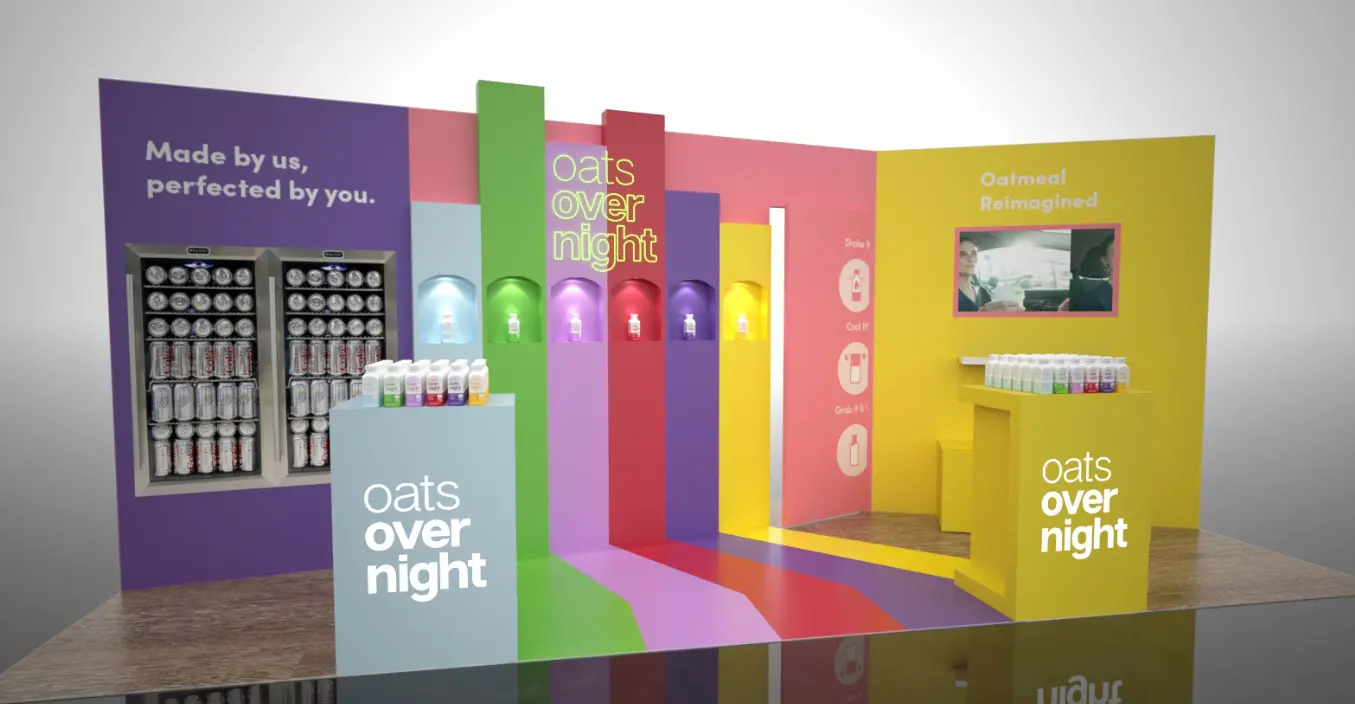
Trade show exhibit design and fabrication should work together from the very beginning, not as separate phases handed off from one team to another. Designers need to understand materials, engineering, labor, shipping, venue rules, and installation. Fabricators need to understand the creative concept, brand goals, visitor experience, and business objectives behind the booth.
When those teams collaborate early, the final exhibit is easier to build, more predictable to budget, faster to produce, and far less likely to fall apart under show-floor pressure. When they do not, even a great-looking design can turn into an expensive mess. This is the core distinction covered in what separates good trade show exhibit design from great, where integration between design and production is what makes the difference between a concept that performs and one that only photographs well.
The strongest trade show exhibits are not simply designed well or fabricated well. They are developed as one connected process.
The Trade Show Exhibit Design Cannot Ignore How the Booth Will Be Built
A rendering can make almost anything look possible. Real materials are less forgiving.
Curved walls, suspended elements, integrated lighting, oversized video displays, specialty finishes, and unusual architectural features may look incredible in a concept. They can also create serious production challenges if the design team does not understand how those elements will be engineered, fabricated, packed, transported, and installed.
That does not mean ambitious ideas should be cut. It means they should be developed with real-world constraints in mind.
A strong design team should be asking questions such as:
- Can this feature be fabricated within the available timeline?
- Will the material survive shipping and repeated use?
- How will the structure break down for transportation?
- Does the venue allow the proposed height, rigging, and electrical setup?
- How many labor hours will installation require?
- Can damaged graphics or finishes be replaced quickly?
- Will the exhibit fit through dock doors, freight elevators, and service entrances?
These are not details to solve after approval. They directly affect the design. The full case for how trade show booth engineering shapes what is possible in the design phase is one of the clearest examples of why fabrication knowledge has to be present in the design room, not waiting at the other end of a handoff.
Fabricators Need More Than a Set of Drawings
Fabrication is not just cutting materials and assembling walls. The production team needs to understand what the exhibit is supposed to accomplish.
A booth designed for fast product demonstrations has different requirements from one built for private sales meetings. A display centered on a product launch may need dramatic lighting, controlled sightlines, and integrated technology. A hospitality-driven space may require more storage, service access, durable finishes, and comfortable traffic flow.
When fabricators understand the purpose behind the design, they can make smarter recommendations.
They may identify a lighter material that creates the same visual effect while reducing freight costs. They may suggest a different connection method that cuts installation time. They may move a structural support so it does not interfere with a product demonstration.
Those decisions protect the design instead of watering it down. A fabricator who understands the brand strategy behind the trade show exhibit design can make material and construction recommendations that serve the concept rather than compromise it.
Early Collaboration Protects the Budget
One of the fastest ways to blow up an exhibit budget is to design first and price later.
A concept may fit the desired look while completely missing the financial reality. By the time fabrication teams review it, the company may already be emotionally committed to the design. That creates an ugly choice: increase the budget or strip away the features that made the concept exciting.
Neither option feels good.
Design and fabrication teams should review cost drivers while the concept is still flexible. Those cost drivers often include:
- Custom shapes and complex geometry
- Specialty finishes
- Heavy materials
- Large-format video walls
- Rigging and overhead structures
- Freight and drayage
- Installation and dismantling labor
- Electrical and AV integration
- Storage and refurbishment
- Tight production schedules
The best teams can explain where money will have the biggest effect and where complexity adds cost without adding much value.
A simpler feature with strong lighting and clean execution may outperform a complicated structure that drains the budget. A more expensive material may be worth it if the booth will be used for several years. A custom component may earn its cost if it becomes the main visual anchor of the exhibit.
The point is not to make every decision cheap. The point is to make every decision intentional. The full breakdown of where those cost decisions carry the most weight is covered in what drives custom trade show booth cost, where the most expensive surprises almost always trace back to design choices that were made before anyone asked how they would be built.
Production Feedback Should Shape the Trade Show Exhibit Design and Fabrication Process
Fabricators should not enter the process only after the final concept is approved.
They should be reviewing ideas during design development, while dimensions, materials, finishes, and construction methods can still change without derailing the project.
This collaboration usually happens through several checkpoints:
Concept Review
The team evaluates the overall idea, booth goals, visitor experience, major architectural features, and expected budget range. Obvious production issues should be identified here.
Design Development
Materials, dimensions, lighting, technology, storage, accessibility, and traffic flow become more specific. Fabricators can begin estimating weight, labor, packing requirements, and structural needs.
Engineering Review
The concept is tested against real loads, attachment points, venue regulations, and assembly methods. Elements that looked simple in a rendering may require additional support or redesign.
Production Approval
Final drawings, graphics, finishes, hardware, electrical requirements, and installation plans are confirmed before materials are ordered and fabrication begins.
Skipping these checkpoints usually does not save time. It pushes difficult decisions later, when they cost more. This is the same production discipline covered in how to evaluate trade show exhibit design before you approve it, where each checkpoint is a protection against the kind of late-stage changes that blow up budgets and compress timelines.
The Timeline Has to Be Shared
Design and fabrication also need one coordinated schedule.
The design team cannot keep revising the booth while production is ordering materials, building structures, and preparing graphics. At some point, the concept has to lock.
A typical exhibit schedule may include:
- Strategy and concept development
- Internal design review
- Budget alignment
- Design revisions
- Engineering
- Material sourcing
- Fabrication
- Graphic production
- AV testing
- Quality control
- Packing and shipping
- Installation
The exact timeline depends on the booth size and complexity. A modular inline display may move quickly. A large custom exhibit with specialty materials, interactive technology, or rigged elements may require several months.
Late approvals compress every stage that follows. That can lead to rush fees, limited material options, overtime labor, reduced testing, and fewer opportunities to correct problems before shipping.
A connected design and fabrication team can flag those risks early instead of pretending the deadline will somehow work itself out.
Better Collaboration Creates Fewer Show-Floor Surprises
The show floor is not the place to discover that a monitor does not fit, a wall connection is inaccessible, a finish was damaged in transit, or a structural element blocks the main brand message.
When design and fabrication teams work together, they can plan for installation before the booth leaves the shop.
They know:
- How components will be labeled and packed
- Which elements must be installed first
- Where power and data connections are located
- How graphics align across multiple panels
- Which tools and equipment the crew will need
- What replacement parts should travel with the booth
- How the final exhibit should look when quality checks are complete
That planning matters because installation time is expensive. A small mistake that would take minutes to fix in the fabrication shop can become a costly problem inside a convention hall.
Integrated Teams Build Better Exhibits
The difference between a disconnected process and an integrated one is easy to see.
In a disconnected process, designers create the vision, fabricators figure out how to build it, and the client gets stuck in the middle when the two do not match.
In an integrated trade show exhibit design and fabrication process, the creative and production teams solve problems together. Design decisions reflect real fabrication knowledge. Fabrication decisions protect the original concept. Budget, schedule, materials, logistics, and visitor experience are considered as parts of the same project. That is how the strongest booths get built. If you want to work with a team where design and fabrication stay connected from first concept to final install, explore Highway 85’s trade show capabilities or connect with our team to start the conversation.