


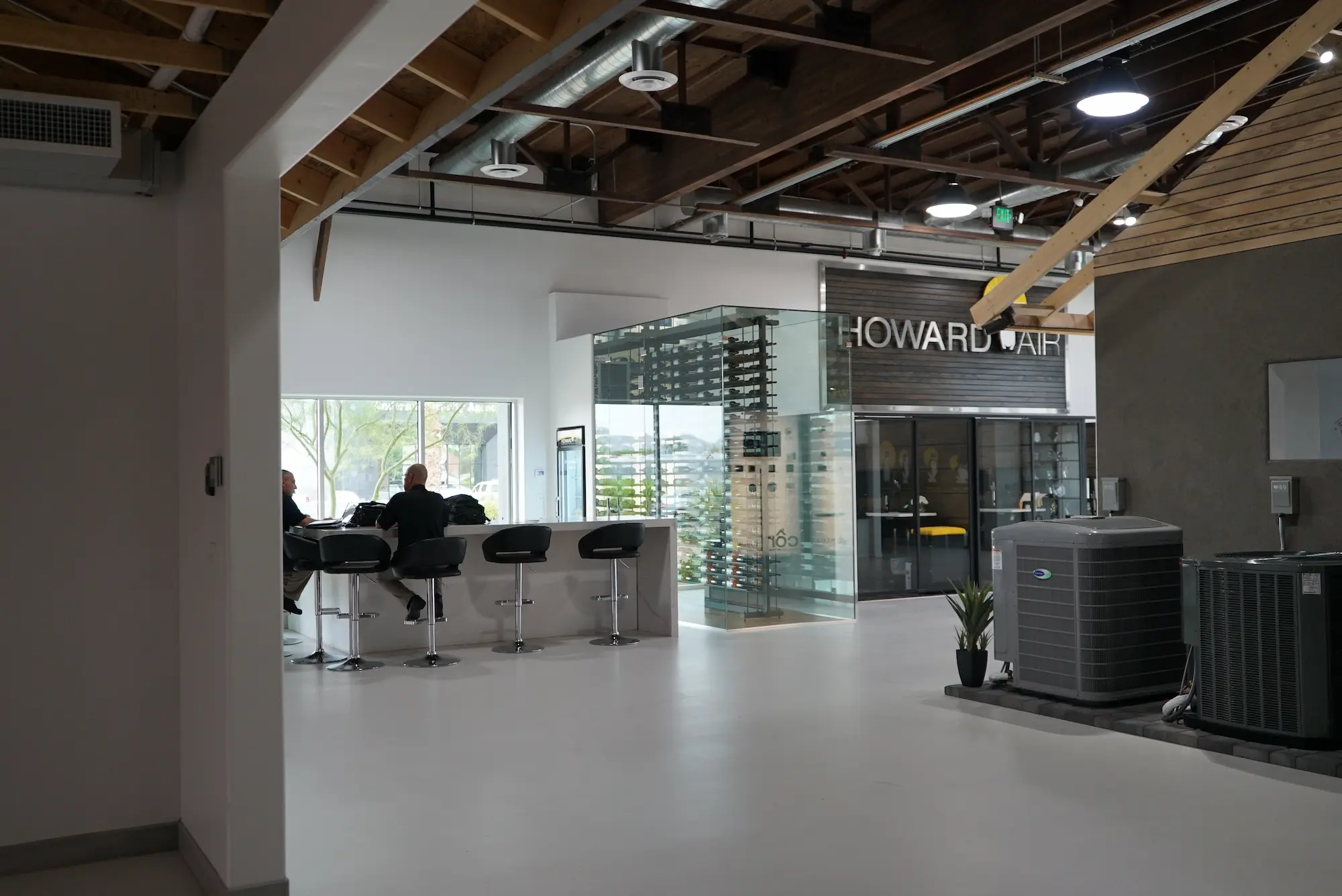
Retail interior branding affects customer behavior and sales by shaping how people feel, where they look, how long they stay, and whether they trust your brand enough to buy. When a space feels intentional, clear, and memorable, shoppers are more likely to engage with products, navigate the store with ease, and leave with a stronger impression of the brand.
That means retail interior branding is not just a design move. It is a sales tool. The right environment can increase dwell time, improve product discovery, reinforce perceived value, and create the kind of customer experience people remember and talk about. For brands investing in permanent interiors, the space itself becomes part of the pitch. Research from the Design Management Institute consistently shows that design-led companies outperform industry benchmarks, with branded physical environments playing a measurable role in customer conversion and retention.
At Highway 85, we see this firsthand. A branded retail environment is not decoration. It is strategy built into walls, fixtures, messaging, and flow.
What is retail interior branding?
Retail interior branding is the way your brand shows up inside the physical space. That includes:
- Materials and finishes
- Color palette
- Signage and messaging
- Lighting
- Fixture design
- Product displays
- Wayfinding
- Interactive moments
- Overall layout and customer flow
Done right, all of those elements work together to tell one clear story. Customers should understand who you are, what you sell, and why it matters within seconds of walking in. This is the same principle that drives strong commercial interior fabrication across every category, where design intent and execution quality have to align completely.
How retail interior branding affects customer behavior
Customer behavior changes fast when the environment changes. People make snap judgments in retail spaces. If the store feels polished and aligned, customers tend to trust the brand more. If it feels generic, cluttered, or disconnected, they pull back.
Here is how strong interior branding influences behavior:
1. It builds trust quickly
Customers read the space before they read a sign. A cohesive environment signals professionalism, consistency, and quality. That matters whether you are selling premium apparel, consumer tech, or specialty goods.
If your branding looks elevated, your products often feel more valuable too. That can support higher price tolerance and reduce hesitation at the point of purchase.
2. It guides attention
Retail branding helps direct the eye. Strategic lighting, bold focal points, branded display zones, and clean wayfinding all influence where shoppers go and what they notice first.
That matters for sales because the more intentional the path, the easier it is to lead customers toward hero products, promotions, or high margin categories.
3. It increases dwell time
When a space feels immersive, customers stay longer. The longer they stay, the more they discover. The more they discover, the more likely they are to buy.
This is especially true when the environment has texture, story, and moments worth exploring. People do not linger in a bland box. They linger in a place that gives them a reason to. For hospitality brands, this same principle applies – hospitality interior design uses the same immersive environment strategy to keep guests engaged and spending longer.
4. It creates emotional connection
The best retail spaces make people feel something. Energy. Curiosity. Confidence. Belonging.
That emotional layer drives customer experience in a big way. Shoppers may forget a shelf graphic, but they remember how the space made them feel. That memory shapes repeat visits, word of mouth, and brand loyalty.
How retail interior branding drives sales
Interior branding impacts sales both directly and indirectly.
Directly, it can improve product visibility, guide customer flow, and support upsell opportunities. Indirectly, it strengthens brand perception, which influences willingness to purchase and return.
Here are a few practical ways it drives revenue:
Better product storytelling
Branded environments help explain why a product matters. Instead of putting items on a shelf and hoping they connect, you can frame them in a way that reinforces use case, value, and lifestyle fit.
That is especially important for premium or less familiar products where context helps close the gap between interest and purchase.
Stronger conversion zones
Cash wrap areas, fitting rooms, demo stations, and feature walls all benefit from intentional branding. These are high impact touchpoints where customers are making decisions. If those moments feel seamless and on brand, conversion gets easier.
Higher perceived value
A polished environment can support premium pricing. When customers see quality in the build, the materials, and the presentation, they often associate that same quality with the product itself.
More shareable experiences
Good retail branding can create social media moments without forcing them. A smart focal wall, a custom installation, or a memorable branded feature can turn foot traffic into organic reach. That visibility can bring new customers through the door. These are the same shareable moments that make office environmental branding so powerful for companies hosting client visits or recruiting events.
What makes retail interior branding actually work?
Not every branded space performs. The strongest ones balance visual impact with function.
That means:
- The layout has to make sense
- The materials have to hold up
- The messaging has to stay focused
- The customer journey has to feel easy
- The brand expression has to be consistent from entry to checkout
A beautiful space that confuses customers will not help sales. A loud space without hierarchy will not improve experience. Good retail interior branding has to look sharp and work hard.
Costs, timelines, and tradeoffs in retail interior branding
This is where brands need to stay realistic.
A full retail interior branding project can range widely depending on scope. A light refresh with updated graphics, paint, signage, and select fixture upgrades may be manageable on a modest budget. A full custom build with branded architectural elements, specialty finishes, lighting upgrades, and custom fabrication is a much larger investment.
A few common tradeoffs:
Speed vs customization
Custom elements usually create more impact, but they also take more time for design, engineering, and fabrication. If the schedule is tight, some standard components may be the better move.
Budget vs durability
Less expensive materials can lower upfront cost, but they may wear out faster in high traffic environments. For permanent interiors, durability matters.
Visual impact vs operational flow
Bold branding should never get in the way of how the store actually works. Back of house needs, restocking, accessibility, and customer movement all have to stay in the equation.
As a general rule, brands should expect several phases: concepting, design development, production, and installation. The bigger the custom scope, the more important early planning becomes.
Why this matters for permanent interiors
Permanent interiors carry more weight than short-term pop-ups or temporary activations. They need to perform every day, for every customer, over the long haul. That means the branding has to do more than look good on opening day. It needs to stay relevant, durable, and operationally smart. The best permanent interior environments are built to support the brand now while leaving room for updates later. That is exactly what distinguishes a well-planned commercial interior fabrication project from one that was rushed into production without enough strategic input.
The bottom line
So, how does retail interior branding affect customer behavior and sales?
It shapes trust, guides movement, increases engagement, improves product discovery, and strengthens the overall brand experience. When customers connect with the space, they are more likely to connect with the product. And when the space is built with strategy, not just style, that connection turns into sales.
For brands serious about customer experience, retail interior branding is not an extra layer. It is part of the business case.
For brands serious about customer experience, retail interior branding is not an extra layer. It is part of the business case. If you are ready to build a retail interior that works as hard as your team does, connect with the Highway 85 team to start planning your project.