


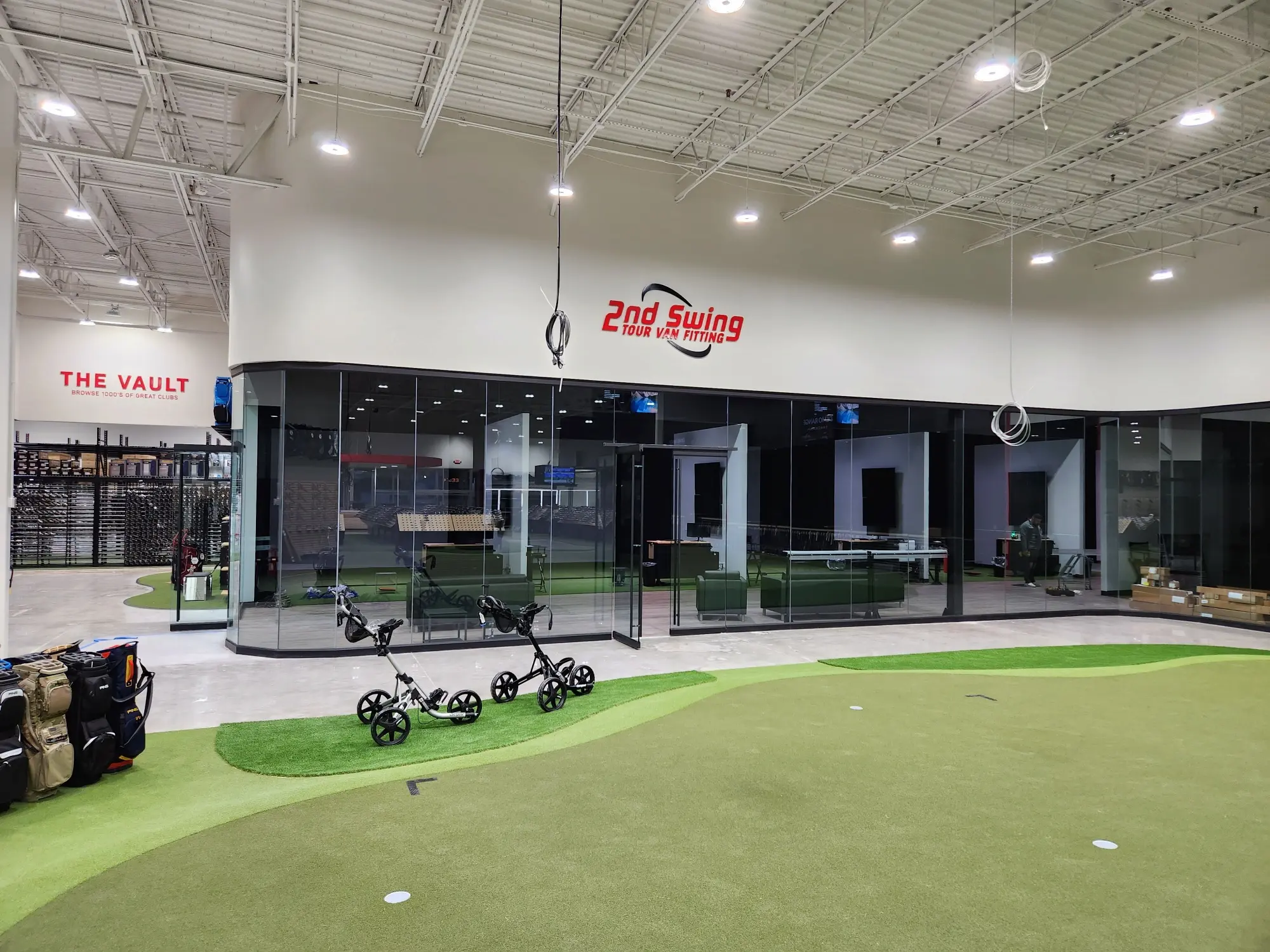
Commercial interior fabrication is the process of taking a design for a branded space and building it into something real. When businesses ask what commercial interior fabrication is and how it works, the answer is straightforward. It includes custom millwork, display systems, branded architectural features, signage integration, dimensional elements, and other permanent interior components that define how a space looks, functions, and feels.
Why does it matter? Because great spaces are not won in the concept phase alone. They are won in the execution. The quality of fabrication determines whether your space feels polished, functions the way it should, and holds up under real-world use. A strong idea can lose impact fast if the finished environment looks off, installs poorly, or fails to match the original vision. At Highway 85, we see commercial interior fabrication as the point where strategy, design, and craftsmanship meet.
At Highway 85, we see fabrication as the point where strategy, design, and craftsmanship meet. It is not just about making pieces. It is about building environments that work hard for the brand inside them.
What is commercial interior fabrication?
Commercial interior fabrication is the custom building of interior elements for business environments. Unlike ordering standard fixtures out of a catalog, fabrication is tailored to the brand, the space, and the experience you want people to have.
That can include:
- reception desks
- feature walls
- branded displays
- built-in cabinetry and millwork
- architectural accents
- dimensional logos and graphics
- integrated lighting and signage
- immersive brand moments
This is the difference between a space that looks generic and one that feels intentional.
How does commercial interior fabrication work?
A commercial interior fabrication project usually moves through a few key phases.
1. Concept review and design translation
Every project starts with an idea. Sometimes that comes from an architect, sometimes from an agency, and sometimes from an internal marketing or facilities team. The first step is figuring out how to take that concept and build it in a way that actually works.
This is where an experienced fabrication partner adds value early. Not every great-looking rendering is ready for production. Materials, engineering, site conditions, durability, and installation all need to be considered before the project moves forward.
2. Engineering and pre-production planning
Once the concept is approved, the fabrication team works through the details. Dimensions are confirmed. Materials are selected. Finishes are reviewed. Build methods are locked in.
This phase matters more than most people realize. It is where teams uncover potential issues before they turn into expensive field problems. It is also where smart decisions get made about budget, longevity, and constructability.
3. Shop fabrication
This is where the vision starts taking physical shape. Components are built in the shop using the right combination of wood, metal, acrylic, laminates, graphics, hardware, and specialty finishes.
Depending on the project, this may include CNC cutting, welding, paint, assembly, finishing, and quality control. Every step has to be dialed in, because permanent interiors leave very little room for sloppy execution.
4. Delivery and installation
After fabrication is complete, the project moves to site. Components are delivered, staged, and installed with precision.
For permanent interiors, installation is not a throwaway step. It is where planning gets tested. If the fabrication team has done its job right, the install goes smoother, the fit is cleaner, and the final environment comes together the way it was supposed to.
5. Final detailing
The last step is finishing strong. Final adjustments, touch-ups, and punch items are completed so the space is ready for employees, customers, or visitors.
Why does commercial interior fabrication matter?
Because in a commercial environment, details carry weight.
Your interior is doing more than filling space. It is shaping first impressions, reinforcing your brand, guiding how people move through the environment, and influencing how the space performs every day.
Here is why fabrication matters:
It protects the vision.
A good design only works if it can be built the right way. Fabrication is what turns ideas into something tangible without losing the original intent.
It strengthens the brand experience.
Custom-built interiors create consistency across materials, finishes, messaging, and form. That consistency helps people feel the brand, not just see it.
It improves function.
The best commercial spaces are not only attractive. They are useful. Fabrication allows you to solve for storage, traffic flow, product presentation, interaction, and durability in a way off-the-shelf solutions rarely can.
It creates lasting value.
Permanent interiors are investments. When they are fabricated well, they look better, perform better, and last longer.
For organizations planning large-scale branded environments, commercial interior fabrication also connects directly to commercial interior branding, where every element of the physical space is designed to communicate identity, guide behavior, and create lasting impressions.
What affects cost and timeline?
This is where real-world project decisions come into play.
Budget
Commercial interior fabrication costs vary based on complexity, materials, finish level, engineering requirements, and installation conditions. A simple branded wall feature is one thing. A multi-material lobby buildout with lighting, displays, and integrated branding is another.
The key is understanding the tradeoffs. Lower-cost materials or simplified construction methods can help control spend, but they may also affect durability or visual impact. The goal is not to spend more for the sake of it. The goal is to spend where it matters. The Design-Build Institute of America publishes useful guidance on integrated project delivery approaches that help teams align fabrication, design, and installation timelines from the start.
Timeline
Custom work takes planning. There are approvals, shop drawings, material procurement, fabrication, logistics, and installation to coordinate. Compressed schedules can be done, but they usually come with tighter decision windows and less margin for changes.
Bringing your fabrication partner in earlier helps avoid bottlenecks and keeps the project moving.
Material lead times
Some finishes and specialty materials are easier to source than others. A beautiful material choice does not mean much if it blows up the schedule. The right partner helps balance appearance, function, and availability.
Site conditions
Access, measurements, code requirements, and coordination with other trades all affect install success. Even a strong shop build can run into issues if the field conditions are not fully understood.
What are the most common tradeoffs?
Almost every commercial interior fabrication project comes down to balancing a few priorities:
- speed versus customization
- budget versus finish level
- visual impact versus long-term wear
- ambitious design versus installation practicality
That is why fabrication should never be treated like a late-stage vendor handoff. It should be part of the project strategy from the beginning.
Who benefits from commercial interior fabrication?
Commercial interior fabrication is especially valuable for companies that need their space to do more than look decent.
That includes:
- corporate offices
- branded environments
- showrooms
- visitor centers
- retail interiors
- agencies needing a trusted production partner
For teams juggling multiple stakeholders, hard deadlines, and high expectations, the right fabrication partner brings clarity and control to the process. That need for reliable communication, full-scope capability, and execution that holds up under pressure is exactly what drives brands to seek a dedicated commercial interior fabrication partner rather than piecing together multiple vendors.
Final answer
So, what is commercial interior fabrication and how does it work? It is the process of engineering, building, and installing custom interior elements that turn branded concepts into permanent commercial environments.
Why does it matter? Because the success of the space depends on more than the design. It depends on whether the final build delivers on appearance, function, durability, and brand impact.
At Highway 85, we believe the best interiors are not just designed well. They are built with purpose, built with precision, and built to perform. If you are planning a commercial interior project and want experienced fabrication support from concept through installation, connect with the Highway 85 team to start the conversation.