


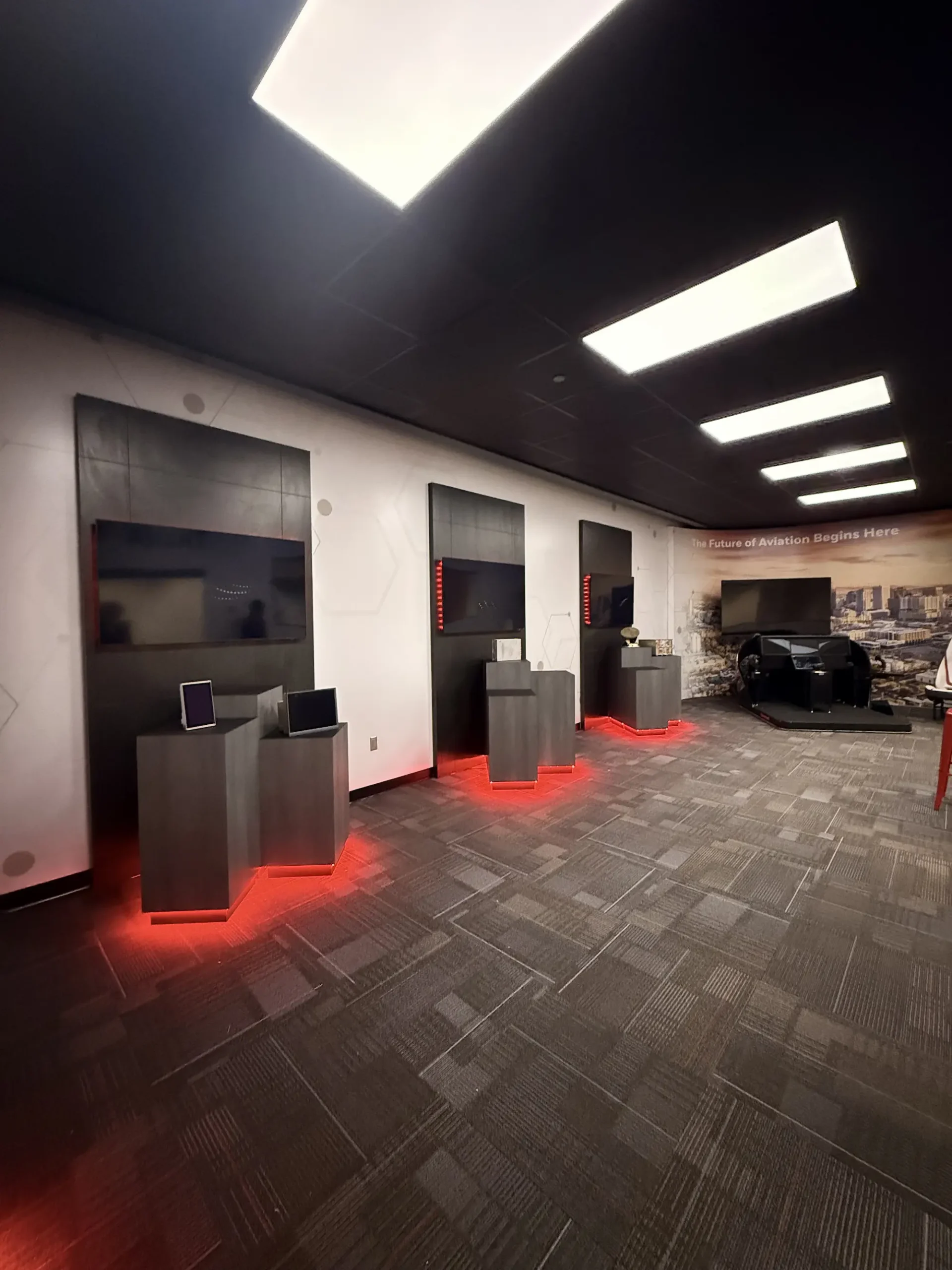
Permanent interior installations and temporary event builds solve different problems. Not every space needs a forever solution, and not every build should disappear after a week. If you are deciding between the two, the right answer comes down to one thing: how the space needs to perform.
Both can be bold, branded, and high impact. The difference is how long they need to last, how often they need to change, and what job they are there to do.
What is the difference between permanent interior installations and temporary event builds?
Here is the simplest breakdown:
Permanent interior installations
These are built to stay in place for the long haul.
They are best for:
- Corporate offices
- Lobbies and reception areas
- Showrooms
- Branded hallways
- Museums and public-facing interiors
- Environments where the brand experience needs to live every day
Common examples:
- Dimensional letter signage
- Lobby feature wall design
- Custom millwork
- Wayfinding systems
- Display fixtures
- Permanent storytelling walls
These are the kinds of elements that define a space long after the ribbon-cutting, which is why commercial interior fabrication quality matters so much in permanent builds. The Experiential Designers and Producers Association publishes industry research on both permanent and temporary branded environments that can help teams benchmark their approach and set realistic expectations for scope, cost, and performance.
Temporary event builds
These are built for short-term use, mobility, or easy refreshes.
They are best for:
- Trade shows
- Pop-ups
- Conferences
- Product launches
- Seasonal campaigns
- Traveling activations
Common examples:
- Booth structures
- Backdrops
- Kiosks
- Portable displays
- Experiential pop-up environments
- Short-term branded installations
How to know which one your space needs
Ask these five questions first.
1. How long does it need to last?
If the installation needs to perform for years, go permanent.
If it only needs to last for a campaign, event, or short activation window, go temporary.
2. Will the message need to change often?
Permanent builds work best when the brand story is stable.
Temporary builds are better when messaging changes with product launches, seasons, or events.
3. Is this space used every day or occasionally?
Daily-use environments usually justify a permanent investment.
One-time or occasional environments usually call for temporary solutions.
4. Does it need to travel or reconfigure?
If it needs to be moved, stored, shipped, or rebuilt in new footprints, temporary is the clear winner.
5. What kind of return are you expecting?
Permanent installations support long-term brand presence and internal culture.
Temporary builds are designed for speed, flexibility, and event-specific impact.
For spaces that see daily use by employees, clients, or visitors, permanent installations tend to deliver the strongest return. That is especially true for branded reception area design, showrooms, and dealership interior branding environments where the space is doing sales and brand work every single day.
Quick decision checklist for permanent interior installations vs temporary builds
Choose a permanent installation if you need:
- Long-term durability
- A polished built-in look
- Consistent daily brand presence
- Stronger integration with architecture
- Less frequent design updates, which makes permanent builds a strong fit for organizations with stable brand identities, the same kind of environments where office environmental branding investments pay off over multiple years rather than a single campaign cycle.
Choose a temporary build if you need:
- Flexibility
- Fast deployment
- Reusability for events
- Easy transport or storage
- Messaging that changes often
The real mistake to avoid
The biggest mistake is using a temporary solution where a permanent one is needed, or overspending on a permanent build for a short-term goal. A temporary display in a flagship lobby can feel flimsy. A permanent-style build for a three-day event can lock you into the wrong investment. Understanding the distinction is the same kind of strategic thinking that prevents budget problems in any commercial interior branding project, where scope decisions made early have a direct impact on cost, timeline, and long-term value.
The takeaway
Permanent installations and temporary event builds are not competing ideas. They solve different problems.
If your space needs to deliver a consistent brand experience every day, permanent is usually the better fit. If your space needs to adapt, move, or support a short-term campaign, temporary is the smarter play.
The best environments are not just impressive. They are built for the way the space actually works. If you are planning a space and want help deciding between permanent interior installations and temporary builds, explore what Highway 85 does for commercial interiors or connect with our team to start the conversation.