


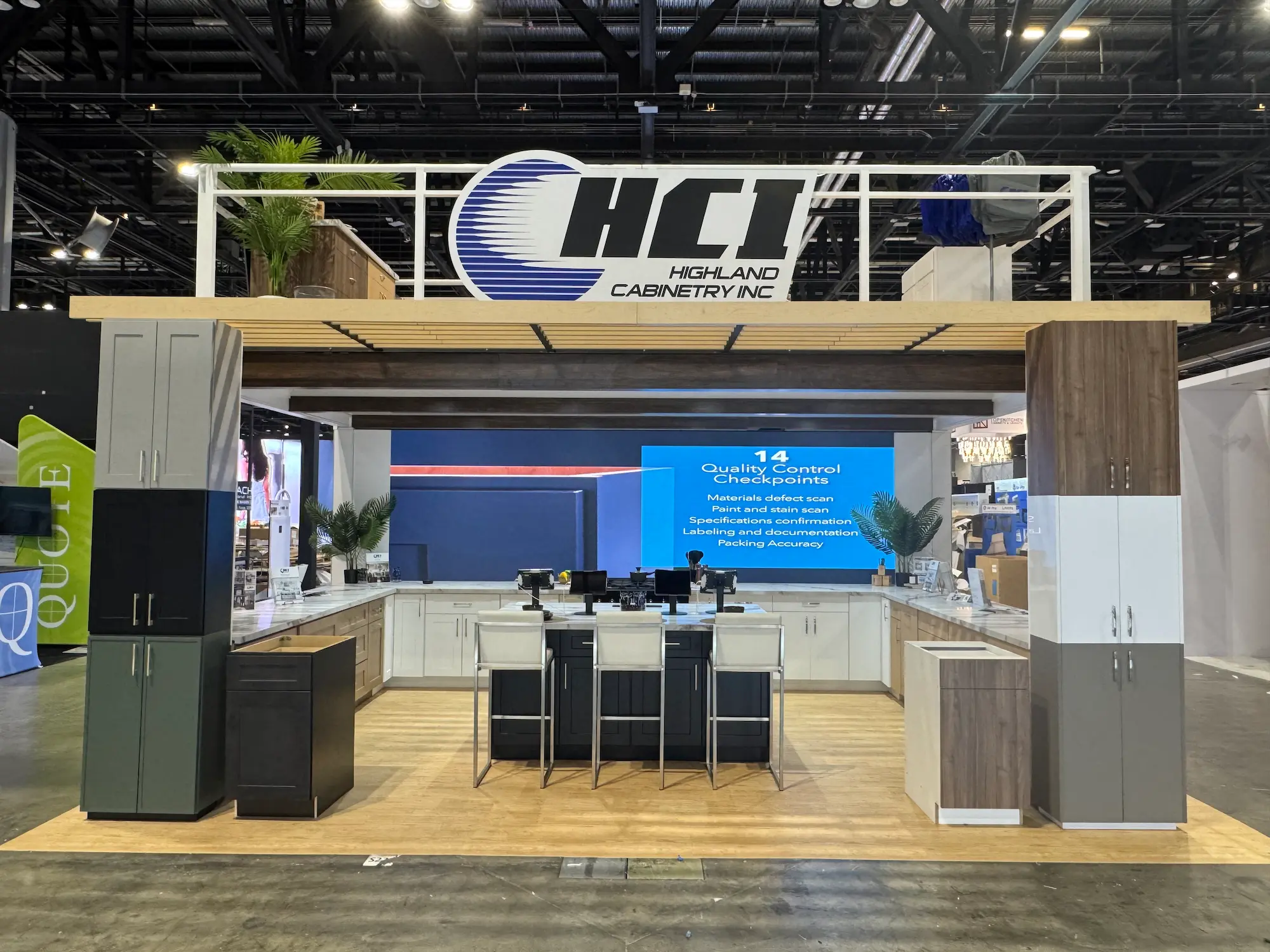
Good trade show exhibit design looks polished. Great trade show exhibit design performs under pressure. The difference is not better graphics, more expensive materials, or a bigger footprint.
Great exhibit design connects brand strategy, visitor behavior, fabrication, logistics, and sales goals into one complete experience. It gets attention, creates movement, supports conversations, and holds up when the show floor gets chaotic. A good booth may impress people in a rendering. A great booth still works when it is surrounded by noise, crowds, competing displays, tight deadlines, and real operational constraints.
Good Design Gets Noticed. Great Trade Show Exhibit Design Gets Understood.
Standing out matters, but attention alone is not the finish line.
A good exhibit may use bold colors, strong lighting, large graphics, or unusual shapes to catch the eye. A great exhibit goes one step further. It helps attendees understand who the company is, what it offers, and why they should stop.
That clarity has to happen fast.
Trade show attendees move through crowded aisles while processing dozens of brands at once. If the booth looks impressive but the message is vague, the design is working harder than the strategy.
Great trade show exhibit design answers three questions almost immediately:
- Who is this company?
- What does it do?
- Why should I care?
The answers do not need to appear as a wall of copy. They can come through messaging, product placement, demonstrations, architecture, lighting, and staff interaction. The key is that every element points in the same direction. This is the same messaging hierarchy covered in brand strategy and trade show exhibit design, where the big idea has to be established before any visual or structural decisions are made.
Good Design Fills the Space. Great Trade Show Exhibit Design Controls the Space.
A booth footprint is not just an area to decorate. It is a working environment.
Good design places counters, monitors, displays, and furniture in the available space. Great design uses those elements to shape how people move, where they pause, and how conversations begin.
Traffic flow should feel natural. Attendees should not have to squeeze between furniture, step around storage boxes, or guess where to enter. Staff should be able to greet visitors without blocking the aisle. Product demonstrations should be visible without creating congestion.
This requires more than artistic instinct. It requires experience with how booths perform in real show conditions.
Great designers think about:
- Primary and secondary entrance points
- Sightlines from multiple aisles
- Staff positioning
- Meeting privacy
- Demonstration visibility
- Accessibility
- Storage
- Crowd buildup
- Emergency exits and venue rules
A floor plan can look balanced on a screen and still fail once people enter it. Great design accounts for human behavior before the booth reaches the show floor. The full spatial planning framework is covered in how to design a trade show booth for traffic flow, where entry points, sightlines, staff positioning, and crowd buildup are all planned before the first crate is built.
Good Design Supports the Brand. Great Trade Show Exhibit Design Brings It to Life.
Logos and brand colors do not automatically create a branded experience.
A good booth follows the brand guide. A great booth translates the brand into physical space.
That may include material choices, lighting temperature, movement, sound, texture, hospitality, technology, or the style of interaction. A premium brand should not feel temporary or flimsy. An innovative company should not present itself through a predictable, outdated layout. A company focused on speed and efficiency should not create a confusing visitor journey.
Great design feels specific to the company. Remove the logo, and the space should still communicate something recognizable about the brand.
Great exhibit design creates an environment competitors cannot easily copy. This is where the difference between following a brand guide and actually translating a brand into physical space becomes visible, and where what makes a trade show exhibit design memorable versus forgettable is most clearly felt by attendees who experience both in the same afternoon.
Good Design Looks Buildable. Great Design Is Buildable.
This is one of the biggest differences between a strong concept and a professional exhibit program.
A good rendering can make nearly anything look possible. Great design is developed with a real understanding of fabrication, engineering, shipping, installation, venue restrictions, and labor.
Every dramatic feature has consequences.
A large overhead structure may require engineering and rigging. A heavy finish may increase freight and drayage costs. A complex curved wall may add fabrication time. A massive screen may require ventilation, structural support, power, and dedicated on-site labor.
None of those choices are automatically bad. Great design simply accounts for them early.
Experienced exhibit teams do not wait until fabrication to ask whether something can be built. They involve production thinking during the design phase, when changes are faster and less expensive.
That practical knowledge protects the concept, the budget, and the schedule. The full case for why trade show booth engineering needs to be part of the design conversation from the start rather than a production phase concern is one of the clearest distinctions between fabricators who deliver great results and those who deliver expensive surprises.
Good Design Fits the Budget. Great Trade Show Exhibit Design Uses It Intentionally.
Every booth has financial limits. Great design does not pretend otherwise.
A good exhibit may come in close to the approved fabrication budget. A great exhibit considers the full cost of the program, including freight, drayage, installation, dismantling, storage, electrical service, rigging, AV, flooring, graphics, and future updates.
The strongest designs put money where attendees will notice it and where the business will benefit.
That might mean spending more on:
- A high-impact branded feature visible across the hall
- Durable materials that will survive several shows
- Better lighting around a product display
- A demonstration area that supports lead generation
- Modular components that work in multiple footprints
It may also mean simplifying elements that add cost without improving the visitor experience.
Great exhibit design is not always more expensive than good design. It is usually more disciplined. It understands that every dollar should solve a problem, create value, or strengthen the experience.
Good Design Works for One Show. Great Trade Show Exhibit Design Thinks Beyond It.
A trade show booth rarely exists in isolation.
Companies attend different events, use different footprints, launch new products, update messaging, and shift priorities throughout the year. A design that works beautifully once but cannot adapt may become an expensive limitation.
Great design considers the broader exhibit program.
Can the booth scale from an island space to an inline footprint? Can graphics be updated without rebuilding entire walls? Can major components be reused? Can product zones change? Can the design evolve with the brand?
There is always a tradeoff between flexibility and total customization. Highly modular systems can be efficient but may limit certain forms or finishes. Fully custom builds can create a stronger visual identity but may require more storage, handling, and reconstruction.
Great exhibit design is not always more expensive than good design. It is usually more disciplined. It understands that every dollar should solve a problem, create value, or strengthen the experience. The breakdown of where those dollars actually go is covered in what drives custom trade show booth cost, where the difference between a budget that works hard and one that gets wasted is almost always a planning decision made before fabrication begins.
Good Design Wins Approval. Great Trade Show Exhibit Design Wins on the Show Floor.
Internal approval matters, but it is not the ultimate test.
A concept can impress executives in a conference room and still struggle at the event. The show floor exposes weak messaging, poor traffic flow, fragile materials, bad lighting, awkward staff zones, and unrealistic operational assumptions.
Great exhibit design is evaluated against real performance.
Did attendees stop? Could they understand the offer? Did the booth support productive conversations? Were demonstrations easy to see? Did staff have the space and tools they needed? Did the structure install correctly and survive the event?
Strong exhibit partners learn from every show. They review what worked, what did not, and what should change before the next event. That experience builds better judgment over time.
Great work is not based on guesswork. It is built on repeated exposure to real projects, real constraints, and real outcomes. The evaluation framework covered in how to evaluate trade show exhibit design before you approve it is the practical tool for making sure a concept that wins approval in the conference room will also win on the show floor. The Center for Exhibition Industry Research finds that exhibitors who conduct formal post-show performance reviews and apply those findings to subsequent exhibit programs consistently outperform those who treat each show as a standalone investment.
The Real Difference Is Integration
Good trade show exhibit design can be attractive, functional, and on-brand. Great design connects every part of the project.
The strategy supports the layout. The layout supports the visitor journey. The materials support the brand. The fabrication supports the concept. The budget supports the priorities. The final booth supports the people expected to use it.
That level of integration does not happen by accident. It comes from asking better questions, involving the right experts, and refusing to separate design from execution. The best booth is not the one that looks great in a presentation. It is the one that proves itself on the floor. If you are ready to work with a fabrication partner who builds with that standard in mind, explore Highway 85’s trade show capabilities or connect with our team to start the conversation.