


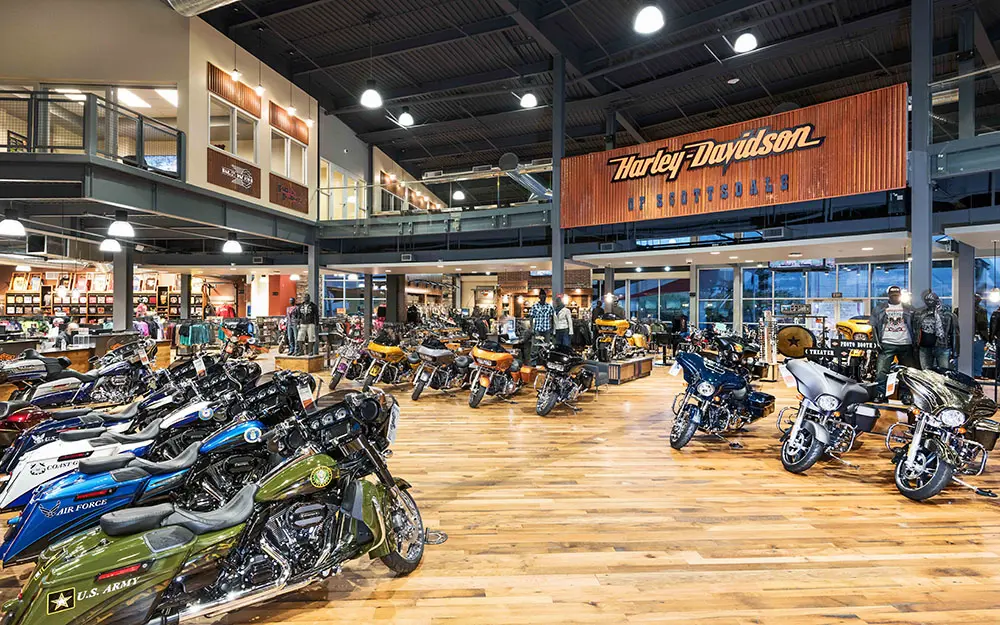
How dealership interior branding affects the customer experience
Dealership interior branding affects the customer experience a lot more than most dealerships think. Interior branding shapes how long customers stay, how confident they feel, and whether the space supports trust or creates friction. Before a shopper compares APRs, trim packages, or warranty coverage, they are already reading the room, deciding whether your dealership feels polished, credible, organized, and worth doing business with.
That means dealership interior design is not just décor. It is a sales tool. When branding, layout, messaging, lighting, and customer flow all work together, the showroom feels easier to navigate and the buying process feels more comfortable. This is the same principle that drives strong retail interior branding in any high-stakes purchase environment: the space either supports the sale or creates resistance to it.
A strong dealership interior does three things fast. It reinforces the brand, reduces stress, and helps customers picture themselves buying from you.
First impressions happen before the first handshake
Car buying is emotional. It is also high-stakes. Customers are making a major financial decision, often under pressure, and they are sizing up the dealership the second they walk in.
If the space feels dated, cluttered, dim, or inconsistent, that creates hesitation. If it feels intentional, modern, and easy to move through, that creates confidence.
Interior branding affects customer experience because it answers silent questions right away:
- Is this place professional?
- Do they take care of details?
- Will this process feel smooth or painful?
- Can I trust what I am being told here?
Customers do not separate the environment from the business. To them, it is all one experience. A dealership with sharp interiors and cohesive branding signals that the team has its act together. That matters when someone is about to spend thousands of dollars.
Research from Cox Automotive consistently shows that dealership experience – including the physical environment – ranks among the top factors influencing customer satisfaction and return visit likelihood.
Branded dealership interiors build trust without saying a word
The best dealership interiors do not rely on a giant logo slapped on a wall and call it a day. They create a branded environment that feels consistent from entry to sales floor to finance office to service lounge.
That consistency matters because trust is built through repetition. When a customer sees the same visual language across signage, materials, colors, digital screens, private offices, and customer waiting areas, the dealership feels established and credible.
Good interior branding can include:
- Brand colors used with restraint, not overload
- Clean architectural signage and wayfinding
- Digital displays that support promotions and messaging
- Branded customer lounges and delivery zones
- Finish selections that match the dealership’s market position
A luxury dealership and a volume-focused dealership should not feel the same. One may need premium materials, warm lighting, and a hospitality-first atmosphere. The other may need clarity, speed, and a highly navigable space built for throughput. Both need dealership interior branding that matches the customer promise, which is exactly what a strong commercial interior fabrication partner helps you build.
The layout can either lower stress or raise it
Most dealerships focus heavily on inventory presentation, but the overall flow matters just as much. Customers want to know where to go, where to wait, and what happens next. If they feel stuck, exposed, or uncertain, the experience gets tense. This is where office wayfinding signage principles apply directly to dealership environments: clear zone definition, visible wayfinding, and intentional traffic flow all reduce friction before a word is spoken.
A well-designed interior helps customers move naturally through the space. It creates visible zones for browsing, consultation, waiting, financing, and vehicle delivery. It also gives staff a better stage to guide the process without making it feel forced.
This is where design starts influencing buying behavior directly. When customers feel comfortable, they ask more questions. They stay longer. They are more open to conversation. They are less likely to rush toward the exit.
Dealership interior branding helps sell the dealership, not just the vehicle
Most makes and models can be cross-shopped online in minutes. That means the dealership experience becomes a differentiator.
If the interior tells a strong story, customers remember the dealership itself, not just the car they looked at. That helps with immediate conversions, but it also supports return visits, referrals, and service loyalty.
Think about what the space can communicate:
- Community connection
- Performance and innovation
- Family-friendly service
- Premium ownership experience
- Transparent, no-nonsense buying
Those messages do not have to live only in ad copy or on the website. They can be built into the physical environment.
A branded interior can turn the dealership from a transactional stop into a place customers actually want to come back to.
The biggest dealership interior design misses are usually operational
This is where many dealerships get it wrong. They think interior branding is a cosmetic project. Fresh paint. New furniture. A logo wall. Done.
But if the design does not support the way the dealership actually operates, the customer experience will still break down.
Common mistakes include:
- Beautiful showroom updates with poor customer flow
- Inconsistent branding between showroom and service areas
- No clear space for vehicle delivery moments
- Waiting areas that feel like an afterthought
- Signage that confuses instead of guides
- Materials that look good for six months and wear out fast
The smartest interior branding projects solve both the visual and functional side at the same time. That means treating the showroom the same way you would treat any serious lobby feature wall design or branded reception area design project: with a clear brief, experienced fabrication partners, and materials chosen for both impact and longevity.
What does dealership interior branding cost and how long does it take?
The honest answer is it depends on scope.
A light refresh with branded graphics, signage, paint, digital display integration, and selective finish upgrades may be achievable in a matter of weeks. A larger interior transformation with architectural features, custom fabrication, fixture updates, and phased installation can take several months, especially if work needs to happen without disrupting normal operations.
Cost is shaped by:
- Square footage
- Number of branded touchpoints
- Custom vs. off-the-shelf elements
- Material selections
- Installation complexity
- Whether the project is phased around business hours
The tradeoff is simple. Cheaper, faster updates can improve appearance, but they may not fully fix flow or customer experience issues. A more strategic buildout takes more planning and budget, but it can create a space that works harder for sales, service, and retention over the long haul.
What matters most
If a dealership wants interior branding to influence buying decisions, the goal should not be to make the space look expensive. The goal should be to make the experience feel clear, trustworthy, and aligned with the brand.
That is what moves the needle.
Customers are constantly picking up signals. From the entrance to the waiting lounge to the handoff moment, they are asking themselves whether this place feels right. Interior branding helps answer that question before the sales pitch even starts.
Done right, dealership interior design does not just support the customer experience. It shapes it. It can make the process feel smoother, the brand feel stronger, and the buying decision feel easier. If you are ready to build a showroom environment that works as hard as your sales team, explore what Highway 85 does for commercial interiors or connect with our team to start the conversation.