

Custom trade show booth cost is not driven by making something look cool. It is driven by every decision that makes the booth perform. Size, materials, engineering, graphics, technology, labor, freight, timeline, and storage all affect what you pay. The real problem is not that custom booths cost money. It is when teams do not know where the money is going and then have to defend a number they cannot explain.
The real problem is not that custom booths cost money. The real problem is when teams do not know where the money is going, then have to defend a number they cannot explain. That is how budgets get messy fast.
Here is what actually drives the cost.
Booth Size Sets the Floor for Custom Trade Show Booth Cost
A 10×10 is not just a smaller version of a 20×20. Bigger booths need more structure, more flooring, more graphics, more lighting, more labor, and more planning. They also usually need to do more at the show.
A larger booth may need to support sales conversations, product demos, private meetings, storage, hospitality, and brand storytelling all at once.
Cost drivers include:
- Footprint and height
- Hanging signs
- Meeting rooms or demo areas
- Storage, flooring, and lighting
More space gives you more opportunity, but only if it is designed with purpose.
Custom Fabrication Makes It Yours
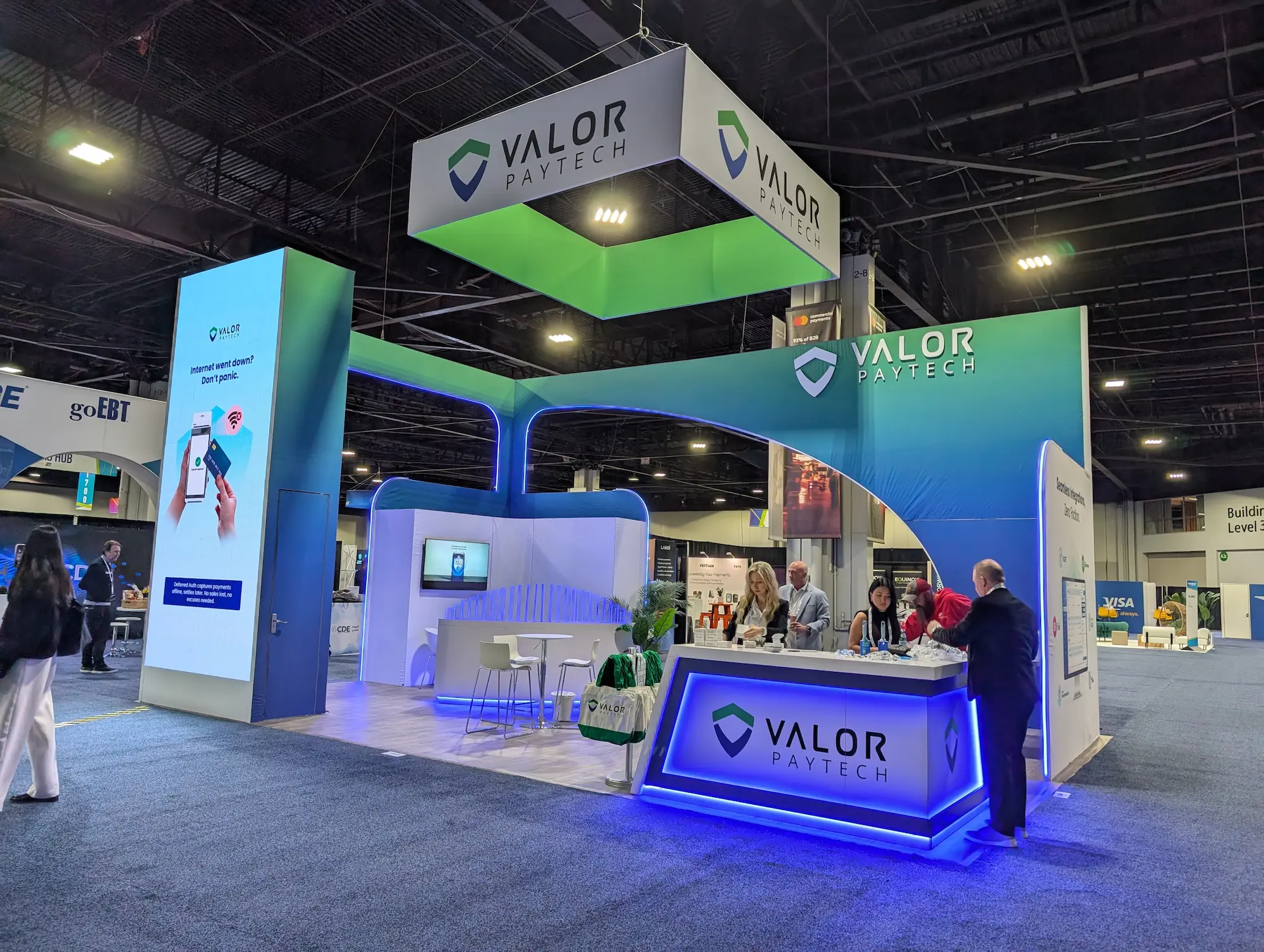
Custom fabrication is where the booth stops looking like every other booth on the floor. Counters, feature walls, product towers, branded arches, dimensional logos, LED integrations, and specialty displays all require planning, engineering, materials, skilled labor, finishing, testing, packing, and installation.
Custom costs more because it is not pulled off a shelf. It is built around your space, your products, your goals, and your show strategy. That is also why understanding what custom trade show fabrication actually is before the budget conversation helps teams make more confident decisions earlier in the process.
Materials and Finishes Change the Custom Trade Show Booth Cost Fast
Laminate, powder-coated metal, acrylic, glass, wood, fabric, specialty flooring, custom paint, and lighting elements all carry different costs. They also create very different impressions on the show floor.
The cheapest material is not always the smartest choice. If your brand sells premium, your booth cannot look cheap. People notice. Buyers notice. Competitors notice.
Ask this instead: what material makes the brand look credible without wasting budget where nobody cares? That question, answered early, is what keeps custom trade show booth cost aligned with what the show actually needs to accomplish.
Graphics Carry the First Impression
Graphics are not filler. They are often the first thing attendees process before your team says a word. Strong booth graphics help people understand who you are, what you do, and why they should stop.
Weak graphics can make an expensive booth feel forgettable, which is a brutal waste of budget.
Graphics that affect cost include:
- Large-format graphics
- Backlit or SEG fabric graphics
- Dimensional signage
- Monitor walls or branded wayfinding
Your booth has seconds to earn attention. Graphics carry a lot of that weight.
Technology Has to Work, Not Just Exist
Screens are not the expensive part by themselves. Making the technology clean, reliable, integrated, and show-ready is where the cost comes in.
Touchscreens, LED walls, lighting controls, product demos, audio, tablets, and interactive features all need power, mounting, cable management, testing, and sometimes on-site support. If the technology is central to the experience, it cannot be treated like a last-minute add-on.
Broken tech makes the whole booth look unprepared. If the technology is central to the experience, it needs to be engineered into the booth from the start, not bolted on after fabrication is already complete.
Labor and Install Are Not Optional
A booth does not magically become show-ready. It has to be unloaded, assembled, leveled, wired, cleaned, checked, and finished before the floor opens. Then it has to be taken apart, packed correctly, and prepared for storage or the next event.
Labor costs depend on show location, union rules, booth complexity, crew size, install window, overtime, and on-site supervision. A booth can look simple when it is finished and still require serious planning to install correctly. The Experiential Designers and Producers Association publishes labor and installation benchmarks that help exhibitors set realistic expectations for on-site costs before the show floor opens.
Freight, Storage, and Show Services Can Hit Hard
Your booth does not teleport to the venue. It has to be crated, shipped, received, handled, moved, installed, dismantled, and stored.
This is where teams get blindsided. The booth build is only one part of the total cost. The logistics around the booth can affect the budget just as much as the physical structure.
Watch for:
- Crating and shipping
- Material handling and drayage
- Electrical, rigging, and internet
- Cleaning and storage
Ignoring logistics does not make them cheaper. It just makes them a surprise. This is the same budget gap covered in what agencies need to know about trade show fabrication, where freight, drayage, and show services consistently catch teams off guard because they were not scoped into the original plan.
Timeline Controls Your Options
Rush timelines cost more because they remove flexibility. A short timeline can mean expedited materials, overtime labor, faster freight, compressed approvals, and fewer backup options if something changes.
The earlier the planning starts, the more control you have over design, budget, and execution. A compressed timeline does not just increase cost. It reduces the quality of decisions made under pressure, and those decisions live on the show floor for everyone to see.
The Real Answer
So, what affects the cost of a custom trade show booth? Everything that makes it perform.
The footprint, materials, fabrication, graphics, technology, labor, freight, show services, storage, and timeline all shape the final number. A smart booth budget is not about cutting everything down. It is about knowing where to spend, where to save, and what actually matters on the show floor.
A smart custom trade show booth budget is not about cutting everything down. It is about knowing where to spend, where to save, and what actually matters on the show floor. The most expensive booth is not the custom one. It is the one that costs a lot and does nothing. If you want to understand what your custom trade show booth cost should actually look like, explore what Highway 85 builds or connect with our team to start the conversation.