


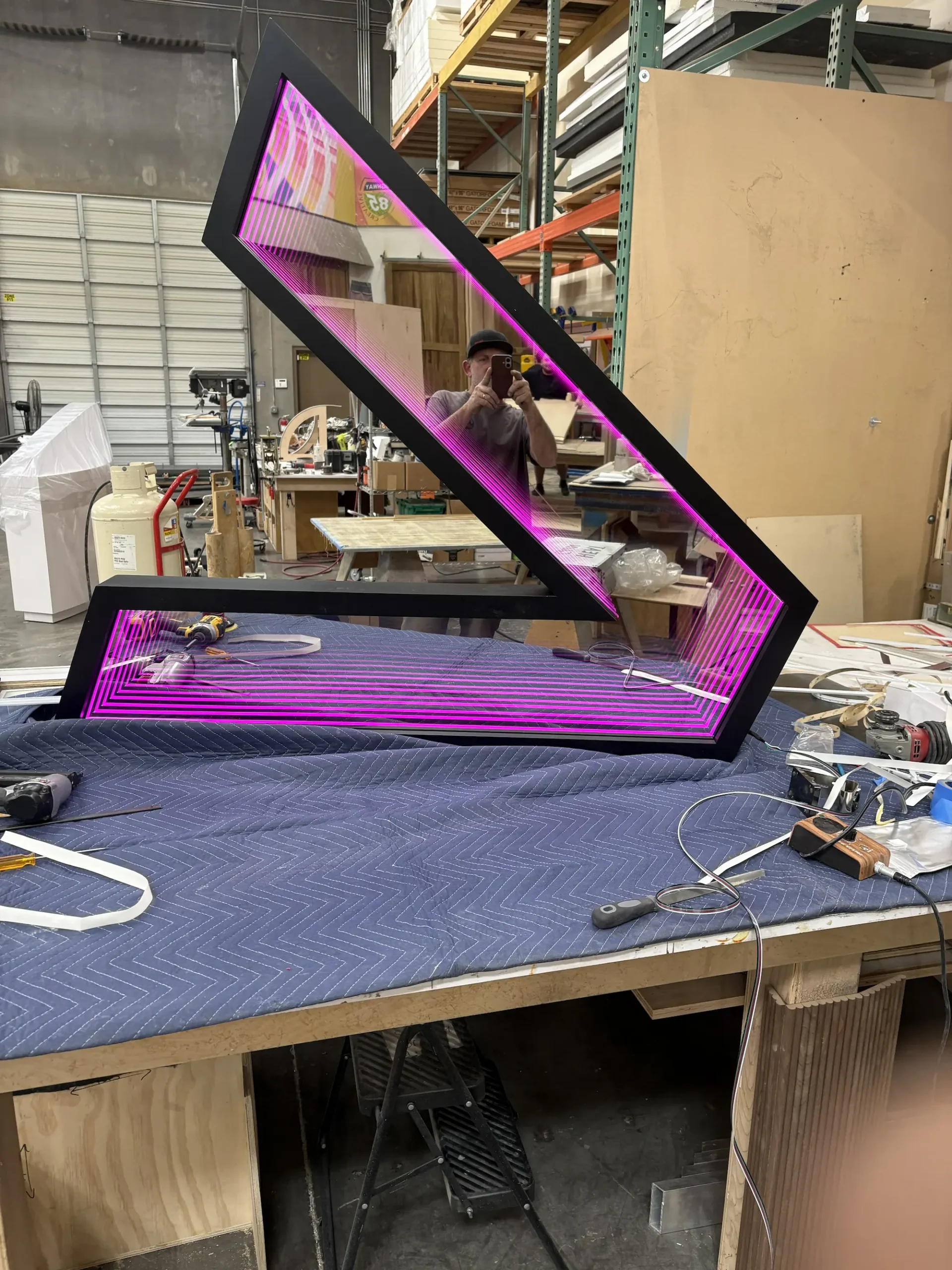
Working with a commercial interior fabricator should feel like a true build partnership, not a vendor transaction. A great interior project does not come together by accident. It comes together when design, fabrication, logistics, and installation all move in sync. If you are planning a branded office, lobby, hallway, showroom, or other permanent environment, knowing what the process looks like upfront can save time, budget, and a lot of stress.
What does working with a commercial interior fabrication company look like?
At its best, it looks like a true build partner, not just a vendor.
A commercial interior fabricator helps take your ideas, drawings, or branded concepts and turn them into real, install-ready elements for a physical space.
That can include:
- Dimensional letter signage
- Environmental graphics
- Custom displays
- Millwork
- Branded hallway graphics
- Wayfinding elements
- Interior signage systems
In short, a commercial interior fabricator is the team that turns strategy and design intent into something real. That is the same role described in detail in our breakdown of what commercial interior fabrication is and how it works.
What the process usually includes
Every project is a little different, but most commercial interior fabrication projects follow a similar path. The Design-Build Institute of America publishes guidance on integrated project delivery that helps teams understand what to expect when fabrication, design, and installation are managed under one roof rather than split across multiple vendors.
1. Discovery and scope
This is where goals get clarified.
Expect conversations around:
- Your space and timeline
- Brand standards
- Budget range
- Materials and finishes
- Installation requirements
- Site conditions and measurements
This stage is about more than collecting specs. It is where a good fabricator starts spotting opportunities and red flags early. The same discovery discipline that drives a strong commercial interior branding project starts here, with alignment between goals, constraints, and creative direction before a single material is selected.
2. Design translation
This is where concept becomes buildable.
A fabricator reviews the creative direction and figures out how to execute it in the real world. That may involve:
- Engineering details
- Material recommendations
- Production methods
- Value engineering
- Adjustments for code, durability, or install conditions
This is where experience matters. Not every design that looks good on screen works well in a real environment. A fabricator who has executed lobby feature wall design, conference room branding, and museum exhibit fabrication projects understands how to bridge the gap between creative intent and physical reality.
3. Fabrication
Once details are approved, production begins.
Depending on the project, this can include:
- Printing
- CNC cutting
- Painting and finishing
- Assembly
- Quality control
- Packaging for delivery or install
This is where precision becomes visible.
4. Installation
Installation is where everything either clicks or falls apart.
A strong fabricator plans for:
- Site access
- Scheduling
- Coordination with other trades
- Clean, efficient install
- Final fit and finish
The goal is simple: the finished space should look intentional, polished, and ready to perform. That same standard applies whether the project is a single branded reception area design or a full corporate campus branding rollout across multiple buildings.
What you should expect from the right commercial interior fabricator
A commercial interior fabricator should bring more than production capacity.
You should expect:
- Clear communication
- Honest feedback
- Practical problem solving
- Material and finish expertise
- Attention to detail
- A process that feels organized rather than chaotic, the kind of clear communication and coordinated execution that prevents the budget and timeline surprises that derail permanent interior installations when too many vendors are working without a shared plan.
Quick checklist before you start
Before kicking off a project, make sure you know:
- Your timeline
- Your budget guardrails
- Your brand requirements
- Who is approving what
- What success looks like in the finished space
The takeaway
Working with a commercial interior fabrication company should not feel confusing or fragmented.
It should feel like moving from concept to completion with fewer surprises, smarter decisions, and a finished environment that actually works the way it should.
The best fabricators do not just make pieces. They help make the whole space make sense. If you are ready to work with a commercial interior fabricator who brings that kind of partnership to every project, connect with the Highway 85 team to start the conversation.