


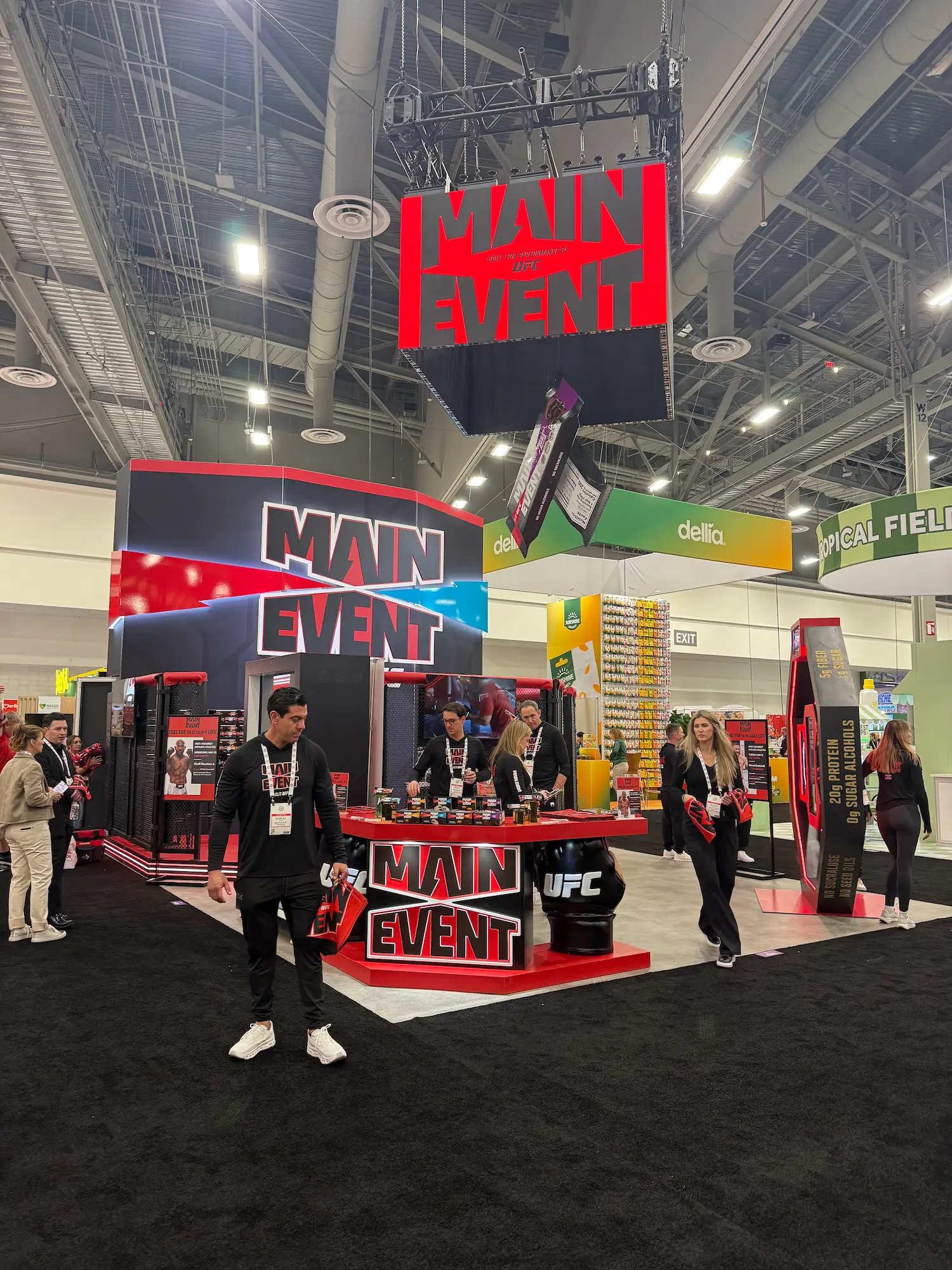
Custom trade show fabrication is the process of designing, engineering, building, finishing, transporting, and installing a trade show exhibit made specifically for your brand, your goals, your space, and your show schedule. It is not a booth pulled from a catalog, a backdrop with a logo on it, or rental furniture dressed up to look intentional. It is the real thing.
Custom trade show fabrication turns your trade show presence into a physical brand experience. Walls, counters, product displays, lighting, signage, storage, interactive moments, demo stations, and every finish choice are built to work together. The goal is to make people stop, understand who you are, and remember you after they leave the aisle.
And yes, it matters. Because on a packed trade show floor, average disappears fast.
What Is Custom Trade Show Fabrication?
Custom trade show fabrication is the hands-on build process behind a custom exhibit. It takes a booth concept and turns it into a real, shippable, installable environment.
That can include:
- Custom walls and structures
- Reception counters
- Product displays
- Demo stations
- Hanging signs
- LED integrations
- Branded graphics
- Flooring
- Storage rooms
- Meeting spaces
- Lighting features
- Specialty finishes
- Modular components for reuse
The keyword here is custom. Custom means the booth is made around your brand, not forced into someone else’s template. It accounts for your sales process, your product, your budget, your booth size, your timeline, your shipping needs, and your internal team’s expectations.
A great custom exhibit does not just look impressive. It functions. It guides traffic, supports conversations, gives your sales team the right tools, and helps marketing capture attention. For teams trying to prove ROI and level up from year to year, that combination of visual impact and functional design is what makes custom trade show fabrication worth the investment.
How Does Custom Trade Show Fabrication Work?
Custom trade show fabrication starts with the goal. Are you launching a product? Rebranding? Trying to create a bigger floor presence? Moving from a 10×20 to a 20×40? Trying to stop relying on the same tired booth from five years ago? The answer changes the build.
From there, the process usually looks like this:
- Strategy: Define the show goals, audience, booth size, budget, timeline, and must-have features.
- Design: Build the visual direction, layout, traffic flow, messaging, and brand experience.
- Engineering: Make sure the idea can stand, ship, install, meet venue rules, and survive multiple shows.
- Fabrication: Cut, shape, paint, laminate, print, wire, assemble, and finish the booth components.
- Logistics: Pack, ship, install, dismantle, and store the exhibit for future use.
That is the difference between buying a booth and building a brand environment. The process requires clear goals, fast approvals, and a fabrication partner who can manage design, engineering, production, and logistics without dropping the handoff between phases.
Why Custom Trade Show Fabrication Beats a Generic Booth
Generic booths are built to be easy. Custom booths are built to perform. A generic booth may get your logo on the floor, but a custom fabricated exhibit gives your team a reason to be there. It creates presence. It makes your brand feel established, intentional, and worth talking to.
This is especially important when your competitors are ten feet away saying almost the same thing you are. Custom fabrication lets you control the experience.
You decide:
- What people see first
- Where conversations happen
- How the product is shown
- What your team needs to sell better
- Whether the space feels premium, technical, bold, approachable, playful, or high-end
That level of control is what separates “we had a booth” from “we owned the floor.” It is also what makes custom trade show fabrication a strategic investment rather than a line-item expense, because the brand presence it creates compounds across every show it attends.
What Does Custom Trade Show Fabrication Cost?
Custom trade show fabrication is not one-size-fits-all pricing. Costs depend on booth size, materials, complexity, finishes, technology, shipping, labor, storage, and how much reuse you want built into the exhibit.
The biggest cost factors usually include:
- Booth size and footprint
- Custom structures and millwork
- Materials and finishes
- Lighting, AV, and technology
- Graphics and signage
- Shipping and freight
- Installation and dismantle labor
- Storage and future reuse needs
A simple custom element may cost far less than a full custom island exhibit. A large exhibit with custom structures, lighting, AV, private meeting rooms, and premium finishes will require a larger investment.
The better question is not “What is the cheapest booth?” The better question is: What does this booth need to accomplish, and what level of build gets us there without wasting money?
A smart fabrication partner helps you understand where the dollars are going. Maybe the hero product display deserves the investment. Maybe the back wall can be more efficient. Maybe a modular structure gives you more value across multiple shows. Maybe a rental-custom hybrid gets you the look without blowing the budget.
Good fabrication is not about spending more for the sake of it. It is about spending in the right places. A smart fabrication partner helps you understand where the dollars create the most impact and where simpler solutions protect the budget without hurting the experience.
How Long Does Custom Trade Show Fabrication Take?
Timelines vary based on complexity, but custom fabrication should never be treated like a last-minute print job. A small custom build may take several weeks. A larger custom exhibit can take months from strategy to design, approvals, engineering, production, shipping, and installation.
Before fabrication starts, you need clear answers to questions like:
- What is the booth size?
- What show is it for?
- What does success look like?
- What must be reused?
- What products need to be featured?
- Who needs to approve the design?
- What budget range are we working within?
The biggest timeline killers are usually not the shop tools. They are slow approvals, unclear goals, late design changes, missing assets, and surprise stakeholder feedback. The earlier those answers are locked in, the smoother the build. The Center for Exhibition Industry Research publishes trade show planning benchmarks that can help teams set accurate production timelines before locking show commitments.
The Tradeoffs Nobody Talks About
Custom fabrication gives you more control, but it also demands better planning. You get a stronger brand presence, but you need time to design and build it correctly. You get premium finishes, but those finishes may increase weight, shipping, or handling needs. You get reusable assets, but they need to be engineered for storage, transport, and future booth layouts.
The main tradeoffs are simple:
- More customization usually means more planning.
- Premium materials can increase freight and handling costs.
- Reusable components need smarter engineering upfront.
- Bigger visual moments may require more install time.
- Last-minute changes can get expensive fast.
You get something nobody else has, but you need a partner who knows how to make it real. A beautiful rendering means nothing if the booth shows up late, installs poorly, or ignores venue requirements. Fabrication is where vision gets tested and where the gap between concept and show-ready build either closes or becomes very expensive.
Why It Matters on the Show Floor
Trade shows are loud, expensive, crowded, and competitive. You are paying for the space. Paying for travel. Paying for staff. Paying for sponsorships. Paying for freight. Paying for attention. So why settle for a booth that looks like everyone else’s?
Custom trade show fabrication matters because it helps your brand show up with purpose. It gives your team a space designed to sell, demo, meet, impress, and be remembered. It also solves a problem a lot of teams deal with: too many vendors, too many handoffs, too much confusion.
When design, fabrication, logistics, installation, and storage work together, the entire process gets cleaner.
That means:
- Fewer gaps
- Fewer surprises
- Better communication
- Stronger execution
- A booth that actually supports your business goals
The Bottom Line
Custom trade show fabrication is how a booth becomes a brand experience. It is the strategy, design, engineering, building, finishing, logistics, and execution behind an exhibit that is made for your company, not pulled from a shelf. A basic booth gets you on the floor. A custom fabricated exhibit makes sure you are worth stopping for. If you are ready to build something that works as hard as your team does, explore Highway 85’s trade show capabilities or connect with our team to start planning your next exhibit.