


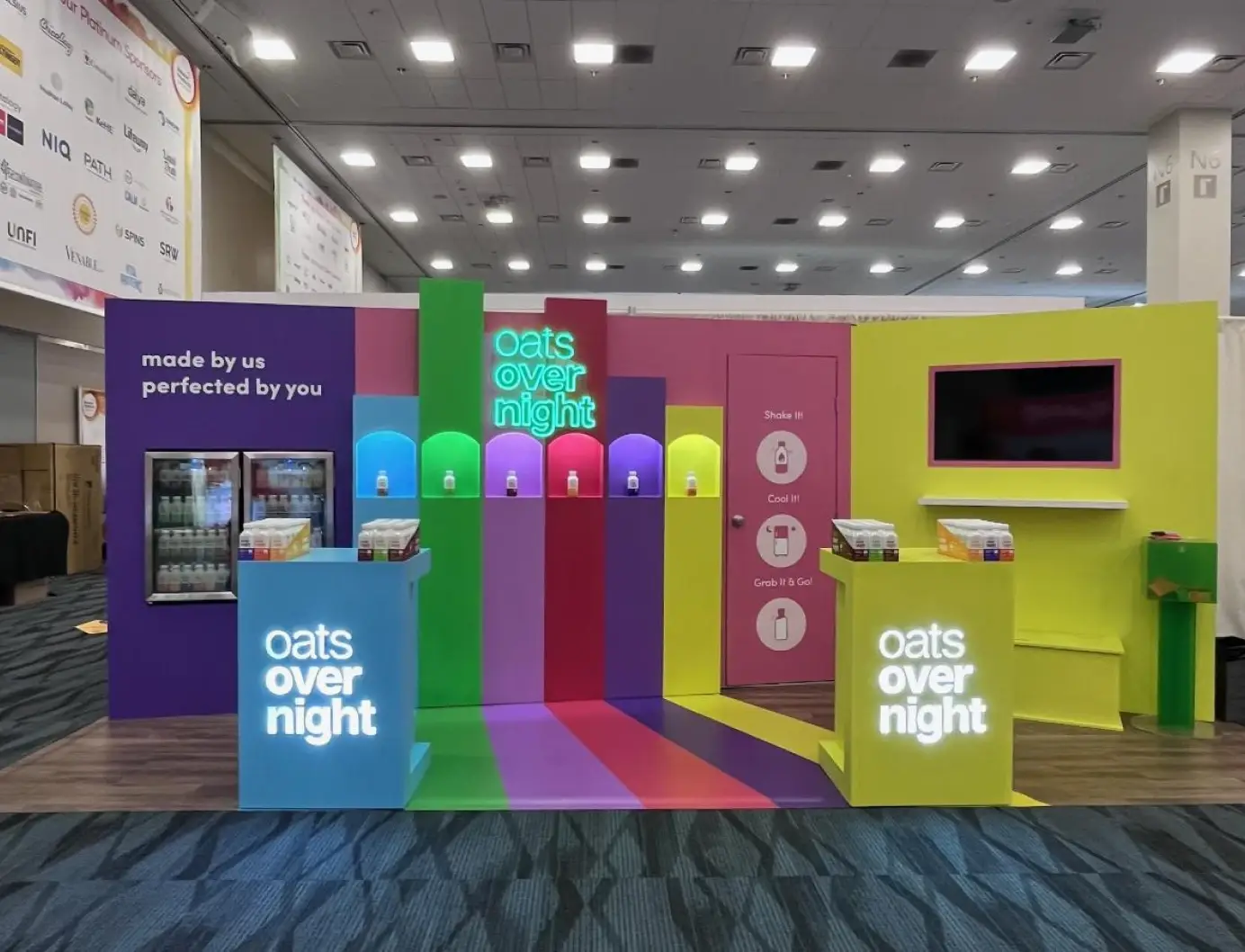
What do agencies need to know about trade show fabrication?
Agencies need to understand that trade show fabrication is not just about building a design. It is about creating something that can physically exist within real constraints like budget, timeline, shipping, and installation. The biggest shift is this: what you design must work in the real world, not just in a presentation.
The most successful agencies approach trade show work by involving a fabrication partner early. This ensures the concept is not only creative but also buildable, cost-effective, and ready for a fixed show date that cannot move.
Fabrication shapes the idea, not just the execution
In most agency work, creative leads and production follows. In trade shows, those two happen together.
Every booth has to meet practical requirements. It has to stand safely, comply with venue rules, fit within shipping limits, and be installed within a tight window. That means even strong concepts may need to evolve once real-world factors are considered.
A fabrication partner helps bridge that gap. They can suggest smarter materials, adjust dimensions, and simplify builds without losing the core idea. Agencies that bring them in late often end up redesigning under pressure.
Budget goes beyond the build
One of the biggest misconceptions is that the booth itself is the main cost. In reality, fabrication is only one part of the total investment.
Costs often include:
- Fabrication and materials
- Freight and shipping logistics
- On-site labor for install and dismantle
- Storage between shows
- Maintenance, repairs, and graphic updates
This matters because clients are usually accountable for ROI. Many need to explain the spend internally and justify why a trade show investment makes sense.
Agencies that understand this can guide smarter decisions. For example, a fully custom build may create impact but increase long-term costs, while a modular approach may lower costs over time and improve flexibility.
Timelines are fixed from day one
Trade show deadlines are not flexible. The event date is locked, and everything works backward from that moment.
A typical project includes concepting, approvals, engineering, fabrication, and shipping. Each phase depends on the one before it. If approvals take longer than expected, production time shrinks, and costs can increase.
This becomes more complex when multiple stakeholders are involved. Larger teams often require input from different departments, which can slow decision-making. Building extra time into the approval process helps avoid last-minute compromises.
Agencies need to think beyond a single show
A key question early on is whether the booth is meant for one event or multiple shows.
This decision impacts everything from materials to layout. A one-time build allows more flexibility, while a multi-show booth needs to be durable, modular, and easy to reconfigure.
Planning for reuse can significantly improve ROI. It also helps clients scale their presence over time instead of starting from scratch for every event.
Where agencies often run into trouble
Agencies new to trade show work tend to hit the same friction points.
- Designing without fabrication input
- Underestimating shipping and logistics costs
- Overbuilding custom elements that cannot be reused
- Assuming timelines can flex like other marketing projects
These issues usually lead to either budget increases or design compromises late in the process. Both can impact the final result on the show floor.
The role of the fabrication partner
A strong fabrication partner is not just executing. They are helping the agency deliver.
They can flag risks early, offer cost-saving alternatives, and ensure the final build matches the original intent. For agencies managing multiple clients, this is critical. Their reputation depends on execution, even when they are not the ones physically producing the booth.
The right partner also helps simplify the process. Many clients prefer a single point of contact who can manage design, build, logistics, and installation. That level of cohesion reduces stress and improves outcomes.
Final takeaway
Trade show fabrication is where creative ideas meet real-world constraints. Agencies that succeed understand that the design has to work beyond the screen.
The most effective approach is to:
- Involve fabrication early
- Design with budget and logistics in mind
- Plan for the full lifecycle of the booth
When agencies do this, they reduce risk, improve client trust, and turn trade show work into a repeatable, high-value part of their offering.