


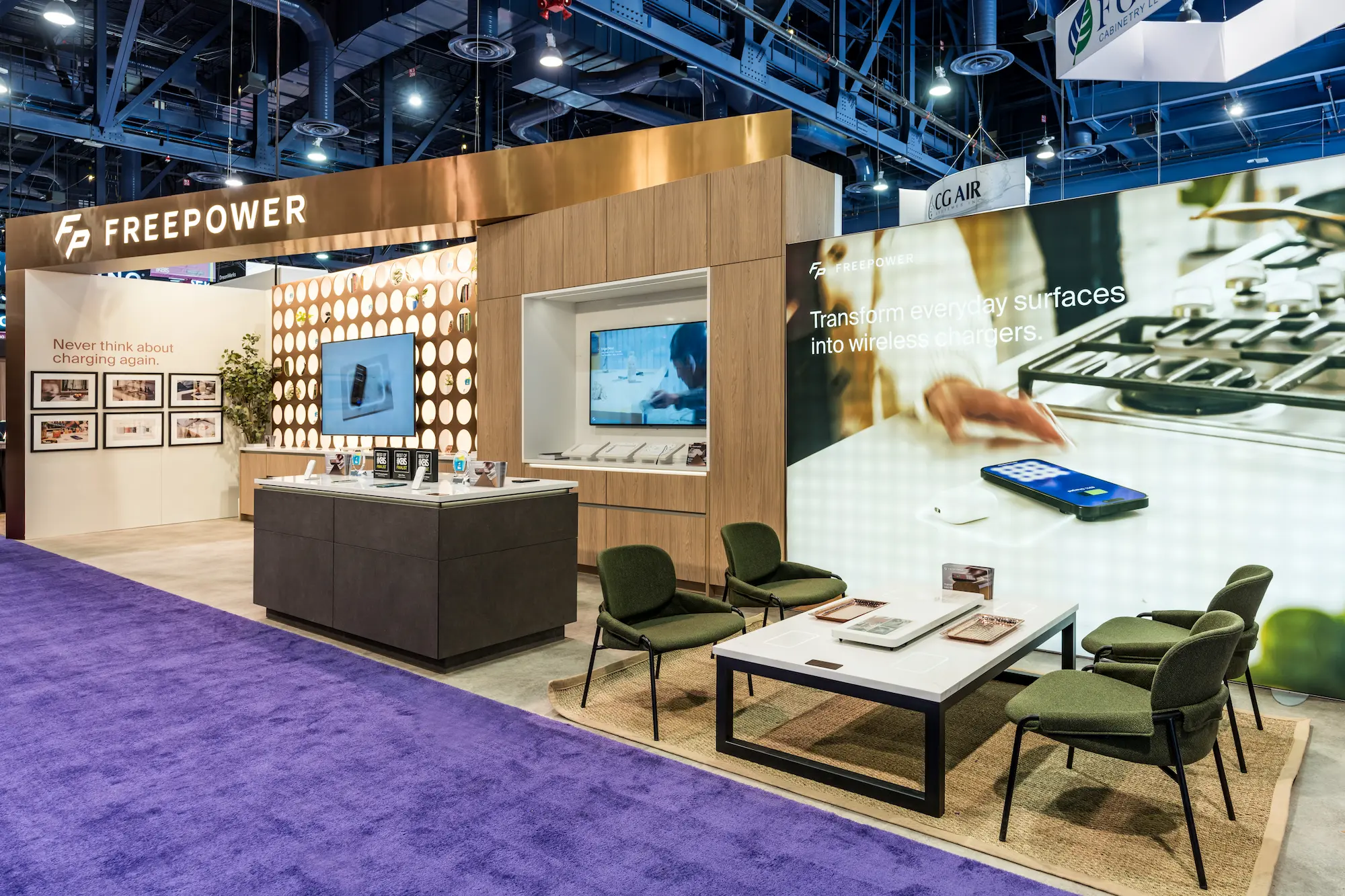
Trade show exhibit design for product launches has to do more than look impressive. You are not just showing up with something new on a crowded show floor. You are asking people to notice it, understand it, remember it, and care enough to take action. That is a significant ask in an environment designed to overwhelm.
This is why trade show exhibit design for a product launch needs to create focus, build curiosity, make the product easy to understand fast, and turn attention into momentum. The entire exhibit has to be built around the product story, the audience, and the action you want attendees to take next.
A Product Launch Booth Needs a Clear Purpose
A product launch exhibit is different from a general brand booth. In a general booth, the goal might be brand awareness, meetings, lead generation, or relationship building. For a product launch, everything has to point toward one central idea: this is new, this matters, and here is why you should care.
That does not mean every wall, screen, counter, and graphic needs to scream “new product.” It means the exhibit needs a clear hierarchy. Attendees should be able to understand what is being launched, who it is for, and why it matters without needing a long explanation from your team.
A strong launch booth usually answers these questions quickly:
- What is the new product?
- What problem does it solve?
- Who is it made for?
- What makes it different?
- What should attendees do next?
If the exhibit does not answer those questions clearly, the product can get buried inside the booth experience. This is the same clarity challenge covered in what makes a trade show exhibit design memorable, where the gap between a visually strong booth and one that actually performs often comes down to whether the message hierarchy was established before or after the design was built.
Start With the Product Story Before the Booth Layout
Before designing the physical space, the product story needs to be locked in. The booth should not start with “Where do we put the demo counter?” It should start with “What does the audience need to understand first?”
For a product launch, the messaging has to be simple enough to catch attention and strong enough to support deeper conversations. That usually means creating a messaging hierarchy with one main launch statement, a few supporting benefits, and clear proof points.
The main message should be visible from the aisle. The supporting details can live closer to the product, demo area, meeting space, or interactive touchpoints. This helps guide people through the story without overwhelming them all at once.
Good product launch exhibit design does not throw every feature at attendees immediately. It creates a path from curiosity to understanding. The same messaging discipline covered in brand strategy and trade show exhibit design applies here with extra urgency, because a product launch has a narrower window to make an impression than a general brand booth does.
Make the Product the Hero of Your Trade Show Exhibit Design
This sounds obvious, but it is where a lot of product launch booths go wrong. The booth looks great, the lighting is cool, the graphics are bold, and somehow the actual product gets lost.
The product should be the visual and strategic center of the space. That can happen through placement, lighting, scale, digital content, or a dedicated demo zone. The goal is to make sure attendees know exactly what they are supposed to look at and interact with.
Depending on the product, this could include:
- A hero display or pedestal
- A live demo station
- A touchscreen experience
- A video wall explaining the product story
- A product comparison area
- A hands-on interaction zone
- A private meeting area for serious buyers
The right choice depends on the product, the audience, and the show environment. A highly technical product may need a guided demo. A visual or lifestyle-driven product may need a more immersive reveal. A product with multiple use cases may need zones that break the story into smaller pieces.
The key is focus. If everything in the booth is competing for attention, nothing wins.
Design for the First Five Seconds
Trade show attendees make quick decisions. They are walking, scanning, comparing, and deciding whether a booth is worth their time. Your launch exhibit has a very small window to pull them in.
That first impression should make the product launch feel clear and exciting. Strong aisle visibility matters here. So do bold graphics, clean messaging, lighting, and an exhibit structure that naturally draws people toward the product.
A product launch booth should not feel like a maze. It should feel easy to enter, easy to understand, and easy to engage with. If attendees have to work too hard to figure out what is happening, they will move on.
The best launch exhibits are built with intention, not decoration for decoration’s sake. The principles that drive trade show booth traffic flow apply with particular force here, because a launch booth that is confusing to enter or hard to navigate loses prospects before the product ever gets a chance to speak for itself.
Build a Demo Experience That Actually Works
For many product launches, the demo is the moment that matters most. This is where the product moves from “interesting” to “I get it.”
A good demo area should be designed around flow, visibility, and conversation. People need enough room to watch, ask questions, and interact without blocking the rest of the booth. Your team also needs enough space to run the demo smoothly without feeling trapped behind a counter.
Think through the details before the show:
- How many people can watch the demo at once?
- Is the demo visible from the aisle?
- Does it need power, monitors, lighting, sound, or storage?
- Can the team repeat it easily all day?
- Is there a backup plan if something goes wrong?
- What happens after the demo ends?
That last question matters. A demo should not just end with “pretty cool, right?” It should lead into a next step, whether that is a meeting, lead capture, sample request, consultation, or sales conversation. The Center for Exhibition Industry Research finds that live product demonstrations are consistently the highest-rated engagement format at trade shows, with attendees who participate in a demo reporting significantly higher purchase intent than those who only receive printed materials or static displays.
Use Graphics and Content to Support the Trade Show Exhibit Design for Product Launches
Graphics, video, and digital content can make or break a product launch exhibit. They should not just decorate the space. They should help explain the product faster.
Large graphics are best for big ideas: the product name, launch message, core benefit, or strongest differentiator. Smaller graphics can support features, specs, use cases, or proof points. Video content can show the product in action, especially if the product is hard to demonstrate live on the show floor.
The most effective launch content is short, clear, and easy to absorb while walking. The full case for how trade show exhibit graphics and visual hierarchy shape attendee behavior applies directly here, where the graphics need to do the work of explaining the product before anyone on the team opens their mouth.
Plan for Traffic Flow and Lead Capture
A launch booth needs energy, but it also needs control. If the booth attracts attention but creates congestion, your team may miss valuable conversations. If the space is too closed off, attendees may hesitate to enter.
The layout should support different levels of engagement. Some attendees may only stop for a quick look. Others may want a full demo. High-value prospects may need a seated conversation. The exhibit should make room for all of that without forcing every visitor into the same experience.
Lead capture should also be built into the booth strategy. Do not wait until the show opens to decide how your team will collect information or qualify prospects. The design should support the sales process, not fight against it.
This could mean placing lead capture near demo exits, adding a consultation counter, creating a meeting area, or using interactive tools that collect information naturally. The Trade Show Exhibit Design Checklist includes a lead capture planning section that helps teams build this into the exhibit strategy before the show floor forces the decision.
Do Not Forget the Team Experience
Your booth staff has to bring the launch to life. Even the best-designed exhibit will fall flat if the team does not know how to use the space.
For a product launch, your staff should understand the product story, the booth flow, the demo process, and the key talking points. They should also know where to stand, how to pull people in, and how to move serious prospects to the next step.
The booth design should make their job easier. Clear zones, smart storage, functional counters, comfortable meeting areas, and reliable tech all help the team stay focused on conversations instead of fighting the space.
Product Launch Exhibit Design Should Create Momentum
A successful product launch booth does not just create a nice show floor moment. It creates momentum after the show. The exhibit should support photos, videos, social content, sales follow-up, press opportunities, and customer conversations.
That means thinking beyond the booth build itself. What will people remember? What will they share? What will your team follow up with? What assets will you capture during the event?
When the booth is designed with the full launch strategy in mind, the trade show becomes more than a reveal. It becomes a launch platform.
Make Your Product Launch Hard to Miss
Trade show exhibit design for product launches needs to be clear, focused, and built around action. The product should be easy to find, easy to understand, and easy to experience. The booth should help your team tell the story, guide the conversation, and turn attention into real opportunity. If you are planning a product launch exhibit and want a fabrication partner who builds around the strategy, not just the structure, explore Highway 85’s trade show capabilities or connect with our team to start planning.