


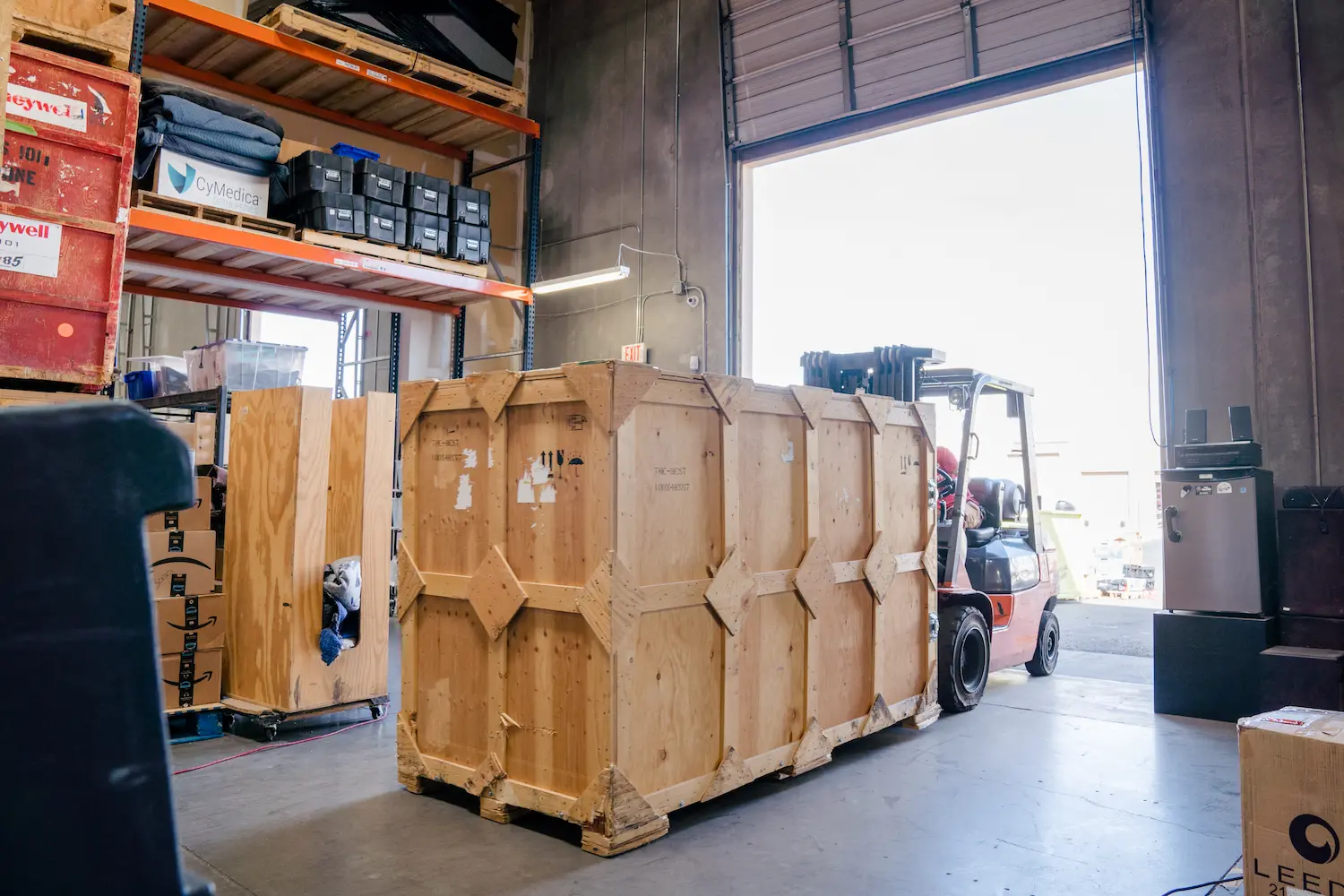
When it comes to trade shows, your exhibit doesn’t just need to look great on the floor, it needs to survive travel. That’s where crate design plays a critical role. If you’ve ever asked, “How does trade show crate design affect shipping and labor costs?”, the answer is simple: a well-designed crate protects your investment, reduces labor during install, and lowers overall shipping expenses.
Here’s a practical breakdown.
Protecting Your Exhibit from Damage
Why Crate Design Matters
Trade show exhibits travel hundreds or even thousands of miles, often handled by multiple logistics providers. Poorly designed crates increase the risk of:
- Chipped laminates and scratched surfaces
- Broken hardware or connectors
- Bent framing and misaligned panels
- Crushed or torn graphics
Design Solutions to Reduce Damage
- Custom fit interiors: Components held securely in foam, padding, or separators prevent shifting.
- Reinforced corners and edges: Absorb impact during handling.
- Protective barriers for high-wear areas: Hinges, edges, and graphics get extra protection.
- Stackable and stable design: Prevents crushing when stacked in trucks or storage.
Proper crate design reduces on-site repairs, prevents costly replacements, and extends exhibit longevity.
Reducing Labor Time During Install
How Crates Affect Install Efficiency
The time spent unloading, unpacking, and sorting components directly impacts labor costs. Crates that are poorly organized or difficult to access slow down setup.
Smart Crate Features for Faster Installs
- Labeled compartments: Clearly marked pieces reduce confusion.
- Modular packing: Components grouped logically for sequential assembly.
- Easy-access openings: Drop-down doors or removable panels eliminate the need for multiple tools to unpack.
- Standardized layouts across crates: Crews know what to expect, speeding up install.
Well-planned crate design can shave hours off setup and teardown, reducing labor expenses and stress on your team.
Impact on Shipping Costs
Crate Design Influences Shipping Expenses
Shipping costs are calculated based on weight, dimensions, and handling complexity. Poorly designed crates often:
- Add unnecessary volume with extra padding or oversized boxes
- Include heavy, overbuilt materials
- Require multiple crates for a single exhibit component
Efficient Crate Design Saves Money
- Right-sized crates: Minimize shipping dimensional weight.
- Lightweight but strong materials: Maintain protection without excessive mass.
- Nested or modular packing: Consolidates components and reduces the number of shipments.
- Reusable design: One crate serves multiple shows, reducing the need for new packing materials.
A thoughtfully engineered crate balances protection with efficiency, keeping your shipping costs under control.
The Bottom Line
So, how does trade show crate design affect shipping and labor costs?
- Poor design increases damage, labor time, and shipping expenses.
- Thoughtful crate planning protects your investment, speeds installation, and reduces overall costs.
- Investing in custom, modular, and well-labeled crates is a small upfront cost with big long-term returns.
Ready to Protect Your Exhibit and Reduce Costs?
If you want your booth to arrive intact, install efficiently, and ship cost-effectively, start with crate design. Review how your current packing protects your investment, supports your install team, and manages shipping weight.
Let’s create crate solutions that save time, protect your booth, and lower shipping costs, show after show.