

Trade show booth photography is not an afterthought. A booth should do more than look good in person. It should crush it on camera. Photos and videos from the show can fuel social media, sales decks, case studies, email campaigns, website updates, and post-show recaps. But that content only works when the booth was designed with the camera in mind.
Designing a trade show booth for photography and social media starts with strong visual hierarchy, clean sightlines, intentional lighting, and moments people actually want to capture. The same design discipline that makes trade show exhibit design memorable also makes it photogenic, because a booth that is visually clear and well-lit in person translates to content that stops the scroll after the show.
Make Your Brand Visible From Every Angle for Trade Show Booth Photography
Your logo cannot disappear the second someone steps five feet to the left.
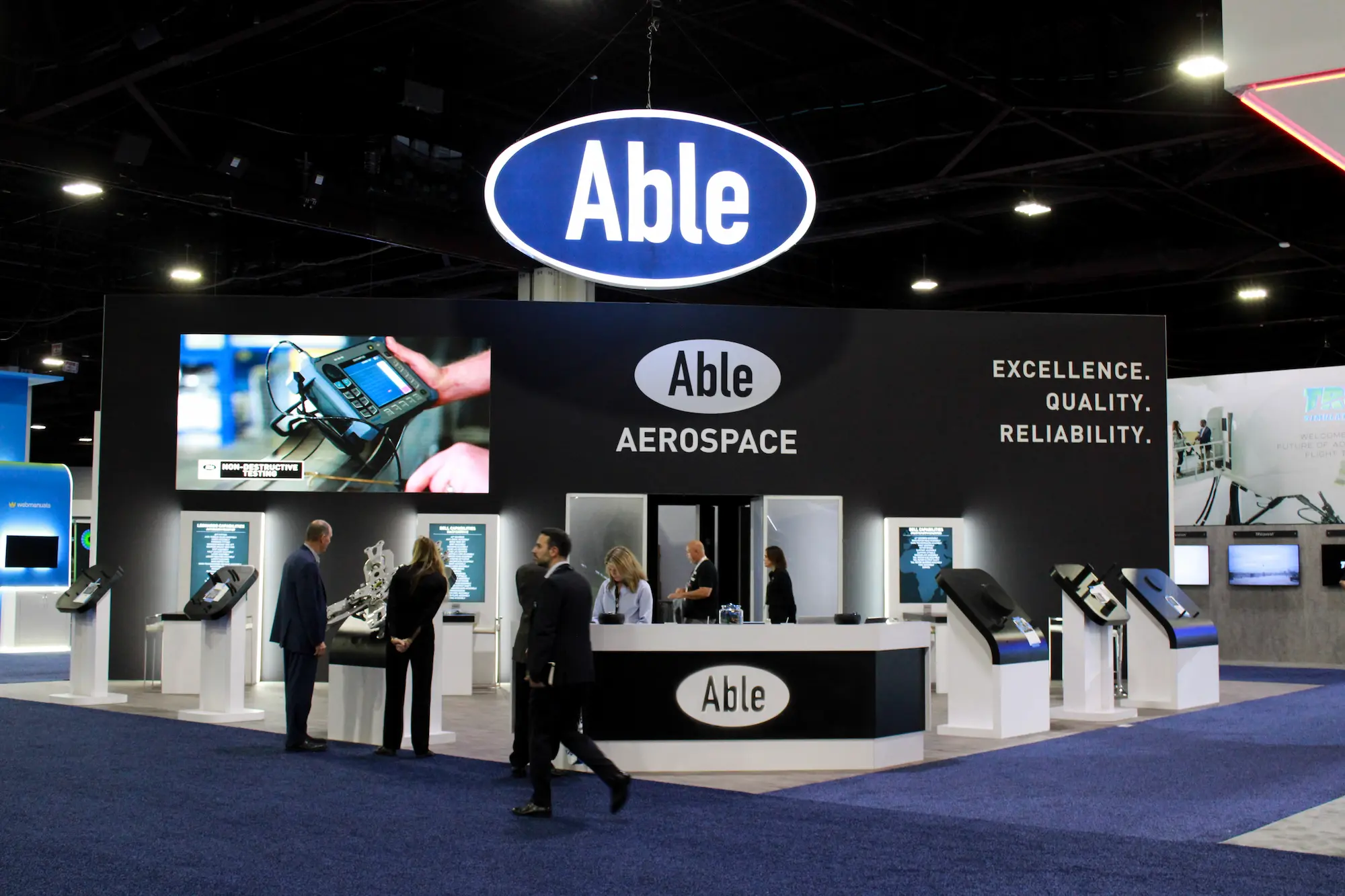
Place major brand elements where they can be seen in wide shots, close-ups, and vertical social videos. Overhead signage, dimensional logos, backlit graphics, and repeated brand marks can keep the company name visible without turning the booth into a logo explosion.
Before approving the design, run through the brand visibility checklist. If the logo disappears when the booth gets busy or the primary signage gets blocked by crowds, the booth is not designed for trade show booth photography. It is designed for an empty rendering. The same visibility principles that drive trade show exhibit graphics apply directly here, where overhead placement and dimensional elements keep brand marks visible at every shooting angle.
Build One Obvious Hero Moment
Every photogenic trade show booth needs a visual anchor. This is the feature people notice, photograph, and remember.
It might be a massive product replica, sculptural installation, bold material treatment, interactive display, or custom-lit wall. The concept should be easy to understand from across the aisle. Tiny details are great, but they will not stop the scroll by themselves.
Pick one element and let it hit hard. Do not make ten different features fight for attention. This is the same visual hierarchy principle covered in color, graphics, and visual hierarchy in trade show exhibit design, where a single dominant focal point outperforms a collection of competing elements every time.
Treat Lighting Like Part of the Structure
Convention hall lighting is brutal. It can flatten colors, create ugly shadows, and make expensive materials look lifeless.
Integrated lighting gives you control. Use it to define architectural features, illuminate products, brighten faces, and create depth behind logos. Avoid placing strong lights directly behind people unless you want every photo to look like a silhouette.
Test lighting in the booth rendering and during pre-show staging. Fixing bad lighting after installation is a lousy use of show-floor time. The full case for why trade show exhibit lighting needs to be part of the design from the beginning, not added during production, applies with particular force here because bad lighting is the fastest way to ruin otherwise strong booth photography.
Create Clean Content Zones for Trade Show Booth Photography
Give your team and attendees places to capture content without random equipment, storage bins, or neighboring booths wrecking the shot.
Useful content zones include:
- A branded interview backdrop
- A product demonstration area
- An interactive photo moment
- A clean space for team photos
- A wide-angle view of the full experience
Keep clutter hidden. Storage, cables, literature, shipping cases, and personal items should have designated locations away from the camera. The storage planning covered in what happens to your custom trade show booth between shows starts with how the booth is designed to contain its own mess during the event, not just after it.
Design for Motion, Not Just Still Photos
Social content is increasingly video-first. Think about how someone moves through the booth and what the camera sees along the way.
Strong entrances, layered graphics, changing light, interactive technology, and live demonstrations create movement. They also give your content team something better to capture than another slow pan across a static wall. The trade show booth technology decisions made during exhibit design directly affect how dynamic the booth looks on video, where screens, lighting controls, and interactive moments create the kind of visual energy that static displays cannot. According to Event Marketer, brands that plan a dedicated content capture strategy before the show consistently generate more post-event social engagement than those who rely on candid photography taken during the event itself.
Photogenic Trade Show Booth Checklist
Before sending the booth into production, confirm that it has:
- Clear branding from several camera angles
- One dominant visual feature
- Lighting designed for people and products
- Uncluttered photo and video backgrounds
- Space for vertical social content
- Hidden storage and cable management
- Interactive or moving elements
- A documented pre-show content plan
A booth that photographs well keeps working after the show closes. Design for the floor, the camera, and the weeks of content that come next.
For a comprehensive planning tool that covers photography alongside layout, messaging, fabrication, and logistics, download the Highway 85 Trade Show Exhibit Design Checklist. If you want a fabrication partner who thinks about post-show content value from the first design conversation, explore Highway 85’s trade show capabilities or connect with our team to start planning.