

Trade show booth graphics can make your exhibit look dialed in, expensive, and impossible to ignore. They can also make it look rushed, blurry, off-brand, and painfully amateur. The difference usually comes down to planning, file quality, materials, and knowing how large format printing actually works.
Your trade show booth graphics are not decorations. They are sales tools. They need to be clear from the aisle, built for the booth structure, and produced correctly the first time. This is an extension of the same visual discipline covered in color, graphics, and visual hierarchy in trade show exhibit design, just applied to the production side of the process where file quality, material selection, and timing determine whether the design actually survives contact with the print shop.
Start With the Viewing Distance When Planning Trade Show Booth Graphics
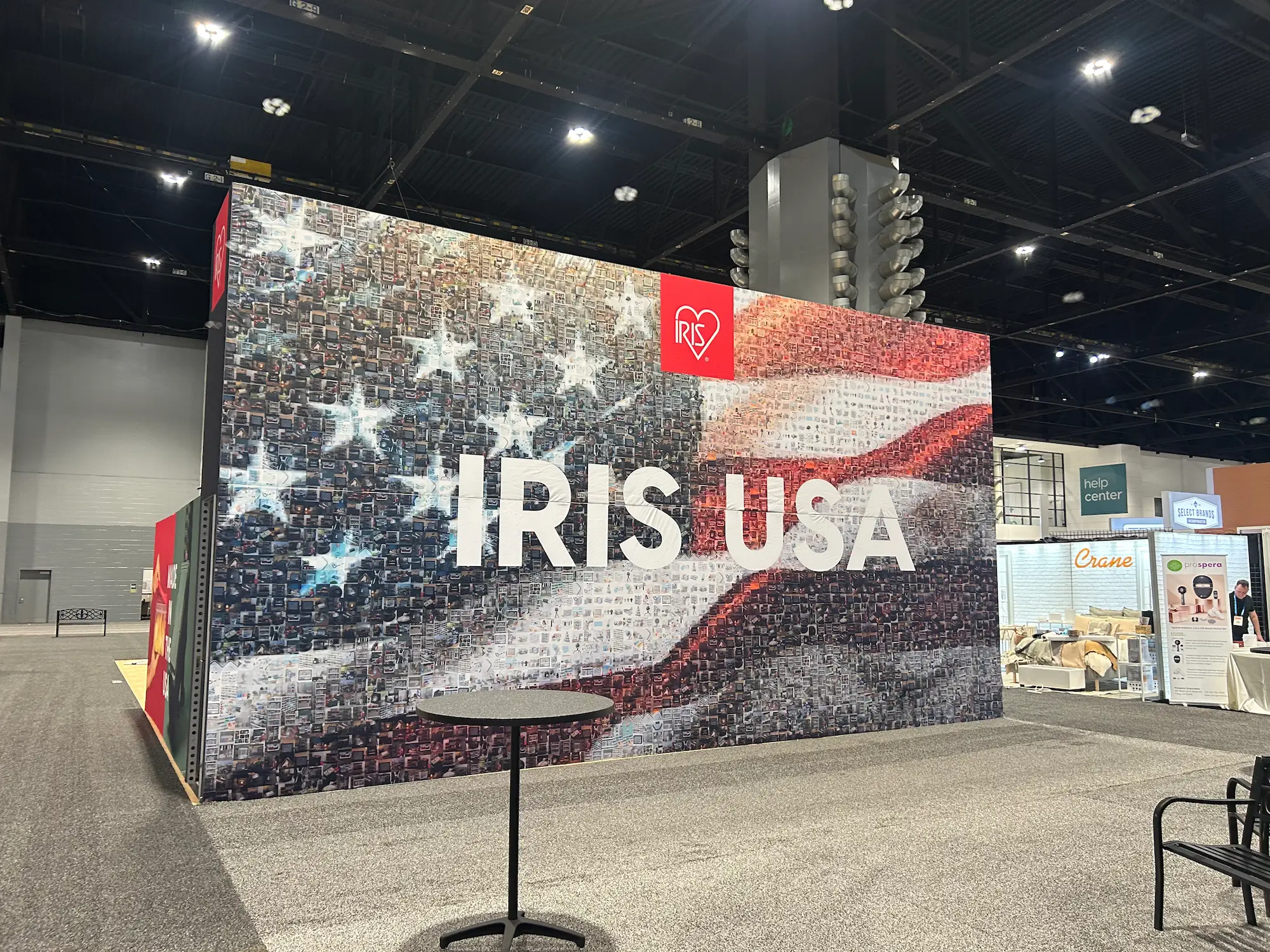
Large format graphics are not viewed like a brochure. Nobody is standing six inches away studying your back wall during a busy show. People are walking past, scanning fast, and deciding in seconds whether your booth is worth a stop.
That means your graphics need:
- One strong headline
- Clear brand visibility
- High-contrast design
- Minimal body copy
- Simple product or service cues
- A call to action when it makes sense
Do not cram the entire website onto the booth wall. Big graphics need big discipline. The messaging hierarchy that makes trade show exhibit design memorable starts with the graphics, where the big idea has to land before the attendee is close enough to read anything smaller than a headline.
Use the Right File Types
Bad files create bad prints. Period.
For large format printing, your design team or exhibit partner will usually need production-ready files, not screenshots, tiny JPEGs, or logos pulled from a slide deck. Vector files are best for logos and sharp brand elements. High-resolution images are critical for photography, product shots, and backgrounds.
Common file needs include:
- AI, EPS, or SVG files for logos and vector art
- High-resolution TIFF, PSD, or JPEG files for images
- Packaged design files with fonts and linked assets
- Final print PDFs built to the correct scale and specs
If the file is low quality, printing it bigger will not fix it. It will just make the problem massive.
Know Your Trade Show Booth Graphics Materials
Not all booth graphics are printed the same way. The material depends on the booth system, budget, finish, lighting, durability, and whether the graphics need to travel from show to show.
Common trade show graphic materials include fabric, vinyl, rigid panels, SEG graphics, adhesive vinyl, and backlit materials. Each one behaves differently. Fabric is flexible and packs well. Rigid panels can look crisp and premium. Backlit graphics need special material and careful color control. SEG graphics look clean, but the measurements have to be right.
Choose the material based on the booth, not guesswork. The same material and finish thinking covered in trade show booth materials applies directly to graphics, where the substrate affects durability, shipping, lighting performance, and how many shows the graphic can support before it needs to be replaced.
Build Trade Show Booth Graphics Around the Booth Structure
Graphics should be designed for the actual exhibit, not a random rectangle. Counters, walls, seams, monitor mounts, lighting, shelving, and structural breaks all affect where graphics should land.
Before approving artwork, check:
- Exact panel sizes
- Bleed and safe zones
- Seam locations
- Hardware or frame obstructions
- Monitor and product placement
- Countertop height
- Sightlines from the aisle
A beautiful graphic that gets cut through the logo is not beautiful anymore. It is a preventable mess. This is one of the most practical reasons to involve the fabrication team in the graphic design process early, rather than treating booth graphics and booth structure as two separate workstreams that meet for the first time at installation.
Give Printing Enough Time
Large format printing needs room for proofing, production, finishing, packing, shipping, and installation. Waiting until the last minute limits options and increases risk.
If your booth graphics matter, and they do, treat them like a production item, not a final-week errand. The same timeline discipline that protects trade show booth installation applies here, where compressed graphics timelines create the same kind of last-minute stress that derails install day before the show even opens. The Experiential Designers and Producers Association recommends that all large format graphics be submitted for production at least three weeks before the show install date, with an additional buffer for backlit or specialty materials that require extended production windows.
Quick Checklist for Trade Show Booth Graphics and Printing
Before sending booth graphics to print, confirm:
- Artwork is built to the correct size or scale
- Logos are vector files
- Photos are high resolution
- Copy is short and readable
- Brand colors are clearly defined
- Bleed and safe zones are included
- Seams and hardware have been checked
- Material is approved
- Proofs have been reviewed
- Production and shipping timelines are realistic
For a more comprehensive planning tool that covers graphics alongside layout, fabrication, and logistics, download the Highway 85 Trade Show Exhibit Design Checklist.
FAQ: Trade Show Booth Graphics and Printing
What resolution should booth graphics be?
It depends on final size and viewing distance, but images need to be high enough quality to print cleanly at scale. Your exhibit partner or printer should provide exact specs before artwork is finalized.
Can I use a logo from my website for booth graphics?
Usually, no. Website logos are often too small or compressed for large format printing. Use vector logo files whenever possible.
What is the biggest mistake exhibitors make with booth graphics?
Trying to say too much. If people cannot understand the message from the aisle in a few seconds, the graphic is working against you.
Should booth graphics be reusable?
When possible, yes. If you attend multiple shows, design graphics with future use in mind. Avoid overly specific dates or messaging unless the campaign demands it.
Bottom Line
Trade show booth graphics are not the place to wing it. Use clean files, smart materials, clear messaging, and real production specs. Large format printing is unforgiving, and the trade show floor is even less forgiving. Get the graphics right and your booth looks intentional. Get them wrong and everyone can tell. If you want a fabrication partner who treats graphics as part of the production process from day one, explore Highway 85’s trade show capabilities or connect with our team to start planning.