

Booth size changes more than your square footage. It affects exhibit space fees, fabrication, shipping, labor, flooring, electrical, furniture, storage, and the number of people needed to run the booth. Understanding how trade show booth cost scales by size is one of the most practical steps in building a realistic budget before committing to a footprint.
Comparing a 10×10 vs 10×20 vs island trade show booth cost is not as simple as doubling one number. A larger footprint creates more opportunities, but it also creates more places for the budget to get strained. Here is what to expect at each level. For the full picture of all the cost categories involved, the trade show budget breakdown covers every line item across the full program.
10×10 Booth: Lean, Focused, and Budget-Friendly
A 10×10 booth gives you 100 square feet, usually with one open aisle side. It is the most economical option for exhibitors testing a new show, entering a new market, or working with a tight budget.
Your spending typically centers on:
- A branded backwall or display system
- One counter or product station
- Flooring and basic lighting
- Graphics, shipping, drayage, and labor
- Lead capture technology
The biggest mistake is stuffing too much into the space. A 10×10 needs one clear message and one primary action. No clutter, no furniture graveyard, no ten-part product demo. The layout and design principles that make a small footprint perform are covered in trade show exhibit design for small booths, where every square foot has to earn its place.
10×20 Booth: More Room, More Moving Parts
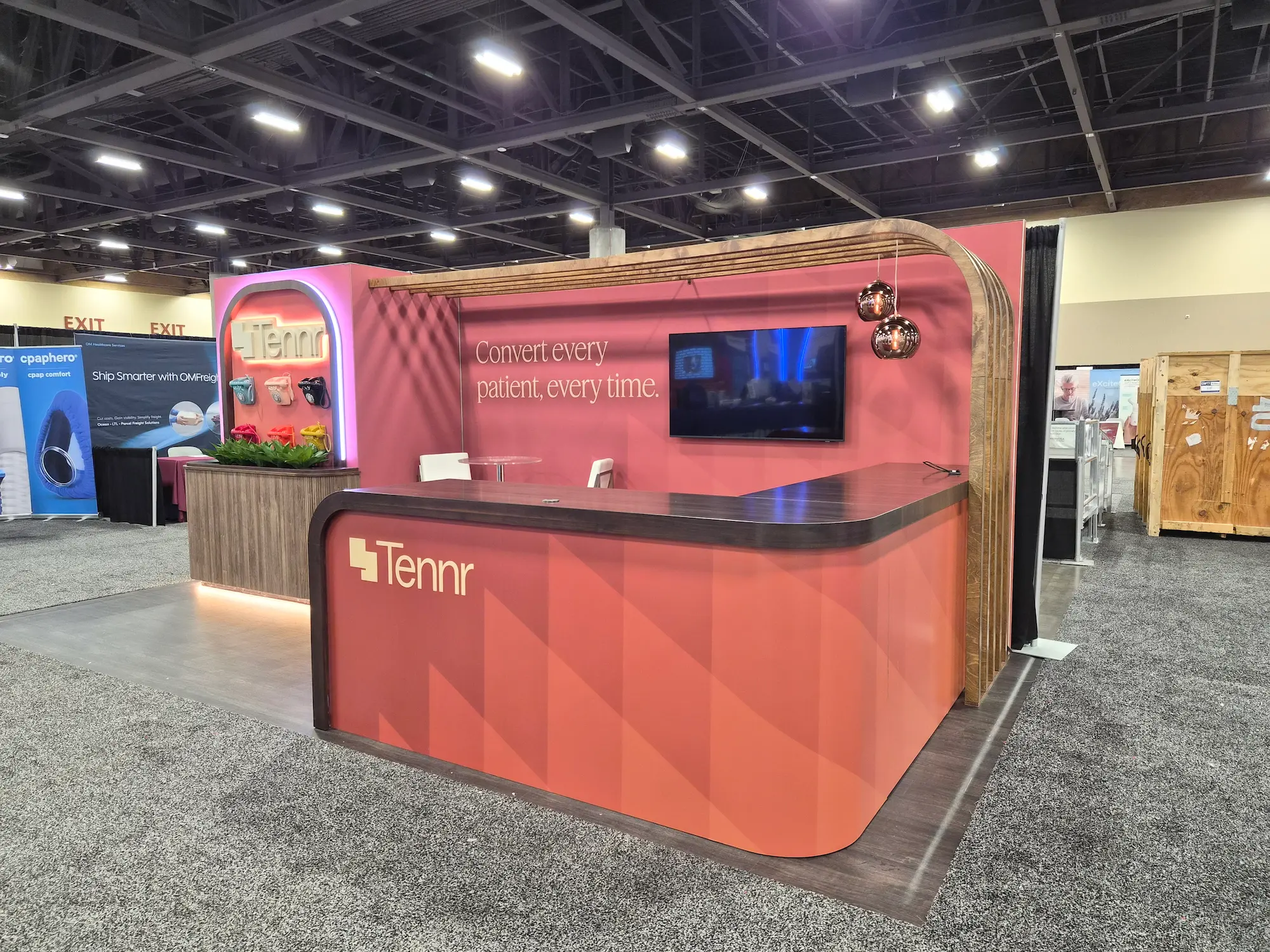
A 10×20 booth provides 200 square feet and may have one or two open sides, depending on its location. It gives you enough space to create separate areas for demos, conversations, products, or lead capture.
However, twice the space does not always mean exactly twice the total cost. Some expenses scale directly, while others jump because the booth requires additional materials, labor, lighting, power, freight, and furniture.
A 10×20 makes sense when you need:
- Multiple product displays
- A dedicated demo area
- Space for several staff members
- A semi-private meeting zone
- Stronger visibility from the aisle
Island Booth: Maximum Visibility, Maximum Trade Show Booth Cost Responsibility
Island booths are typically 20×20 or larger and open on all four sides. They deliver serious visibility, but they demand a serious budget.
Beyond the larger exhibit space, island booths may require:
- Custom fabrication and structural engineering
- Overhead signage or rigging
- Additional electrical and AV
- Larger freight shipments
- More installation and dismantle labor
- Increased storage, staffing, and show services
An island booth should support a real business objective, not a desire to look big. Product launches, major customer meetings, live demonstrations, and high-volume traffic can all justify the investment. The design principles behind making a four-sided space perform are covered in island booth design, and the full cost picture for large exhibits is in what goes into building a 20×20 or larger custom trade show booth. The Center for Exhibition Industry Research publishes annual data on island exhibit investment ranges and attendee engagement benchmarks that can help teams evaluate whether a larger footprint investment is likely to deliver proportional returns at their target shows.
Which Booth Size Fits Your Trade Show Booth Cost Budget?
Choose a 10×10 when you need a sharp, efficient presence. Choose a 10×20 when your booth must handle multiple activities without becoming chaos. Choose an island when visibility, traffic, and experience are critical to the show’s success.
Start with what the booth needs to accomplish. Then build the footprint and budget around that goal. Bigger can hit harder, but only when every square foot earns its keep. If you want help matching booth size to business goals and building a realistic cost estimate from the start, explore Highway 85’s trade show capabilities or connect with our team to start planning.