

Building a large custom trade show booth is a bigger lift than choosing a layout and sending a logo file. For a 20×20 exhibit or larger, exhibitors should expect a process that includes strategy, design, engineering, fabrication, logistics, installation, show services, storage, and long-term planning.
The biggest shift from a smaller booth to a large-format custom exhibit is complexity. A 10×10 or 10×20 space can often be solved with a clean structure, graphics, and a simple product display. A 20×20 or larger exhibit has to function like a branded environment. It needs to attract traffic, support sales conversations, create memorable moments, meet show regulations, and hold up under real installation timelines.
The best results on large-format builds come from starting early, aligning stakeholders, and working with a partner who can connect the big idea to what actually happens on the show floor.
Why Large Custom Trade Show Booths Require More Planning
A large custom trade show booth has more room to make an impact, but that also means more decisions. Every square foot needs a purpose. Before design begins, your team should be clear on what the booth needs to accomplish.
Common goals for a 20×20 or larger booth include:
- Creating a stronger brand presence than previous years
- Launching a new product or service
- Hosting meetings or demos inside the space
- Building a social media or photo-worthy moment
- Improving traffic flow and lead capture
- Making the exhibit reusable for future shows
This is where many projects either gain momentum or get messy. A large booth often has input from marketing, sales, leadership, product teams, and sometimes engineers or technical experts. Each group may have different priorities. Marketing wants brand impact. Sales wants qualified conversations. Leadership wants ROI. Product teams want accurate demos and display space.
A strong exhibit partner helps translate those priorities into one cohesive experience instead of a booth that feels like several ideas competing for attention. This is the same stakeholder alignment challenge covered in the custom trade show booth design process, just with more voices and higher stakes.
What the Large Custom Trade Show Booth Process Usually Includes
For a 20×20 or larger custom booth, exhibitors should expect the build process to move through several phases.
1. Discovery and Strategy
The first step is understanding the show, the audience, the booth size, the brand, the budget, and the goals. This is where the team should discuss what worked in past years, what needs to change, what competitors are doing, and how success will be measured.
This is also the right time to talk about practical constraints. Ceiling height, hanging sign rules, fire codes, electrical needs, rigging, storage, venue access, and target install timelines can all affect the final design.
2. Concept and Design
Once the goals are clear, the creative team develops the booth concept. For large-format booths, design is not just about how the structure looks. It is about how people move through the space.
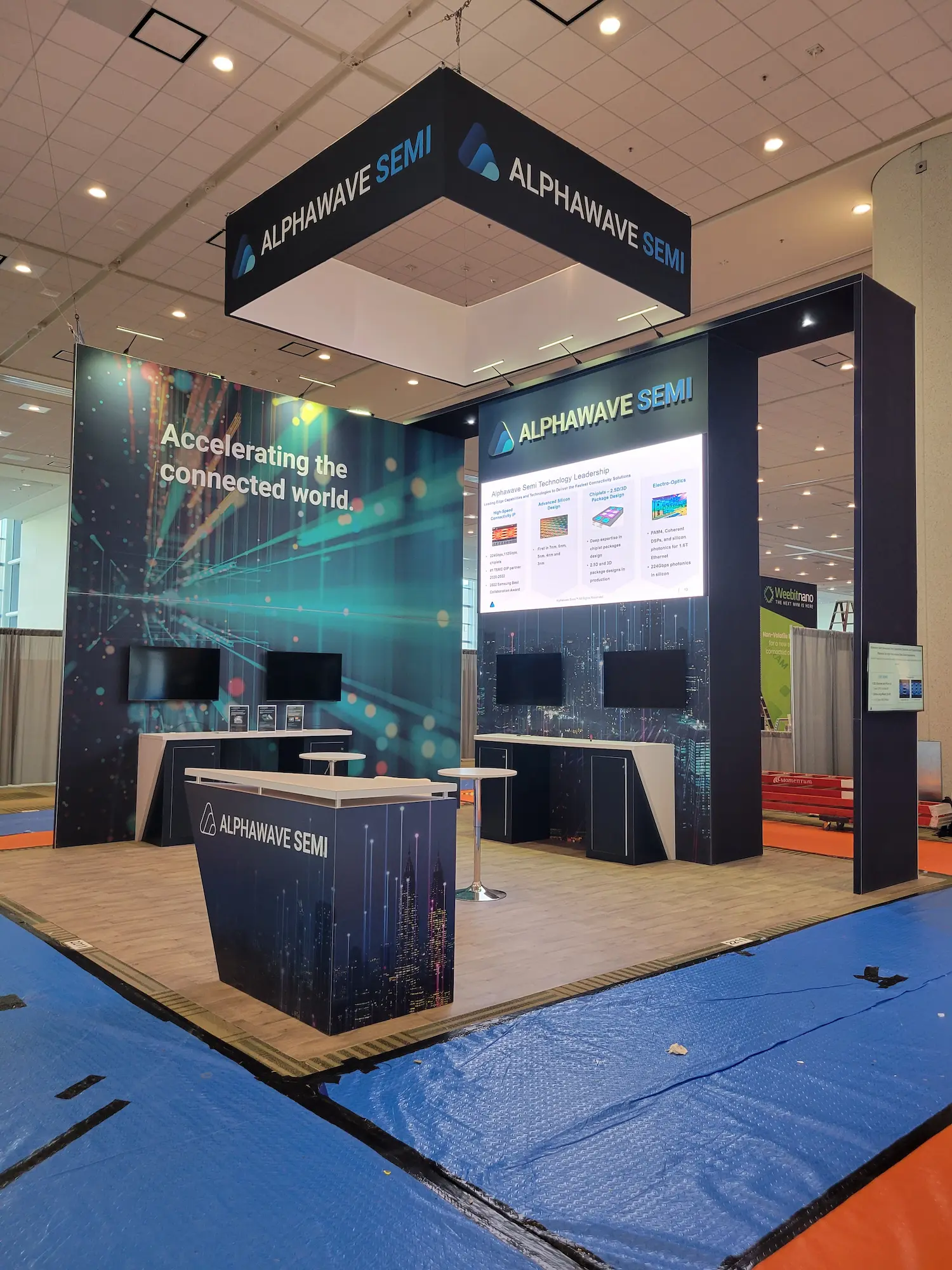
A good 20×20 or larger exhibit should account for:
- Open entry points
- Clear product or service zones
- Private or semi-private meeting areas
- Brand visibility from multiple aisles
- Storage for staff items and collateral
- Demo space that does not block traffic
- Lighting, digital displays, and graphics
- Photo or social media moments
The design should feel impressive, but it also has to be buildable. This is where trade show booth engineering becomes critical, because a rendering that ignores structural, shipping, and install realities creates expensive problems later in the process.
3. Budget Alignment
Large custom booths often require a bigger investment because there are more materials, more labor hours, more logistics, and more show services involved. Costs can vary widely depending on size, finishes, technology, structural complexity, shipping distance, and how much of the booth is custom fabricated.
Exhibitors should expect the budget to include more than the booth structure itself. Common cost categories include design, fabrication, graphics, AV, lighting, flooring, furniture, shipping, material handling, installation and dismantle labor, electrical, rigging, storage, and future refurbishments.
This is one of the most important conversations early in the process. Understanding what drives custom trade show booth cost before the first design review helps teams make faster decisions and avoid the sticker shock that slows approvals down.
Timeline Expectations for a Large Custom Trade Show Booth
For a 20×20 or larger booth, the safest approach is to start several months before the show. More complex builds, new product launches, major rebrands, or exhibits with heavy AV and custom engineering need more runway.
A typical process may include time for discovery, design development, approvals, engineering, material ordering, fabrication, graphics production, pre-build or quality checks, shipping, and installation. Delays usually happen when there are too many late-stage changes, unclear approvals, missing assets, or design decisions that were made before budget and show rules were fully understood.
Starting early also gives your team more options. You have more room to compare materials, refine the experience, solve engineering challenges, and avoid rush charges. When the timeline gets compressed, flexibility usually decreases and costs can rise. The Center for Exhibition Industry Research recommends that exhibitors planning large-format custom booths begin the design and fabrication process at least 16 to 20 weeks before the show date to avoid timeline compression and associated cost increases.
Key Tradeoffs Exhibitors Should Expect
Every large custom booth involves tradeoffs. The goal is not to avoid them. The goal is to make smart decisions before the show floor forces your hand.
One common tradeoff is visual impact versus reusability. A highly custom booth can create a strong first impression, but it should still be planned with future shows in mind. Modular custom elements, replaceable graphics, and adaptable layouts can help the exhibit evolve year after year.
Another tradeoff is openness versus function. A booth that is too open may attract traffic but leave no room for meetings, demos, storage, or staff flow. A booth that is too enclosed may feel premium but discourage people from entering. The right balance depends on your goals and audience.
The best booths do not spend everywhere. They invest in the moments that matter most and protect the rest of the budget for the operational realities like freight, labor, and show services that catch teams off guard when they are not planned for upfront.
What to Ask Before Starting a Large Custom Trade Show Booth
Before committing to a design, exhibitors should ask a few practical questions:
- What is the primary goal of this booth?
- Who needs to approve the concept and budget?
- What do we need visitors to do inside the space?
- Which elements need to be reused at future shows?
- What show rules could affect the design?
- Where do we need storage, demos, meetings, or hospitality?
- What parts of the experience will help sales prove ROI?
These questions keep the booth from becoming a collection of nice-looking elements without a clear purpose.
Why the Right Fabrication Partner Matters
Large-format trade show booths put pressure on every part of the process. Design, fabrication, logistics, installation, communication, and show-floor problem solving all have to work together. When those pieces are split between too many vendors, details can get lost.
Highway 85 Productions supports trade show teams that need a custom booth partner who can think through the full experience, not just the structure. For a 20×20 or larger booth, that means helping connect strategy, design, fabrication, and execution so the final space looks sharp, functions well, and supports the business goals behind the investment.
A large custom trade show booth is not just a bigger booth. It is a branded environment with more moving parts, more opportunities, and more at stake. When it is planned well, it can become one of the strongest tools your team has for launching products, creating conversations, and showing up with confidence. If you are ready to start planning your next large exhibit, explore what Highway 85 builds or connect with our team to get started.