

A Practical Field Guide for Exhibit Managers
A custom trade show display is not just a visual upgrade. It is an operational decision that affects how clearly your brand is understood, how efficiently your staff works on the floor, and how well the booth supports your actual trade show objectives.
For exhibit managers, custom booths tend to surface at a specific moment. The team is attending shows regularly. The brand has matured past generic messaging. The booth needs to do more than exist. It needs to work.
This guide explains what custom trade show displays are, when they make sense, how they support different goals, what tradeoffs come with them, and what typically gets underestimated during planning and execution.
What Is a Custom Trade Show Display?
A custom trade show display is a booth designed and fabricated specifically for your brand, audience, and objectives. It is not assembled from a predefined kit and it is not shared with other exhibitors.
A custom display allows you to define:
- Layout and traffic flow
- Structural form and footprint
- Graphic hierarchy and messaging
- Lighting, AV, and product integration
- Storage, meeting, and staff support needs
Custom does not automatically mean large, complex, or expensive. It means the booth is designed around purpose rather than constrained by a prebuilt system.
The difference shows up not just in how the booth looks, but in how people use it.
How Custom Displays Differ From Other Booth Types
Understanding the differences matters because many teams move to custom too early or too late.
- Portable displays
These are lightweight and cost-effective. They work well for small footprints or infrequent shows, but they limit visibility, structure, and flexibility. - Rental booths
Rentals reduce upfront commitment and are useful for testing shows or layouts. They restrict customization and often rely on shared components that limit brand expression. - Modular systems
Modular exhibits offer reconfiguration within a defined system. They balance flexibility and control, but still impose structural and design rules. - Custom displays
Custom exhibits are built to fit your goals rather than the other way around. They offer the most control, but they require clearer planning and stronger internal alignment.
Custom is not automatically better. It is better when the organization is ready to use it intentionally.
Who Custom Trade Show Displays Are For
Custom trade show displays tend to work best for organizations that meet most of the following conditions.
- They attend multiple trade shows each year
- They have established brand standards and messaging
- They need specific booth functions such as demos, AV, or meetings
- They want consistency across different events and venues
In these situations, the cost and effort of custom fabrication is offset by reuse, clarity, and performance over time.
When Custom Displays Often Underperform
Custom exhibits are often a poor fit when:
- The company is exhibiting once or twice as a test
- The brand story is still changing significantly
- Trade show goals are unclear or shift show to show
- Internal stakeholders are not aligned on priorities
In these cases, teams often end up with a booth that looks impressive but does not support how staff actually works or how attendees engage.
Custom booths tend to amplify existing clarity or confusion. They do not solve underlying strategy problems.
Why Custom Displays Matter on the Trade Show Floor

Trade show floors are dense, loud, and visually competitive. Attendees are navigating dozens or hundreds of booths, often with limited time and little prior context.
In that environment, most engagement decisions are made quickly.
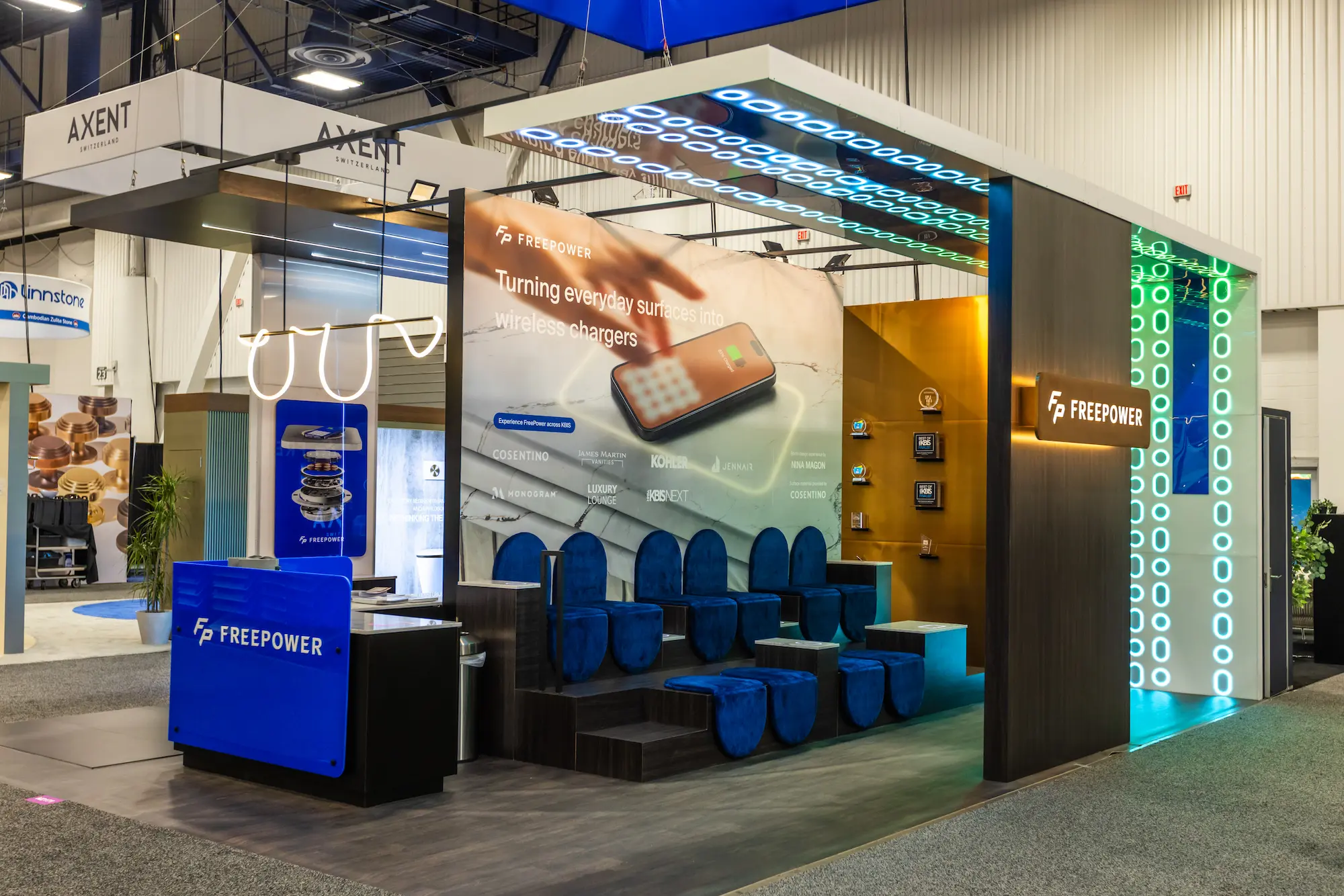
A well-designed custom display helps by:
- Making it immediately clear who you are and what you do
- Creating separation from neighboring booths
- Supporting a focused experience rather than visual noise
When the booth is working, attendees do not need an explanation before deciding whether to stop. The booth communicates enough on its own to earn a few seconds of attention.
Those seconds are what allow staff to do their job.
Aligning Your Custom Display With Trade Show Goals
Custom booths perform best when they are designed around explicit objectives. Without that clarity, design decisions default to preference, internal politics, or aesthetics alone.
Most trade show objectives fall into three categories.
Communication Goals
These include brand awareness, message clarity, and market positioning.
Common signals this is your primary goal:
- You are entering a new market
- Your offering is often misunderstood
- You want attendees to remember your brand, not just your product
Design considerations:
- Clear visual hierarchy that prioritizes one primary message
- Consistent use of brand elements across booth and materials
- Minimal copy that supports fast understanding
Trying to communicate everything usually results in communicating nothing.
Logistical Goals
These include demonstrations, traffic flow, and managing how people move through the space.
Common signals this is your primary goal:
- You rely on product demos
- You need to manage crowds or queues
- You want to control where conversations happen
Design considerations:
- Open versus controlled layouts
- Defined demo or focal areas
- Sightlines from main aisles
Layout decisions directly affect staff behavior and attendee comfort.
Quantifiable Goals
These include lead generation, sales conversations, recruiting, or partnerships.
Common signals this is your primary goal:
- Sales teams are heavily involved
- Lead quality matters more than volume
- Conversations are longer or more technical
Design considerations:
- Spaces that support conversation without blocking flow
- Clear and consistent lead capture points
- Staff positioning that encourages engagement
If goals are not defined, the booth will still be built. It just will not work as intentionally as it could.
Common Trade Show Objectives and How Custom Displays Support Them
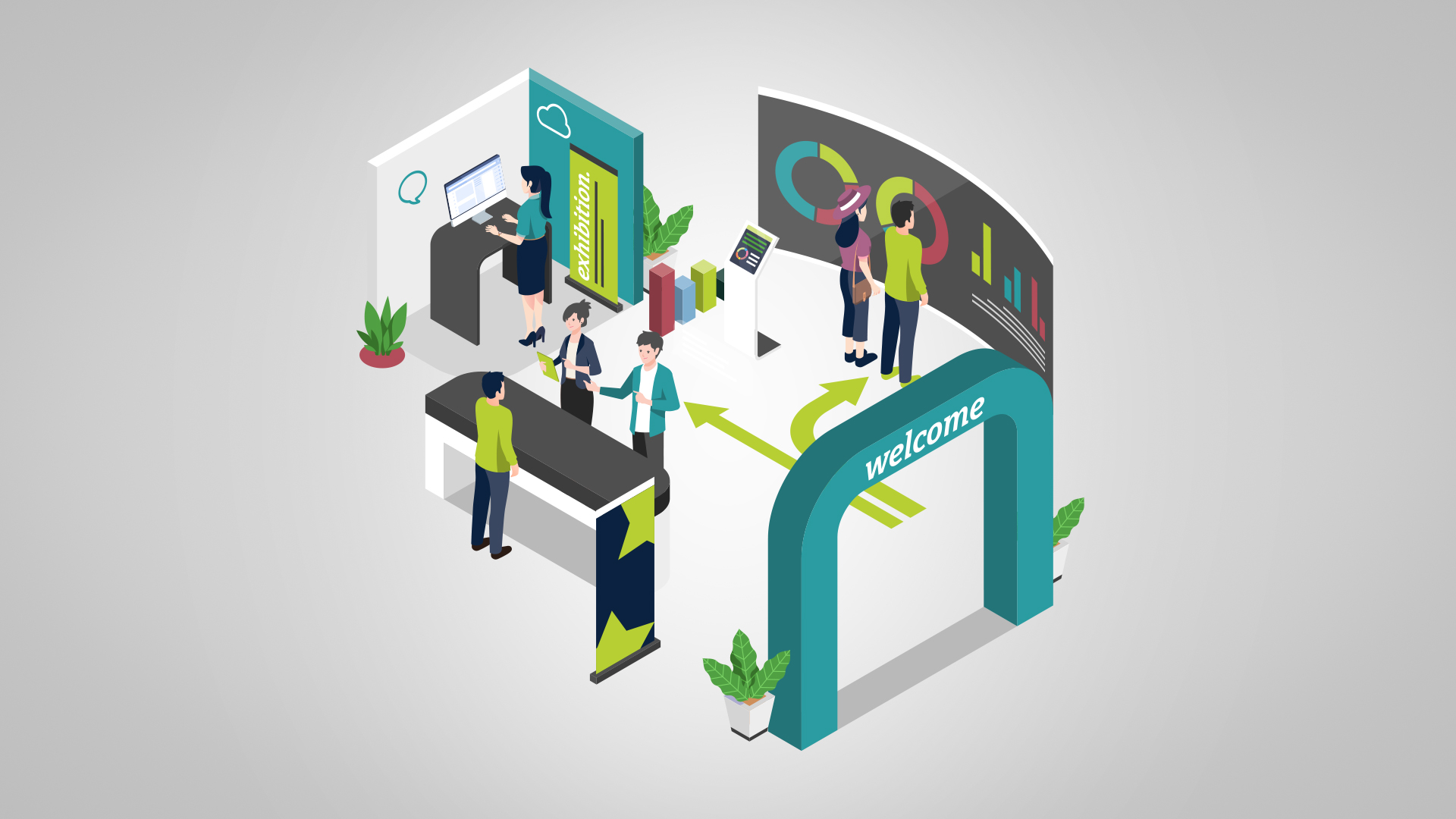

Building Brand Awareness
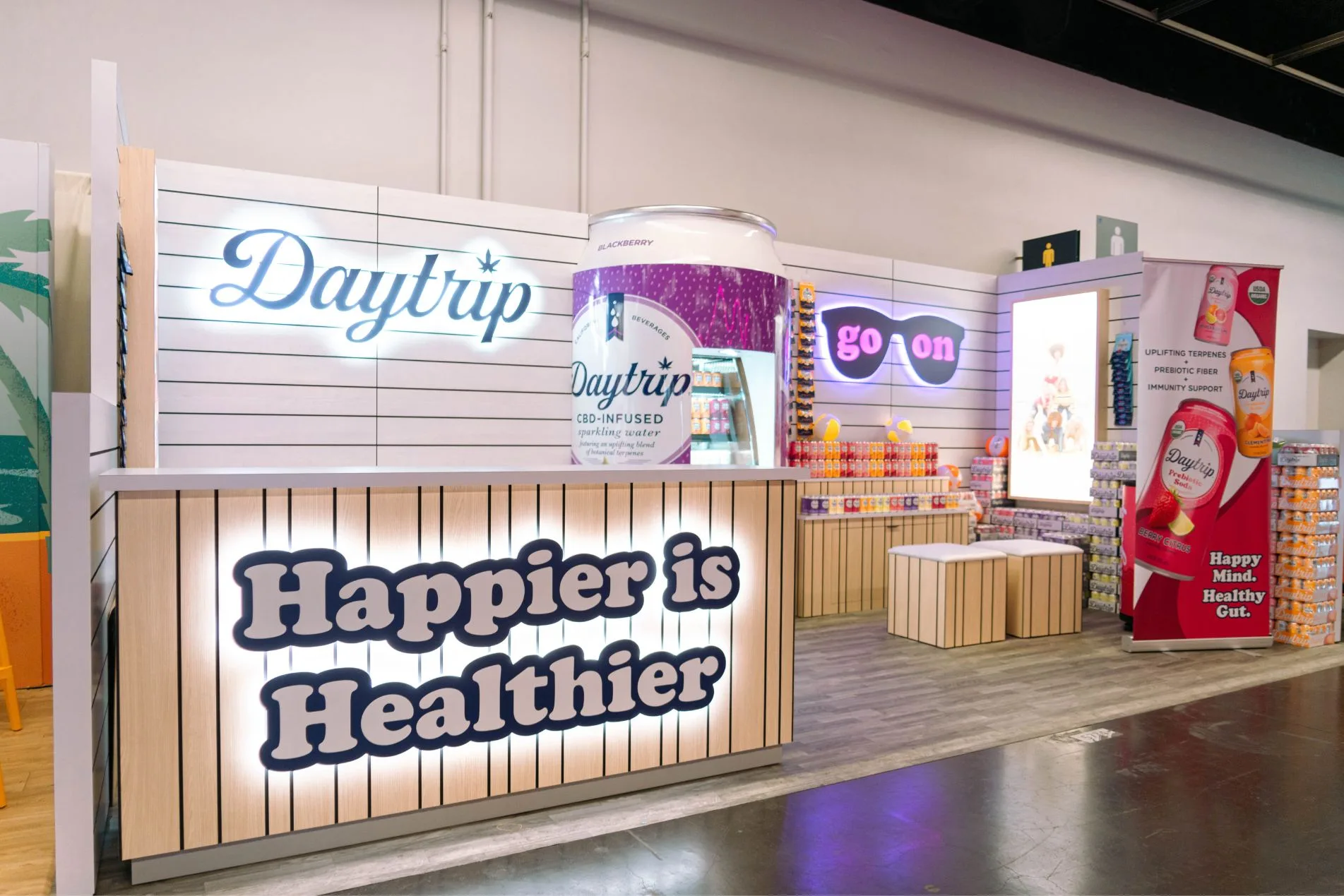
When awareness is the goal, consistency matters more than novelty. The booth should reinforce the same story people see online, in sales meetings, and in marketing materials.
Key considerations:
- Color, typography, and imagery
- Tone and overall impression
- What you want attendees to remember afterward
Many effective awareness booths are visually simple. They communicate clearly and avoid unnecessary explanation.
Generating Leads and Sales
Attracting attention is only the first step. The booth must also support real interaction.
Key considerations:
- Obvious entry points
- Clear reasons to stop
- Staff that are visible and approachable
Pre-show promotion can help, but the physical booth still needs to support conversation and data capture once people arrive.
Launching a New Product or Service
Product launches introduce additional complexity.
Key considerations:
- Space for demonstrations
- Power, AV, or special utilities
- Models, samples, or interactive elements
Venue and show regulations can affect what is possible. These should be confirmed early, not after design decisions are locked.
Core Components of a Custom Trade Show Display
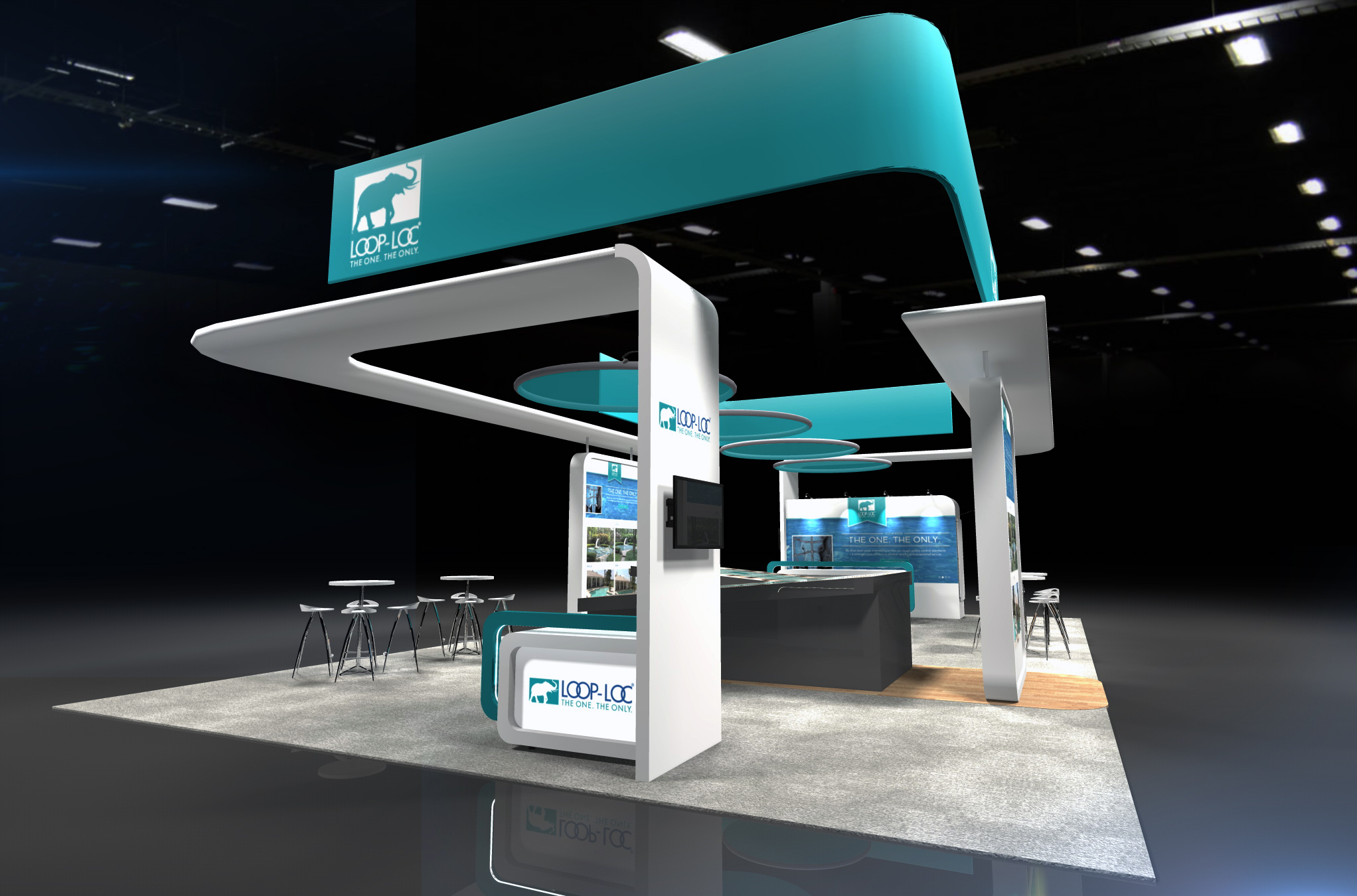
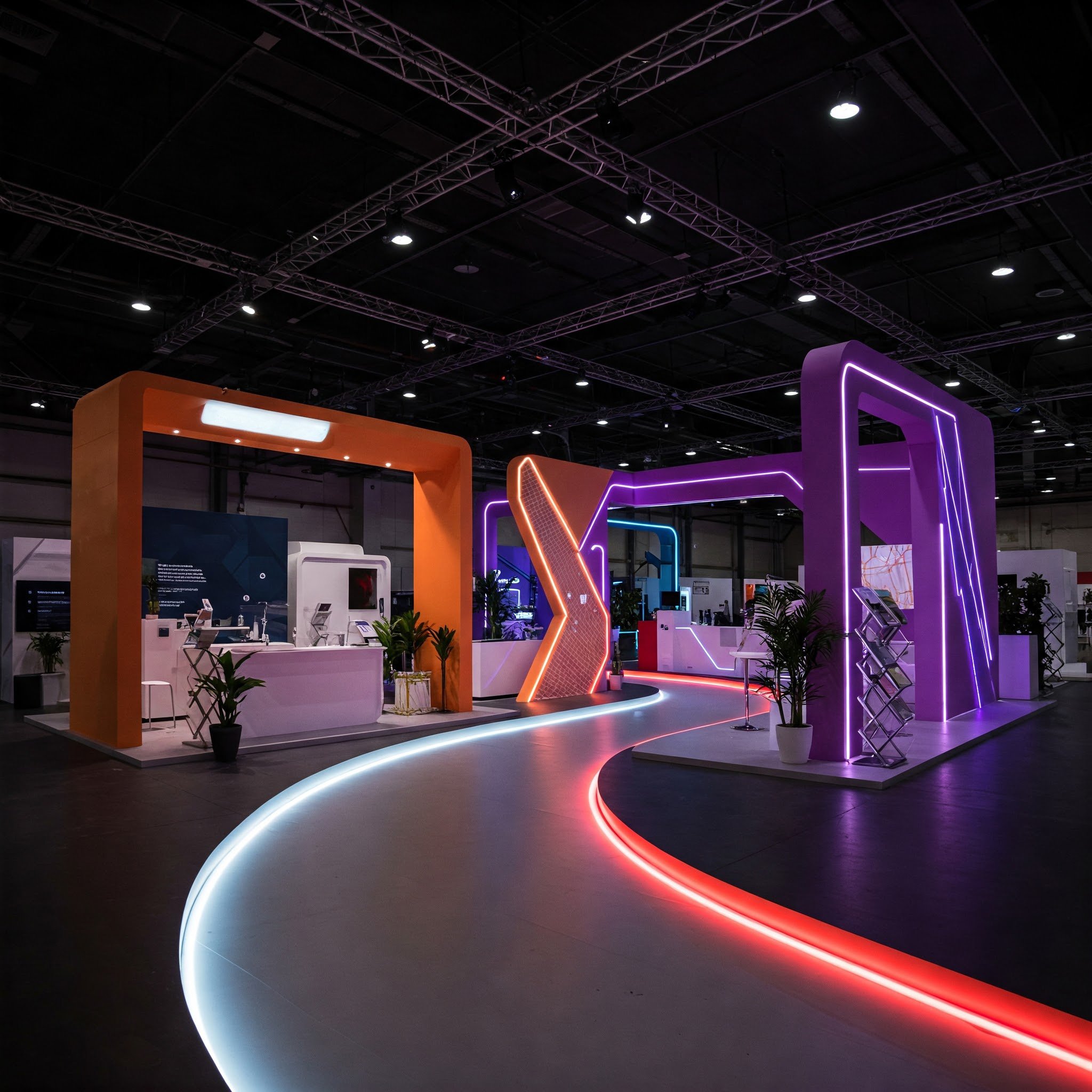
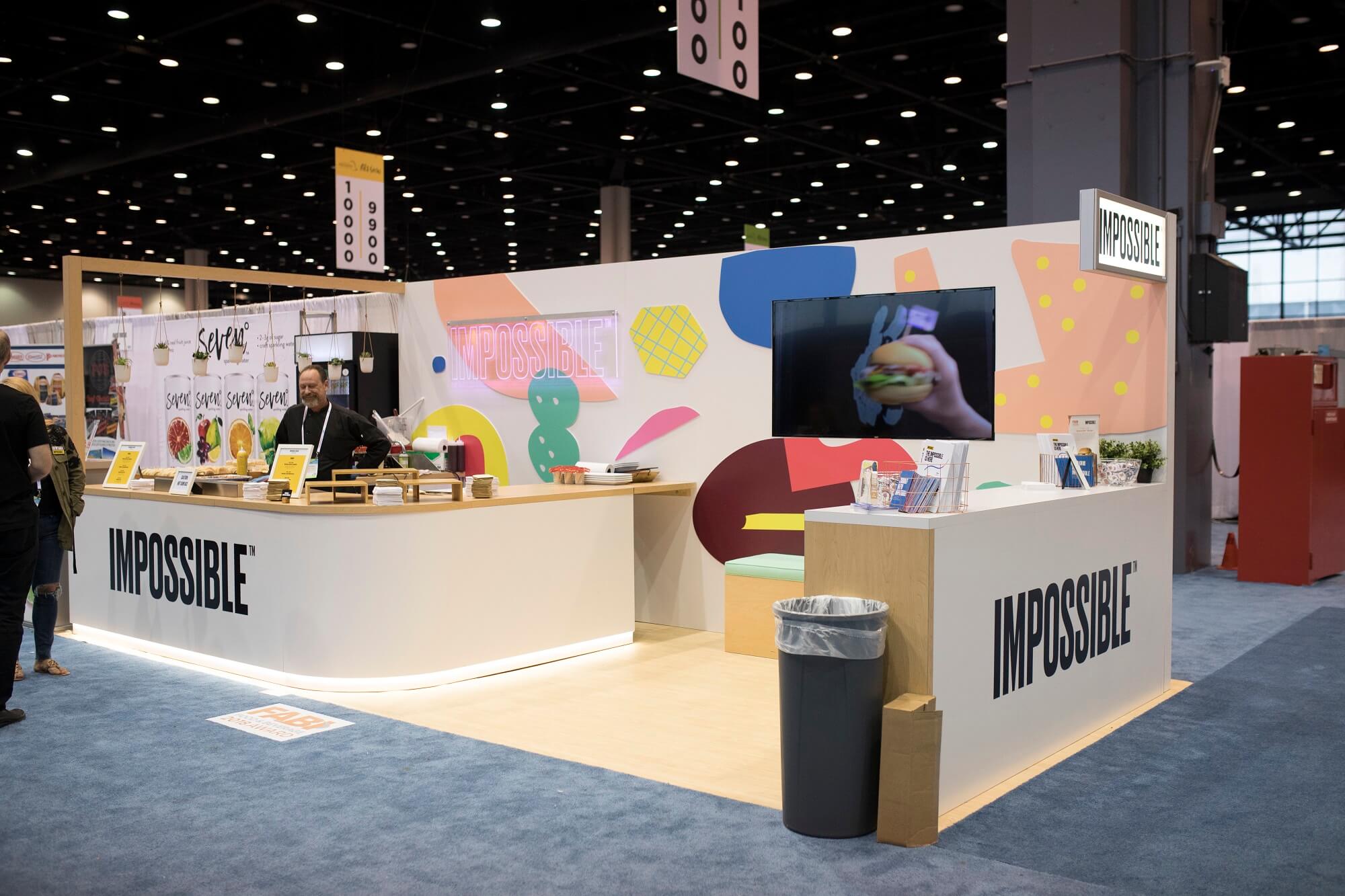
Structure and Layout
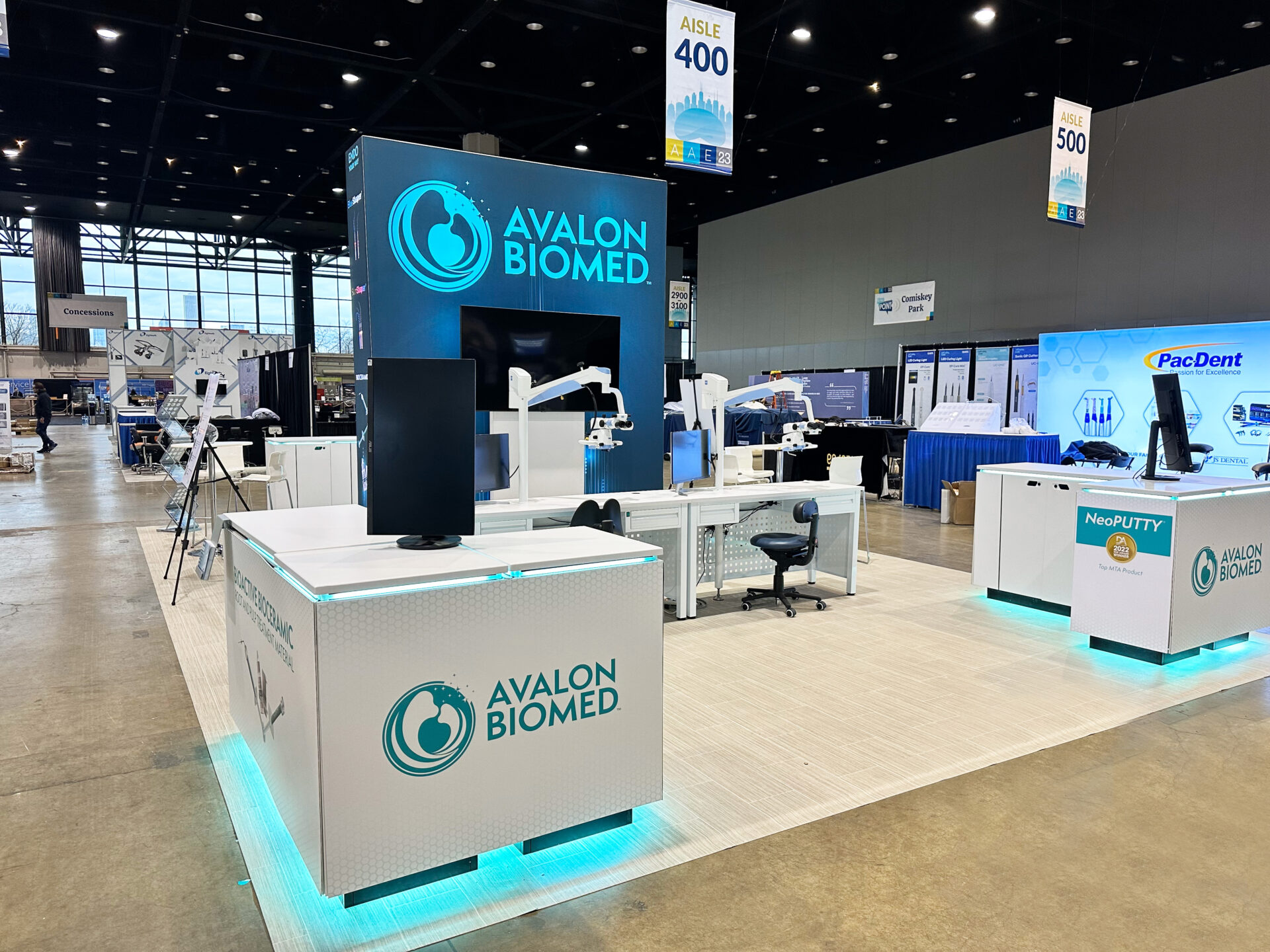
The structure defines how people enter, move through, and exit the booth. It also determines sightlines and perceived openness.
Poor layout decisions often result in:
- Staff blocking entry points
- Congestion near demos
- Awkward conversation zones
Good layout decisions support natural movement and make staff behavior easier.
Graphics and Messaging
Graphics should support fast comprehension. They are not meant to replace conversation.
Effective graphics:
- Prioritize one main message
- Use supporting copy sparingly
- Reinforce brand recognition
Overloading graphics with text often creates visual noise and slows engagement.
Lighting and AV
Lighting directs attention and sets mood. It can highlight products, signage, or architectural features.
AV can add motion and explanation, but it should be purposeful. Screens without a clear role often become distractions rather than assets.
Product Integration and Demos
Products should feel designed into the booth. When products are added late, they often disrupt flow or messaging.
Early planning helps ensure:
- Adequate space
- Proper power and support
- Clear sightlines for demos
Design Tradeoffs and Constraints
Every custom trade show display involves compromises. Understanding them early prevents frustration later.
Budget Allocation
Cost is influenced less by size alone and more by:
- Structural complexity
- Custom fabrication requirements
- AV integration
- Finish levels and durability
A smaller booth with complex features can cost more than a larger, simpler one.
Size Versus Efficiency
Larger footprints provide more space, but they also:
- Require more staff
- Increase logistical complexity
- Raise expectations for activity
Efficiency often matters more than square footage.
Customization Versus Flexibility
Highly tailored designs can limit reuse across different booth sizes or venues.
Teams should decide early whether:
- The booth needs to adapt to multiple footprints
- Components should break down or reconfigure
- Long-term use is a priority
There is no single correct answer. The right balance depends on your show schedule and goals.
How to Decide If a Custom Trade Show Display Is the Right Investment
This is often the most important question and the one teams struggle to answer honestly.
Custom displays tend to make sense when:
- Trade shows are a core marketing channel
- The brand story is stable
- Internal stakeholders agree on priorities
- The booth will be used repeatedly
They tend to underperform when:
- Shows are infrequent or inconsistent
- Messaging is still evolving
- Decisions are driven by aesthetics alone
- There is no plan for reuse
Moving to custom too early often results in expensive redesigns later. Waiting too long can limit performance and brand clarity.
Execution Reality: What Often Gets Underestimated
Booth Staffing
Staff behavior has a direct impact on results. In fact, the booth itself is often not the deciding factor in trade show performance — the people inside it are. Before you finalize who is going to the show, it is worth understanding the costs of sending the wrong people to trade shows, because a strong custom display with the wrong staff will underperform every time.
Effective booth staff:
- Understand the booth’s purpose
- Are comfortable starting conversations
- Know when to engage and when to step back
Design should support staff behavior, not fight it.
Show Selection and Booth Location
The largest show is not always the most productive.
Factors that matter:
- Audience relevance
- Competitive environment
- Floor placement relative to traffic patterns
Early planning improves location options.
Logistics, Storage, and Follow-Up
A strong booth without strong follow-up underperforms.
Key considerations:
- Consistent lead capture
- Note-taking during or immediately after conversations
- Timely follow-up after the show
These steps often determine whether the booth investment pays off.
Common Mistakes With Custom Trade Show Displays
- Designing before defining objectives
- Prioritizing appearance over function
- Overcrowding the space with messaging or features
- Treating staffing and follow-up as secondary concerns
Most underperforming booths fail for planning reasons, not design talent.
Next Steps and Deeper Dives
For more detail on specific decisions, these resources may be helpful:
- Show-Stopping Custom Trade Show Signs
- The Pros & Cons of Renting vs. Buying Custom Booths
- How to Make a $25K Exhibit Booth Look Like $50K with Smart Custom Fabrication
Frequently Asked Questions
How long does it take to design a custom trade show display?
Timelines vary based on complexity, approvals, and fabrication requirements. [Add typical timeline range here.]
Is a custom booth always better than a rental?
No. Rentals can be a better fit for testing shows or short-term needs.
Can a custom booth be reused or reconfigured?
Yes, if flexibility is considered during design.
How should trade show success be measured?
Lead quality, follow-up results, and alignment with objectives are more meaningful than raw traffic.