

The first trade show cost for a standard 10×10 booth at a US business-to-business event typically ranges from $15,000 to $40,000 all-in. That total can climb quickly for larger footprints, custom fabrication, major industry shows, expensive convention cities, or teams traveling from across the country. The critical word is all-in. Your first trade show does not cost whatever the booth quote says.
It costs whatever it takes to reserve the space, create the exhibit, ship it, install it, power it, staff it, promote it, dismantle it, and get everything home. That is where first-time exhibitors get blindsided. Understanding the full trade show budget breakdown before committing to a show is what separates teams that finish within budget from those who spend the weeks after the show explaining cost overruns.
A Realistic First Trade Show Cost Breakdown
This sample budget shows how a $25,000 first show might break down. It is not a universal quote, but it is a much stronger planning benchmark than starting with booth space alone.
| Expense | Sample Budget |
| Exhibit space and registration | $3,500 |
| Booth rental, graphics, and furnishings | $7,000 |
| Shipping and material handling | $3,000 |
| Installation and dismantling | $2,000 |
| Electrical, internet, and show services | $1,500 |
| Staff travel and lodging | $4,500 |
| Marketing, giveaways, and lead capture | $1,500 |
| Contingency fund | $2,000 |
| Estimated total | $25,000 |
A smaller regional event with a lightweight display and local staff could cost less. A national show with premium floor space, custom elements, multiple employees, and complex logistics could cost far more.
The first lesson is simple: the booth is only part of the bill.
1. Exhibit Space: Paying for the Rectangle
Your first confirmed expense will probably be the exhibit space.
A show organizer may charge based on booth size, location, exhibitor package, association membership, or sponsorship level. A basic inline space is usually the least expensive. Corner booths, island exhibits, entrance locations, and high-traffic areas may come at a premium.
You may also pay for:
- Exhibitor registration
- Staff badges
- Required insurance
- Directory listings
- Lead retrieval access
- Sponsorship packages
- Premium booth placement
Do not assume the space includes the physical booth. In many cases, you are buying an empty rectangle of carpet or concrete.
That rectangle still needs walls, graphics, lighting, furniture, storage, and a reason for people to stop.
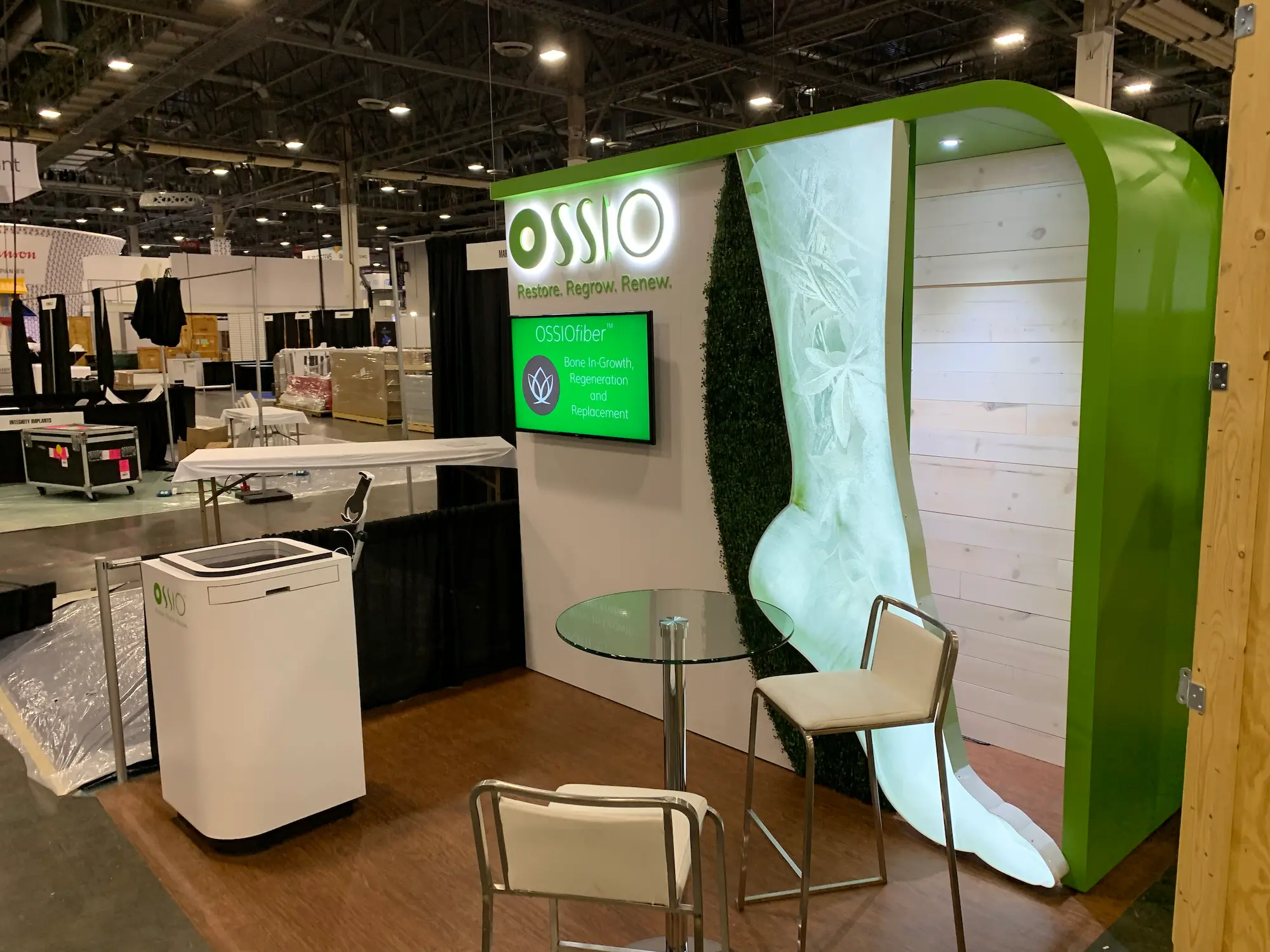
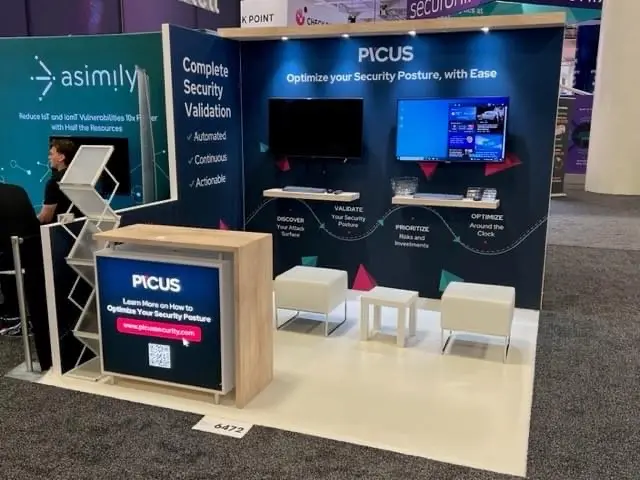
2. The Booth: Rental, Portable, or Custom?
For a first show, the booth decision has an outsized effect on the budget.
A portable display may work for a small event with simple messaging and limited product needs. A rental exhibit can provide a more professional environment without requiring you to purchase and store a full structure. A custom booth offers the most control, but it also requires more design, fabrication, engineering, and logistics.
For many first-time exhibitors, a rental or hybrid approach is the practical move. It lets the company test the show, learn what the sales team actually needs, and avoid locking into an expensive structure before it has a real performance benchmark.
That does not mean the booth should look generic.
Good rental design can still deliver bold graphics, strong lighting, product displays, meeting areas, and a clear brand presence. The goal is to spend with intent, not build the biggest object in the hall. The full comparison between rental, modular, and custom approaches is covered in custom vs modular trade show booths, where the decision comes down to how often the booth will be used and what the brand needs to accomplish at each event.
3. Shipping and Drayage: Two Different First Trade Show Cost Drivers
Shipping gets your exhibit materials to the venue.
Drayage, also called material handling, covers the venue-side process of receiving freight, moving it to your booth, storing empty containers during the show, and returning them when the event closes. These are separate charges, and first-time exhibitors frequently confuse them.
Your logistics budget may include:
- Freight to the advance warehouse
- Direct-to-show shipping
- Return shipping
- Crates and protective packaging
- Material handling
- Special handling fees
- Marshaling yard charges
- Expedited delivery
Weight matters. Timing matters. Packaging matters.
Smart exhibit engineering considers freight and handling before the structure reaches production. The full picture of how these logistics decisions affect total program cost is covered in the logistics side of custom trade show booths most exhibitors overlook, where drayage and material handling consistently catch teams off guard when they are left out of the original budget conversation.
4. Installation and Dismantling Labor
Some exhibits can be assembled quickly. Others require professional labor, specialized equipment, electrical work, rigging, or on-site supervision.
Your venue may also have rules governing what your own employees can carry, assemble, wire, or install. Labor requirements vary by location and event.
Installation and dismantling costs can increase because of:
- Tight setup windows
- Union labor requirements
- Overtime or weekend schedules
- Late freight arrivals
- Complicated structures
- Hanging signs
- Forklift requirements
- On-site changes
The cheapest booth on paper can become expensive if it requires a small army and half a day to assemble. Ask how the design affects labor before approving it. The installation considerations covered in what exhibitors should know about trade show booth installation belong in the first trade show cost conversation from day one, not after the structure is already built.
5. Electrical, Internet, and Show Services
The booth space usually does not come with a convenient outlet and free Wi-Fi.
Power, internet, cleaning, furniture, rigging, plumbing, waste removal, and other services may need to be ordered through approved show contractors. Freeman’s first-time exhibitor guidance identifies show services, flooring, furniture, audiovisual equipment, electrical service, lead retrieval, shipping, travel, and marketing as separate budget categories.
These charges may also have discount deadlines. Miss the early-order date, and the same service can cost more.
Build a list of everything that needs power before submitting service orders. Include monitors, laptops, lights, chargers, demonstration equipment, and anything else the team plans to plug in. Figuring it out on-site is not a budget strategy. It is a guaranteed way to pay premium rates for services that would have cost less with advance ordering.
6. Travel and Staffing
Your employees are another major cost category.
For each person attending, budget for:
- Flights or mileage
- Hotel rooms
- Meals and per diem
- Airport transfers
- Rental cars or rideshares
- Parking
- Branded apparel
- Training time
- Client dinners
Three employees staying four nights can create a substantial travel bill before anyone scans a badge.
Do not automatically send everyone who wants to attend. Staff the booth around expected traffic, scheduled meetings, product demonstrations, and sales roles.
Too few people creates missed conversations. Too many creates unnecessary travel costs and a crowded booth full of employees talking to each other.
7. Marketing and Lead Capture
Showing up is not a traffic strategy.
Your first trade show budget should include the work required to tell people you will be there and follow up after they leave. That may involve email campaigns, social content, appointment setting, printed collateral, promotional items, photography, video, or show sponsorships.
You may also need a lead retrieval device or software package. Do not leave this decision until the team reaches the show floor.
Choose what information the staff needs to collect, how leads will be qualified, and who will follow up after the event. A pile of badge scans is not automatically a return on investment. The framework for connecting booth activity to real business outcomes is covered in how to measure ROI on a custom trade show booth investment, where post-show lead quality and pipeline movement are the metrics that actually prove whether the first show investment was worth making.
8. Add a First-Timer Contingency Fund
Your first trade show has more unknowns than your fifth.
You do not yet know how much freight the exhibit will generate, how smoothly installation will go, what the staff will forget, or which last-minute request will arrive from leadership.
Set aside roughly 10 to 15 percent of the working budget for surprises.
That money may cover:
- Replacement graphics
- Rush shipping
- Extra labor
- Missing cables or adapters
- Additional furniture
- Damaged materials
- Last-minute printing
- Schedule changes
A contingency fund does not mean the plan is sloppy. It means the plan acknowledges reality.
How Early Should a First-Time Exhibitor Start?
A first-time exhibitor should ideally begin planning six to nine months before the event. A larger custom exhibit may require nine to twelve months.
Earlier planning gives you time to understand the exhibitor manual, compare booth options, meet service deadlines, coordinate internal approvals, reserve hotels, build marketing campaigns, and train the staff.
Compressed timelines usually reduce choices and increase rush costs.
You are already learning a new process. Do not make it harder by starting late. The earlier the planning starts, the more control the team has over design quality, material selection, budget alignment, and timeline protection. This is the same principle covered in the complete guide to trade show exhibit design, where compressed timelines consistently reduce options and increase costs across every phase of the program.
Is the First Trade Show More Expensive?
Often, yes.
The first event may include one-time costs for initial design, reusable graphics, shipping cases, lead capture setup, staff training, and marketing assets. You also lack historical data, which makes estimating labor, freight, traffic, and staffing more difficult.
The upside is that some of those investments can support future shows.
A flexible booth system, durable graphics, strong shipping cases, documented procedures, and a trained team can reduce the cost and chaos of the next event.
Think beyond opening day. Build the first program so it creates a smarter second one.
The Bottom Line
How much does a first trade show cost? A smaller professional program may begin around $15,000, while more ambitious exhibits can move well beyond $40,000. The exact total depends on the event, location, booth size, design, staff count, logistics, and level of promotion.
Do not ask only what the booth costs. Ask what the entire show will require, where the budget is most exposed, and what the company needs the event to accomplish. Your first trade show should not be cheap for the sake of being cheap. It should be controlled, intentional, and built to prove whether the opportunity deserves a second round. If you want a fabrication partner who helps first-time exhibitors build a realistic cost picture from the start, explore Highway 85’s trade show capabilities or connect with our team to start planning.