

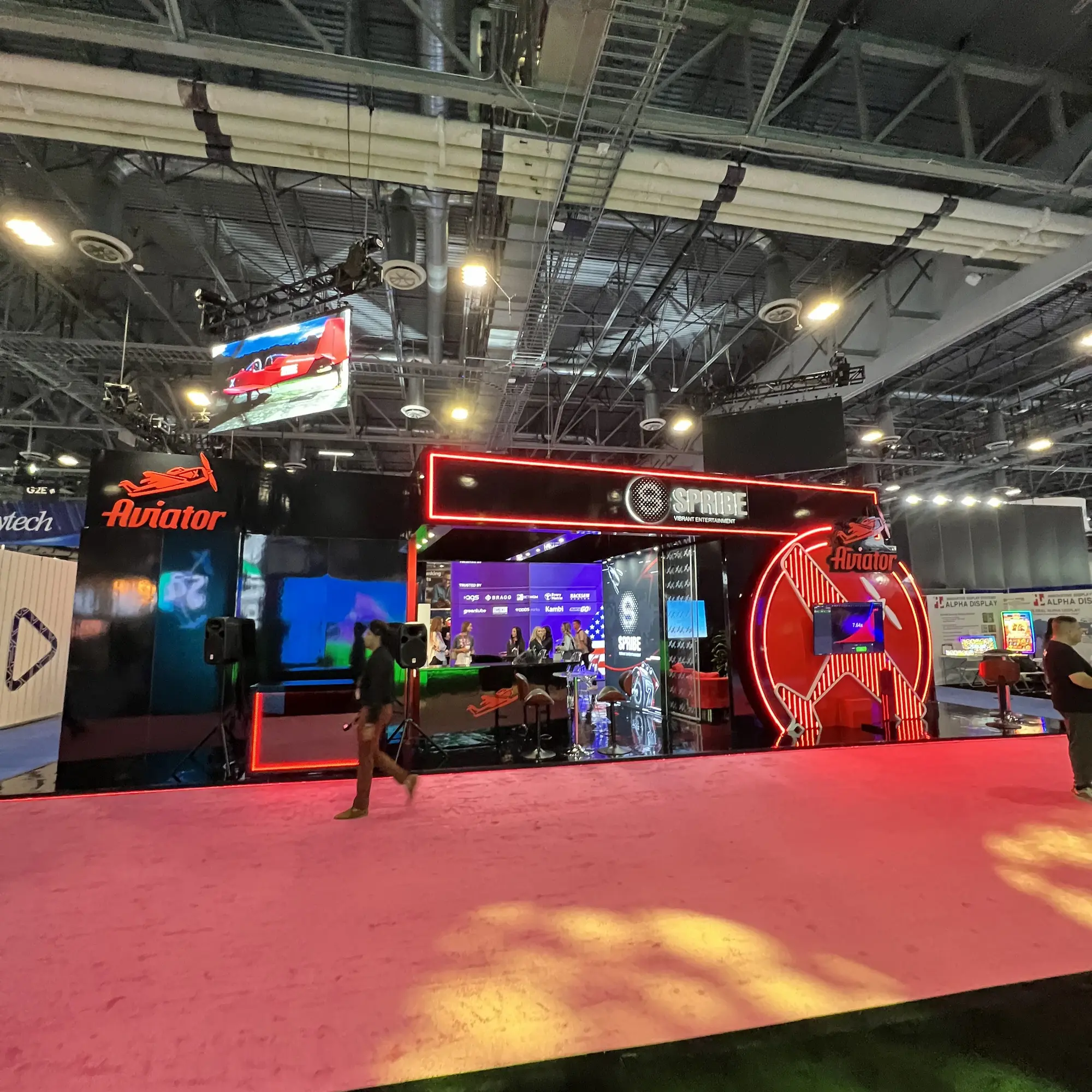
A custom trade show booth is one of the highest-leverage investments a brand can make in how it shows up in the physical world. It is not just a structure. It is a sales environment, a brand statement, a lead generation tool, and sometimes the first real impression a serious prospect has of your company.
The difference between a custom booth and a rental or modular setup is not just visual. It is strategic. A custom booth is designed around your goals, your products, your team, your audience, and your show calendar. Every square foot has a purpose. Every finish choice reflects the brand. Every layout decision supports the people working inside it.
This guide covers everything exhibitors need to know about custom trade show booths, from what they cost and how they are built to how to choose the right fabricator and measure the return on the investment.
Table of Contents
- What Is a Custom Trade Show Booth?
- When to Invest in a Custom Trade Show Booth
- What a Custom Trade Show Booth Actually Costs
- The Custom Trade Show Booth Design and Build Process
- Booth Types and Formats
- What Goes Inside a High-Performing Booth
- Logistics, Installation, and Storage
- Multi-Show Strategy and Long-Term Value
- How to Choose the Right Fabricator
- What Great Execution Actually Looks Like
- Frequently Asked Questions
What Is a Custom Trade Show Booth?
Custom trade show fabrication is the process of designing, engineering, building, finishing, transporting, and installing a trade show exhibit made specifically for your brand. It is not pulled from a catalog, rented from a vendor library, or forced into someone else’s template. It is built around your company from the first conversation.
A custom booth can include dimensional signage, branded walls and counters, product display areas, demo stations, integrated lighting, AV and technology, hospitality spaces, private meeting rooms, custom flooring, and storage built into the structure. The specific combination depends on the goals, the booth size, the show schedule, and the budget.
What makes a custom booth different from a rental or modular setup is control. You control the layout, the materials, the finishes, the experience, and the way every element reflects the brand. You are not adjusting your vision to fit a pre-existing system. The system is built around your vision.
That level of control matters on a trade show floor where competitors are ten feet away, attendees are moving fast, and the window to make an impression is measured in seconds.
When to Invest in a Custom Trade Show Booth
The right time to invest in a custom trade show booth is when the booth needs to do more than exist. Rental gets you on the floor. Custom gives you presence.
The signals that it is time to make the switch include attending multiple shows per year, scaling to a larger footprint, launching a major product or rebrand, needing private meeting space, wanting reusable assets across multiple events, and noticing that the current booth no longer matches where the brand is going.
If your sales team is working around the booth instead of working inside it, that is the rental ceiling. If leadership is asking for a stronger presence and the current setup cannot deliver it, that is the rental ceiling. If competitors are consistently outshining you on the floor, that is the rental ceiling.
Custom is not about spending more for the sake of it. It is about building something that performs at the level your brand and your team actually need.
What a Custom Trade Show Booth Actually Costs
Custom trade show booth cost is driven by every decision that makes the booth perform. Size, materials, engineering, graphics, technology, labor, freight, show services, storage, and timeline all affect the final number.
The biggest mistake exhibitors make is treating fabrication as the only cost. In reality, the booth build is one part of the total investment. A complete cost picture includes design, engineering, fabrication, graphics production, AV and lighting, flooring, furniture, shipping and freight, material handling and drayage, installation and dismantle labor, electrical and rigging orders, storage, and future refurbishments.
Understanding where the money goes before the first estimate helps teams make smarter decisions, protect margins, and present the investment to leadership with confidence. The most expensive booth is not the custom one. It is the one that costs a lot and does nothing.
The Custom Trade Show Booth Design and Build Process
The custom trade show booth design process works by moving from strategy to concept, then into design, estimating, engineering, fabrication, logistics, and installation. Every phase depends on the one before it.
It starts with discovery, where goals, audience, budget, show schedule, and approval process are established. Strategy then shapes the space before any visual decisions are made. Concept design turns the strategy into a visual direction with floor plans, renderings, material references, and lighting ideas.
Once design is approved, budget alignment ensures the concept is realistic. Trade show booth engineering then answers the practical questions: how the structure stands safely, how it breaks down for shipping, where power runs, how graphics attach, and what materials will hold up under real event conditions.
Fabrication follows, where components are built, graphics produced, finishes applied, and technology coordinated. Then logistics gets everything to the show, and installation brings the plan to life on the floor.
A practical planning window for a custom trade show booth is eight to twenty weeks depending on size and complexity. The earlier the process starts, the more control the team has over design quality, material selection, budget alignment, and timeline protection.
Booth Types and Formats
Different booth types carry different demands. Understanding what each format requires helps teams plan smarter from the beginning.
Large format booths
A large custom trade show booth at 20×20 or above has to function like a branded environment. It needs to attract traffic from multiple directions, support sales conversations, create memorable brand moments, meet show regulations, and hold up under real installation timelines. More space means more decisions, more stakeholders, and more opportunity to either create something powerful or something that feels scattered.
Island booths
Island booth design is open on all four sides, which means the booth needs to communicate quickly from every angle. There is no single front. Attendees may approach from any direction, so every side needs to answer three questions in seconds: what does this company do, why should I stop, and where do I go first. Overhead signage, open corners, and one strong traffic driver are the building blocks of a booth that performs from all four sides.
Smaller custom booths
A 10×10 or 10×20 space can still benefit from custom fabrication. In a smaller footprint, every square foot matters more, not less. Custom millwork, dimensional signage, integrated lighting, and purposeful layouts can make a small booth feel intentional and premium in a way that rental displays rarely achieve.
What Goes Inside a High-Performing Booth
The elements inside a custom booth determine how well it performs for the team using it and the attendees walking past it.
Materials and finishes
Trade show booth materials affect durability, shipping, installation, storage, reuse, maintenance, and how well the booth represents the brand. The right combination of wood, metal, acrylic, laminate, fabric, and specialty finishes creates a space that feels intentional from the aisle and holds up through multiple shows. The cheapest material is not always the smartest choice. The right material is the one that makes the brand look credible without wasting budget where nobody cares.
Lighting
Trade show booth lighting is one of the highest-ROI investments in a custom exhibit. It affects what attendees notice first, how long they stay, how clearly they understand your products, and how polished the brand appears on the floor. Materials, finishes, and fabrication details all look better when they are lit correctly. Lighting should be part of the design plan from the beginning, not treated as a last-minute add-on.
Technology and interactivity
Trade show booth technology works best when it is built into the structure from the start. Touchscreens, LED walls, interactive kiosks, product demo stations, lead capture tools, and lighting controls all require power, mounting, cable management, and engineering decisions that happen during fabrication. Technology that is placed on top of a finished booth rather than integrated into it almost always looks and feels like an afterthought.
What makes a booth memorable
The booths that stand out on the show floor combine clear messaging, smart traffic flow, quality fabrication, intentional lighting, and a real reason for people to stop. They are not always the biggest or loudest spaces. They are the easiest to understand, the easiest to enter, and the most aligned with what the brand needs to accomplish during the show.
Logistics, Installation, and Storage
The work that happens after fabrication is where many exhibitors get surprised. Planning for it early is what separates teams that show up confidently from those that are solving problems at the venue.
Logistics and drayage
Trade show booth logistics covers everything that happens after the booth leaves the shop and before it returns from the show. Freight, crating, advance warehouse deliveries, material handling, drayage, and return shipping all affect cost and timeline. Drayage alone, the cost of moving freight from the dock to the booth space, can shift the budget significantly if it is not scoped into the original plan. The best logistics plans are made during design, not after fabrication is finished.
Installation
Trade show booth installation affects more than appearance. It can change how well the booth supports the team during the show. A strong install plan accounts for venue labor rules, electrical and AV timing, crew scheduling, crate arrival windows, and show-site decision making. A booth that is engineered well should be easier to install, easier to troubleshoot, and easier to reuse across future shows.
Storage and maintenance
Trade show booth storage is part of what makes a custom exhibit a long-term investment rather than a one-show expense. What happens between events directly impacts how long the booth lasts and whether it shows up looking the way the team expects. A post-show inspection, labeled crates, organized hardware, and a documented repair list are what keep a booth show-ready without last-minute scrambling before the next event.
Multi-Show Strategy and Long-Term Value
A custom trade show booth should not be designed for one event. If the company attends multiple shows each year, the booth needs to work as part of a bigger program.
The best multi-show trade show booths are planned with flexibility from the start. Modular components, interchangeable graphics, reconfigurable layouts, and durable materials allow the booth to adapt to different footprints, audiences, and campaigns without a full rebuild between events.
Measuring trade show booth ROI requires connecting the booth to real business outcomes: leads generated, pipeline created, meetings booked, deals closed, and brand perception shifts. The strongest ROI measurement includes lead quality, sales pipeline, closed revenue, brand engagement, and long-term reuse value. A booth used across four shows will almost always have a stronger ROI story than a one-time build with no future plan.
The cost per show goes down every time the booth is reused. The value of the investment goes up every time it creates a qualified conversation, a closed deal, or a brand moment worth sharing.
How to Choose the Right Fabricator
The custom trade show booth fabricator you choose shapes the outcome of the project as much as the design does. Here is what to look for.
Trade show experience
A fabricator can be excellent at building things and still be the wrong fit for a trade show program. Trade shows have their own rules, pace, and pressure. The booth has to make sense for shipping, venue requirements, install schedules, electrical needs, storage, and show services. A beautiful booth that creates problems during setup is not a win.
Full-scope capability
The strongest fabrication partners can handle design translation, engineering, fabrication, graphics, logistics, and installation under one roof. When those pieces are split across multiple vendors, the agency or exhibit manager becomes the connector between everyone. That adds risk at every handoff point.
Clear communication
Communication is one of the easiest ways to tell whether a fabricator will be reliable. If early conversations are slow, vague, or confusing, that pattern rarely improves under production pressure. A reliable fabrication partner will tell you what is included, what is not, when decisions are due, and what could affect the budget or timeline before those problems appear.
Honest answers about tradeoffs
The 10 questions to ask a trade show booth fabricator before hiring are designed to reveal how a partner actually operates under real conditions. The answers to questions about engineering, timeline, regional support, and what happens after the booth is built tell you more than the portfolio does.
Red flags to watch for
Vague estimates with unclear inclusions, avoidance of shipping and install conversations, limited trade show-specific experience, and overpromising on tight deadlines are all signals that a fabricator may not be built for the pressure of a live show floor.
What Great Execution Actually Looks Like
Highway 85 has built custom trade show booths for brands across technology, food and beverage, healthcare, financial services, automotive, and professional services. The projects that work best share a pattern that has nothing to do with budget size.
They start with a clear brief. Every team member knows what success looks like before the first design concept is developed. The fabrication partner is involved early enough to influence decisions that still have room to move. Communication is structured from the first conversation, not improvised as the deadline approaches.
The booth that results from that process feels intentional on the show floor. Attendees understand the brand quickly. The sales team has the tools they need. The install goes smoothly because the engineering and logistics were planned for real conditions, not ideal ones.
A well-executed custom trade show booth project looks calm on the outside because the hard work was handled with discipline behind the scenes. The structure ships correctly, installs on time, and performs the way it was designed to perform. Leadership is satisfied. Marketing has content. Sales has a better place to work. The event manager has fewer fires to manage.
That is what separates a booth from an exhibit strategy. And it is what Highway 85 builds toward on every project, regardless of the footprint, the budget, or the show.
Frequently Asked Questions
What is a custom trade show booth?
A custom trade show booth is a fully bespoke exhibit designed and fabricated specifically for one brand. Unlike rental or modular booths, every element, including the layout, structure, materials, finishes, graphics, and technology, is built around the brand’s goals, products, and show strategy. The result is a booth that feels intentional rather than assembled.
How much does a custom trade show booth cost?
Cost depends on booth size, materials, complexity, finishes, technology, shipping, labor, show services, and storage. A simple custom element may cost far less than a full custom island exhibit. Large exhibits with custom structures, integrated lighting, AV, private meeting rooms, and premium finishes require a larger investment. The total cost includes more than fabrication: freight, drayage, installation labor, and show services can add meaningfully to the final number.
How long does it take to build a custom trade show booth?
A practical planning window is eight to twenty weeks depending on size and complexity. Smaller custom booths may fit into the shorter end of that range. Larger booths, technology-heavy builds, and projects with multiple approval layers need more time. The biggest timeline risks are slow internal approvals, late design changes, and unclear goals rather than shop production speed.
What is the difference between a custom and modular trade show booth?
A custom booth is built around one brand’s exact specifications. A modular booth uses adaptable components that can be reconfigured, rescaled, and reused across different events. Custom offers more creative control and stronger brand presence. Modular offers more flexibility and budget efficiency over multiple shows. Many brands benefit from a hybrid approach that combines custom brand moments with modular systems for the rest of the structure.
When should a company stop renting and invest in a custom booth?
When the booth needs to do more than exist. If your team is working around the booth instead of inside it, if your competitors are consistently outshining you, or if your sales goals require a space that rental cannot deliver, it is time to invest in custom. Trade shows attended multiple times per year, major product launches, and rebrands are all strong triggers for making the switch.
How do you measure ROI on a custom trade show booth?
ROI measurement should connect the booth to real business outcomes: leads generated, pipeline created, meetings booked, deals closed, and brand engagement metrics. The strongest ROI stories include lead quality, post-show pipeline movement, closed revenue, and long-term reuse value. Defining what success looks like before the show makes the measurement conversation after the show far easier to have.
How do you design a custom trade show booth that drives traffic?
Start with a clear strategy that defines what the booth needs to accomplish. Design around how people move, not just how the space looks in a rendering. Keep the message easy to understand from the aisle. Create one strong reason to stop. Build open entry points and clear traffic flow through the space. Plan lighting and materials to add depth and direct attention to the right areas.
What should exhibitors know about booth installation?
Installation affects timing, budget, safety, and the first impression the booth makes on the floor. Venue labor rules, electrical and AV requirements, crate arrival deadlines, and show-site decision-making all need to be planned before the team arrives. A booth engineered well is easier to install, troubleshoot, and reuse. Installation should be part of the design conversation, not a detail figured out at the venue.
How do you store and maintain a custom trade show booth between shows?
Every component should be labeled, protected, and placed in the correct crate or case after each show. A post-show inspection should flag damaged pieces, outdated graphics, missing hardware, and anything that needs repair or refresh before the next event. A booth partner who manages storage as part of the program removes the last-minute scrambling that comes when nobody has tracked what is in each crate.
What makes one custom trade show booth fabricator better than another?
Experience with the specific demands of trade show production, full-scope in-house capabilities, clear and proactive communication, honest answers about tradeoffs, and a track record of finished environments that perform under real show floor conditions. The portfolio tells you what they can produce. The process tells you whether they can be relied on when the pressure is high and the deadline is fixed.
Ready to Build a Custom Trade Show Booth That Works?
A custom trade show booth is one of the most powerful tools a brand has for showing up with confidence, starting better conversations, and making the trade show investment easier to justify. When it is planned strategically, fabricated precisely, and executed with care, the result is an exhibit that performs before the doors open and long after they close.
Highway 85 has built custom trade show booths for brands across industries and footprints, from tight 10×20 inline spaces to large-scale island exhibits and multi-show touring programs. We bring the fabrication expertise, the engineering discipline, the logistics capability, and the communication standards that turn ambitious booth concepts into finished, polished environments that work.
Connect with the Highway 85 team to start planning your next custom trade show booth.