

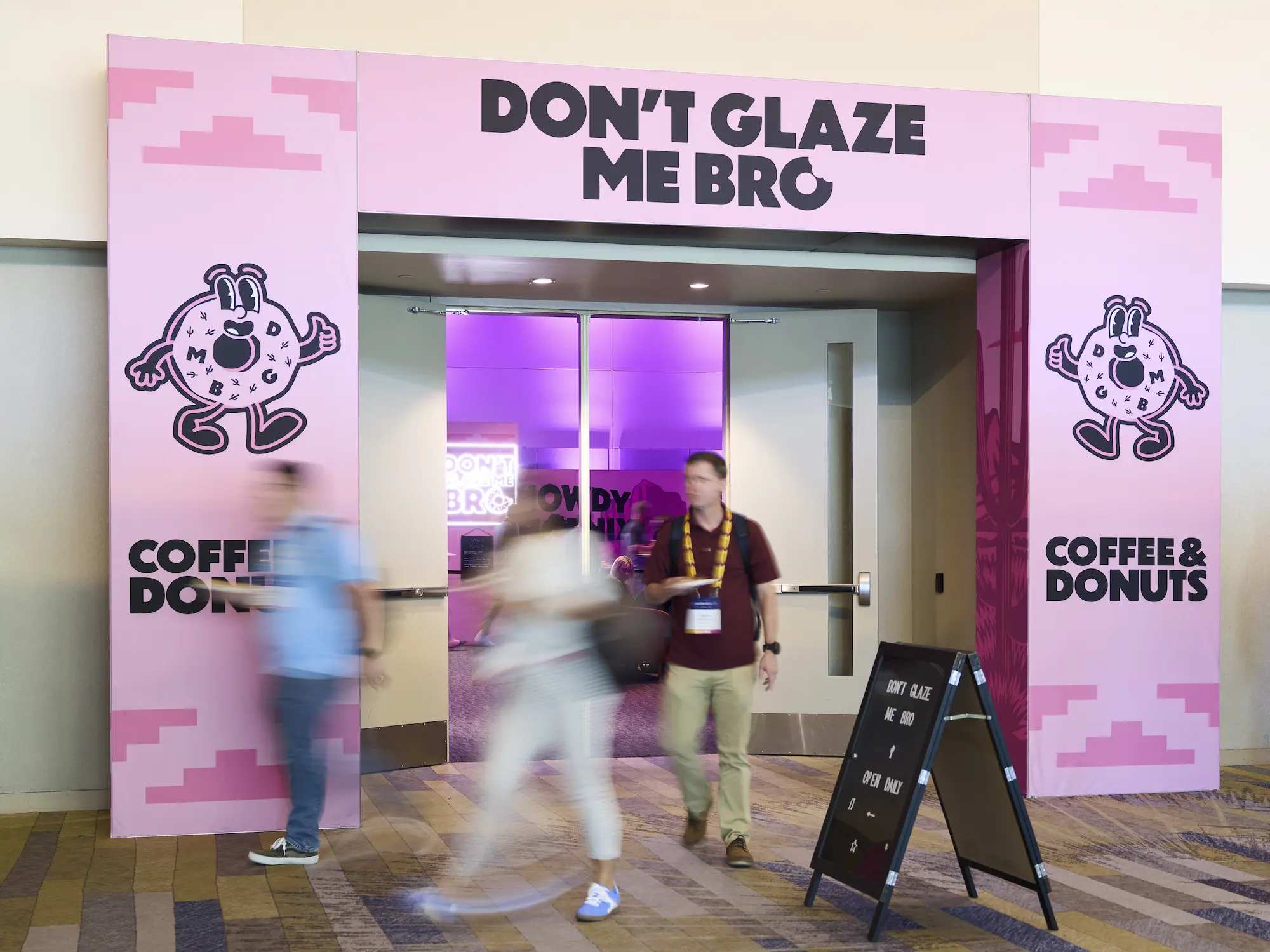
The first signs attendees see set the tone for the entire event. If guests arrive and immediately understand where registration, sessions, and main areas are located, the event feels organized. Strong entrance signage is also one of the first opportunities to reinforce your corporate event theme, connecting attendees to the brand story before they even reach registration.
Clear signage reduces confusion, prevents congestion, and helps attendees move confidently through the venue. When it is done right, no one thinks about it. They simply know where to go.
That leads to a practical question planners often overlook: How does signage design affect attendee experience at corporate events? The answer is simple. It shapes how easy the event feels to navigate from the moment someone walks in.
First Impressions Start at the Entrance With Corporate Event Signage
The first signs attendees see set the tone for the entire event. If guests arrive and immediately understand where registration, sessions, and main areas are located, the event feels organized.
Entrance signage should accomplish three things quickly:
- Confirm attendees are in the right place
- Direct them to registration or check-in
- Introduce the event branding
Large format welcome signage and clear directional arrows eliminate the awkward moment where guests stand in a lobby trying to figure out what to do next.
Directional Signage Keeps People Moving
Crowds naturally follow visual cues. Without them, people stop, hesitate, and ask staff for directions. This slows everything down.
Directional signage should appear at every decision point where someone has to choose a direction. These include hallway intersections, escalators, elevators, and entrances to session areas.
Good directional signs focus on clarity:
- Large readable text
- Simple arrows
- Limited information per sign
When attendees can read a sign from a distance, they make decisions while walking instead of stopping.
Session and Room Identification Prevents Confusion
One of the most common frustrations at conferences is finding the right breakout room. Small printed signs or unclear room labels force people to double-check schedules or ask staff for help.
Session signage should be highly visible and consistent throughout the event space. Large room identifiers outside each session space reduce confusion and prevent groups from gathering in the wrong place.
Digital screens can also be helpful for displaying live session information, speaker names, and schedule updates.
Wayfinding Supports the Entire Event Experience
This is where the answer to how signage design affects attendee experience at corporate events becomes clear. Strong signage removes friction from the attendee journey. People spend less time searching for rooms and more time engaging with the event. It is also a core component of experiential design for corporate events, where every physical element works together to shape how attendees feel moving through a space.
Make Corporate Event Signage Part of the Event Plan
Signage and wayfinding should be planned early in the event design process. Waiting until the final production phase often leads to rushed solutions and confusing layouts. Build signage into your corporate event planning timeline from the start so it gets the same attention as staging, AV, and session content.
Map attendee movement first. Identify the moments where people need guidance. Then design signage that solves those moments clearly. For events with complex environments, signage works best when it is part of a broader custom builds for corporate events strategy, where fabrication, wayfinding, and branded environments are all planned together.
When signage is done well, attendees may never notice it. But they will feel the difference.
Want to create an event environment that works as well as it looks? Connect with the Highway 85 team to start planning signage and wayfinding that keeps your attendees moving and your event running smoothly.