


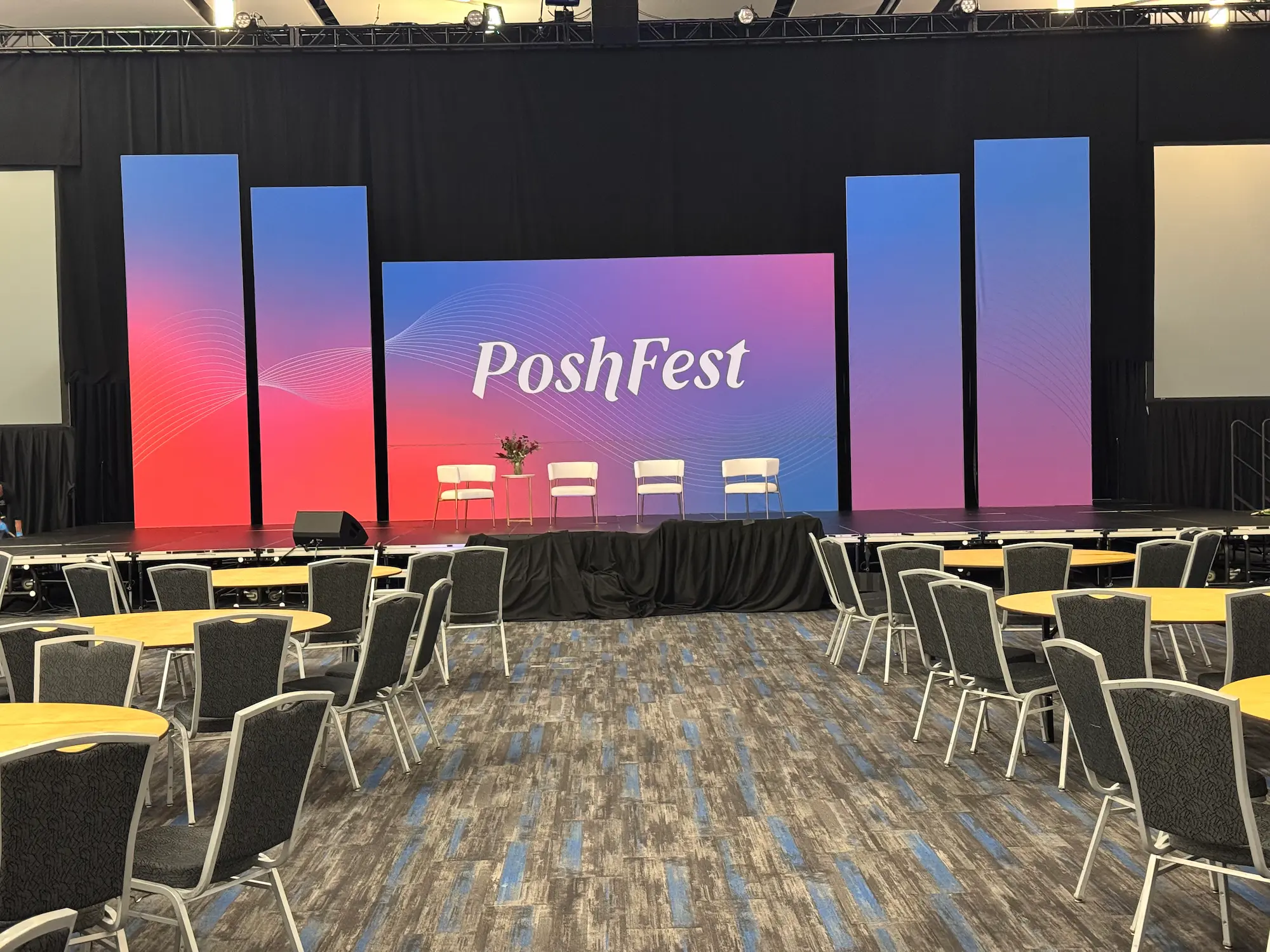
An all-in-one fabrication partner versus piecemeal vendors is one of the most practical decisions an agency makes when production gets complicated. Trade show exhibits, corporate event builds, branded environments, and permanent interior projects all involve design details, materials, timelines, budgets, approvals, logistics, and install schedules moving at the same time.
For agencies managing multiple clients or high-visibility builds, an all-in-one fabrication partner often reduces risk, simplifies communication, and keeps the final experience more cohesive. Understanding the difference between the two models is the same kind of foundational decision covered in how to evaluate a fabrication partner before putting your name on the work.
What Is an All-In-One Fabrication Partner?
An all-in-one fabrication partner can support multiple parts of a build under one roof. Instead of hiring separate vendors for fabrication, graphics, finishing, logistics, storage, and install coordination, the agency works with one team responsible for moving the project from concept to completion.
This can include:
- Custom fabrication
- Trade show exhibits
- Corporate event builds
- Scenic and dimensional elements
- Branded interiors
- Graphics and finishes
- Engineering support
- Logistics and installation coordination
- Storage and refurbishment
For agencies, the biggest advantage is not just convenience. It is control. When fewer vendors are involved, there are fewer opportunities for details to get lost between teams. This is the same principle behind white label fabrication, where the agency owns the client relationship and needs a single accountable production partner behind the scenes.
What Happens With Piecemeal Vendors?
A piecemeal vendor model means the agency hires separate partners for different parts of the project. This can work well when each scope is simple, highly defined, and not dependent on the others.
The challenge comes when the project has complexity. If one vendor handles fabrication, another handles graphics, another handles AV, and another handles install, the agency becomes the connector between everyone. That often means more meetings, more follow-ups, more file handoffs, and more chances for misalignment. According to EDPA, multi-vendor production models are among the top contributors to timeline slippage and budget overruns in experiential and trade show projects.
Piecemeal production can create issues like:
- Inconsistent finishes or build quality
- Confusion over who owns a problem
- Delays caused by one vendor waiting on another
- Extra project management time for the agency
- More difficult budget tracking
- Last-minute install surprises
- Less cohesive execution
For agency teams, this matters because the client usually does not see the vendor structure behind the scenes. They see the final result and associate it with the agency’s work. This is exactly the accountability gap that makes fabrication quality control for agencies so important, since managing it across multiple vendors is significantly harder than managing it through one partner.
Why Agencies Choose an All-In-One Fabrication Partner
Agencies are often responsible for protecting the client relationship while relying on outside teams to execute. That creates pressure. The fabrication partner has to be more than a shop. They need to act like an extension of the agency.
This is especially important for reseller and agency teams whose reputation depends on work they are not physically producing themselves. Their needs often include flawless execution, strong communication, trust, regional support, and the ability to handle multiple client projects at once.
An all-in-one partner can help agencies:
- Keep communication centralized
- Preserve the original creative vision
- Identify production challenges earlier
- Build more accurate timelines
- Reduce vendor handoff issues
- Maintain consistency across multiple projects
- Scale without rebuilding the vendor list every time
These are the same capabilities that separate a strong fabrication partner for agencies from one that creates more work than it solves.
When Multiple Vendors Can Still Make Sense
There are times when multiple vendors are the right choice. If the project requires a highly specialized service, a local partner for a small install, or a client-mandated supplier, piecemeal support may be necessary.
The key is to be clear about ownership. Before production begins, agencies should define who manages timelines, who approves final details, who handles problem-solving, and who communicates with the client. Without that structure, the agency can end up managing the gaps between vendors instead of leading the project.
Quick Checklist: Which Model Is Right for Your Agency?
Use one fabrication vendor when:
- The project has multiple moving parts
- The client expects a polished, cohesive final result
- Timeline control is critical
- Your team is managing several clients at once
- The build includes custom elements, finishes, logistics, or install coordination
- You need one accountable production partner
Use multiple vendors when:
- The scope is simple and clearly divided
- A specialty vendor is required
- The client already has preferred suppliers
- Each vendor’s role can be managed without slowing the project down
Final Takeaway
For agencies asking, “Should agencies use one fabrication vendor or multiple?”, the practical answer is this: use the model that reduces risk and protects the client experience.
For complex trade shows, corporate events, branded environments, and permanent interiors, an all-in-one fabrication partner usually gives agencies better control, cleaner communication, and more consistent execution. Piecemeal vendors can work, but only when the scope is simple and the agency has the time to manage every handoff. If you are ready to work with a fabrication partner who handles the full scope under one roof, connect with the Highway 85 team to start the conversation.