


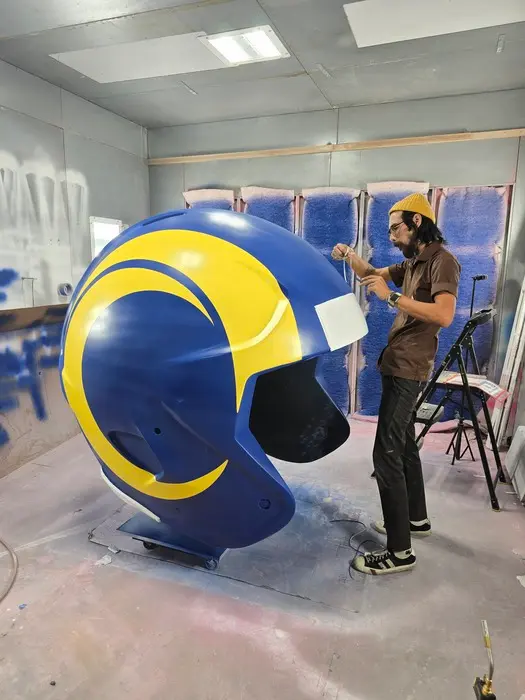
A successful agency fabricator partnership looks like this: the agency keeps control of the client relationship and creative vision, while the fabricator protects the execution behind the scenes. The right partner does not just build what was sent over. They help translate the idea into something that can be engineered, fabricated, transported, installed, and trusted in front of the client.
For agencies managing branded environments, trade show activations, corporate experiences, or permanent installs, the best fabrication partner feels like an extension of the team. This is the same relationship described in why every creative agency needs a fabrication partner they can trust, just illustrated through the lens of what it actually looks and feels like when everything is working.
That is the difference between a vendor and a true fabrication partner.
The Setup: An Agency Has the Big Idea, but Needs the Right Build Partner
Picture a common agency scenario.
A client comes in with a major opportunity: a branded experience tied to a product launch, national sales meeting, trade show, or customer-facing event. The agency has the creative direction, the messaging, the renderings, and the relationship. The client is excited. The timeline is tight. The expectations are high.
Then reality starts to show up.
Will the design actually stand? Can it be built within budget? What materials make sense? How will it ship? Who is handling installation? What happens if the venue has load-in restrictions? Can the finish quality match the renderings? What happens when the client asks for changes two weeks before install?
This is where the agency-fabricator relationship either becomes a source of confidence or a source of stress.
For an agency, the risk is not just whether the structure gets built. The risk is reputation. If the fabrication misses the mark, the client does not separate the agency from the shop. They see one failed experience. That is why agency partners need more than a capable builder. They need a team that understands how to protect the agency’s name while solving production challenges in real time.
This lines up closely with the pressures agencies face when protecting their reputation when fabrication is out of their hands. The risk is not just whether the structure gets built. The risk is that the client does not separate the agency from the shop. They see one failed experience. That is why the agency fabricator partnership matters so much.
What a Strong Agency Fabricator Partnership Looks Like Early in the Process
The first sign of a strong fabrication partnership happens before anything is built.
A good fabrication partner reviews the concept with both creativity and practicality. They are not there to water down the idea. They are there to make sure the idea survives contact with materials, timelines, labor, freight, and install conditions.
That might include:
- Recommending a lighter material that still gives the same visual impact
- Adjusting a connection point so the structure is safer and easier to install
- Identifying where custom fabrication is worth the spend and where a simpler solution will work
- Building a production schedule that accounts for approvals, engineering, finishing, packing, and delivery
- Giving the agency clear language they can use when presenting options to the client
The best partners make the agency look more prepared. They help the agency walk into client conversations with answers, not guesses. This is especially valuable when the agency does not have deep fabrication expertise in-house, which is exactly the scenario where the 10 questions every agency should ask a new fabrication partner help agencies identify whether a partner can actually fill that role.
Communication Is the Real Case Study
In a successful agency fabrication partnership, communication is not just frequent. It is useful.
The fabricator does not bury the agency in shop language or vague updates. They provide clear checkpoints, realistic timelines, and direct answers. If there is a problem, they raise it early and bring options with it.
For example, instead of saying, “This material may not work,” a strong partner says:
“Based on the finish you want and the install schedule, this material creates risk. We recommend switching to this alternative. It keeps the same look, reduces weight, and gives us two extra days in finishing.”
That kind of communication gives the agency something they can act on. It also helps them manage their client with confidence.
This matters because agencies are often caught between two pressures. A good fabrication partner helps bridge that gap without making them feel exposed. The same structured communication discipline covered in why agency fabricator communication makes or breaks the project is what creates that confidence in practice.
Practical Constraints That Shape the Agency Fabricator Partnership
A successful partnership is honest about constraints from the start. Most fabrication challenges come down to four things: budget, timeline, materials, and logistics.
Budget: A custom build can usually be adjusted, but every decision has a tradeoff. A strong partner helps the agency understand where the dollars are going and where value can be engineered without hurting the experience. This is the same cost visibility covered in how to scope a fabrication project when you are not the one building it.
Timeline: For custom fabrication, the clock starts well before the shop floor. Time is needed for final drawings, client approvals, procurement, fabrication, finishing, quality control, crating, freight, and install. When agencies bring in the fabrication partner early, there is more room to solve problems before they become expensive.
Materials: The best material is not always the most premium material. It is the material that fits the design intent, budget, durability needs, venue requirements, and transportation plan. A fabrication partner should help the agency balance visual impact with real-world performance.
Logistics: A beautiful build can still fail if it cannot get through a loading dock, fit in a freight plan, assemble quickly, or meet venue rules. Successful partnerships account for install conditions before production begins.
These constraints are not creative blockers. Managed well, they are what make the creative work possible. The Experiential Designers and Producers Association publishes production planning standards that help agencies and fabricators align on constraints before production begins, reducing the most common sources of cost overruns and install surprises.
The Moment It Clicks: Install Day Feels Controlled
The clearest sign of a successful agency-fabricator partnership is what happens on-site.
Install day should not feel like everyone is discovering the project for the first time. The parts should be labeled. The crew should understand the plan. The agency should know who to call. The client should see progress, not panic.
When the partnership is right, the fabrication team has already thought through the pressure points. They know what needs to happen first, what can happen in parallel, and what details need extra attention before the client walks the floor.
For the agency, this creates a major advantage. They can focus on the client experience, brand details, programming, photography, social moments, and stakeholder management. They are not stuck chasing missing hardware or explaining why a scenic element does not match the approved design.
That is what a strong behind-the-scenes partner does. They give the agency space to lead.
What the Client Sees
The client sees a polished experience.
They see a booth, environment, display, or activation that looks like the renderings they approved. They see clean finishes, thoughtful details, and a space that supports the message. They see the agency as organized, capable, and worth hiring again.
They probably do not see the engineering revisions, material swaps, late-stage coordination, freight planning, or install sequencing that made it happen.
And that is the point.
A successful fabrication partner does not need to be the hero in the room. They need to help the agency be the hero to the client.
What the Agency Gains From a Strong Agency Fabricator Partnership
When the agency-fabricator partnership gets it right, the agency gains more than one successful project.
They gain a repeatable production relationship. They gain a partner who understands how they present work, how their clients make decisions, where they need support, and how to protect their reputation. Over time, that creates speed and trust.
Future projects get easier because the agency does not have to start over with a new vendor every time. The fabricator already knows the agency’s standards, communication style, and expectations. The agency already knows the fabricator can execute.
That is where the relationship becomes especially valuable. It supports growth. It helps agencies scale fabrication capacity, say yes to larger opportunities, and take on work outside their usual region or internal capability without rebuilding their vendor list every time.
The Bottom Line
A successful agency fabrication partnership looks calm on the outside because the hard work is being handled with discipline behind the scenes.
The agency brings the client relationship, creative direction, and strategic vision. The fabricator brings engineering, material knowledge, production planning, logistics, and install experience. When both sides work as one team, the result is a smoother process, a stronger final product, and a client who trusts the agency even more.
For agencies, the right fabrication partner is not just there to build. They are there to protect the idea, protect the timeline, protect the budget, and protect the agency’s reputation. That is what it looks like when the partnership gets it right. If you are ready to build that kind of relationship with a fabrication partner who operates as a true extension of your team, connect with the Highway 85 team to start the conversation.