

How to Plan, Design, Staff, and Maximize Your Trade Show Booth for Real ROI
Trade show etiquette is one of the most overlooked drivers of trade show success. Booth space, travel, custom exhibits, graphics, giveaways, staffing, it adds up fast.
But when done right, trade shows can become one of your highest-performing marketing channels.
The difference between a booth that generates real pipeline and one that barely breaks even comes down to strategy. Not luck. Not foot traffic. Not the size of your LED wall.
This guide covers the complete framework for trade show success, from pre-show planning and booth design to staff etiquette, lead capture, and post-show follow-up.
If you’re looking for actionable trade show tips and best practices that actually move the needle, this is it.
Part 1: Pre-Show Strategy: Winning Before the Doors Open
Most exhibitors start preparing too late. The best-performing booths win the show before it even begins.
1. Research the Event and Attendee Demographics
Before designing anything, ask:
- Who attends this show?
- Are they decision-makers or researchers?
- What industries dominate?
- What problems are they trying to solve?
Most shows provide exhibitor prospectuses with demographic data. Use it.
Different shows require different messaging. A booth strategy for engineers should look very different from one targeting marketing executives.
The more specific your targeting, the more effective your engagement.
2. Define Your Primary Goal
Every trade show strategy should revolve around one core objective:
- Brand awareness?
- Lead generation?
- Product launch?
- Distributor recruitment?
- Account-based relationship building?
When you try to do everything, you accomplish nothing.
Define:
- Target number of qualified leads
- Meeting goals
- Revenue pipeline targets
Clarity drives ROI.
3. Pre-Show Marketing (Most Companies Skip This)
One of the most overlooked trade show best practices is promoting your booth before the show.
Don’t wait for traffic, create it.
Before the Show:
- Email your database announcing your booth number
- Schedule meetings in advance
- Promote on LinkedIn
- Offer a booth-only incentive
- Send personal invites to target accounts
If attendees already know you’ll be there, you’re no longer competing for random attention – you’re expecting visitors.
Part 2: Trade Show Booth Design Tips That Stop Traffic
You have seconds to capture attention. Attendees walk the floor quickly, avoiding eye contact unless something interrupts their pattern.
You need a hook.
4. Devise a Compelling “Hook”
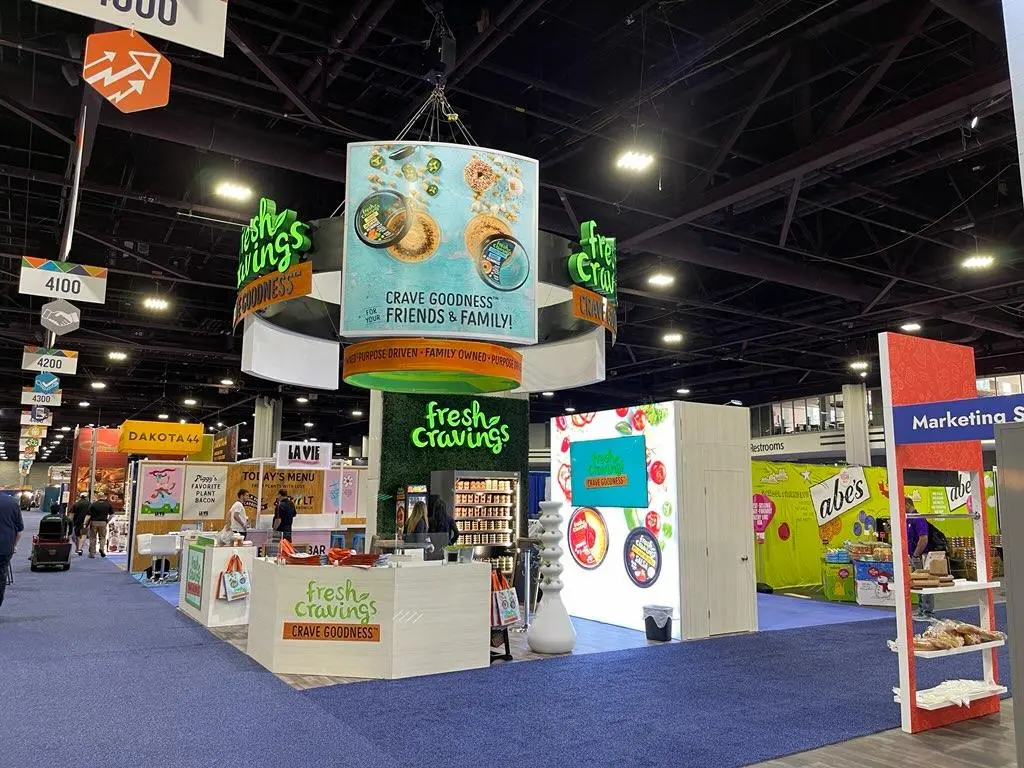
Your hook is the visual or experiential element that makes someone stop.
This could be:
- A giant LED video wall with motion graphics
- A bold value proposition in oversized typography
- A live demo
- A live podcast recording
- Interactive touchscreen experiences
- A visually striking product display
The key: clarity and speed.
If someone cannot understand what you do in 3-5 seconds, you’ve lost them.
5. Create an Experiential Booth (Give Them a Reason to Stay)
Attraction is step one. Engagement is step two.
Once they stop, what happens next?
Give attendees something they can:
- Touch
- Try
- Experience
- Participate in
If your product is too large to bring, create a scaled working model. Make it tangible.
You can also use:
- Interactive games
- Hands-on demos
- Visual walkthroughs
- Micro-presentations
- Controlled hospitality (if allowed)
People remember experiences far more than brochures.
6. Keep Your Booth Open and Organized
An obstructed entrance or wall of staff is intimidating.
Best practices:
- Keep entry points open
- Avoid clutter
- Hide personal items
- Keep literature racks filled
- Remove trash immediately
A clean booth communicates professionalism and confidence.
Part 3: The 10 Commandments of Trade Show Etiquette
Your booth design gets them to stop.
Your staff determines whether they stay.
Here are the non-negotiable trade show etiquette rules that separate high-performing booths from forgettable ones.
Commandment 1: Research the Event Clientele
Know who you’re speaking to. Different attendees require different messaging.
Understand:
- Their job roles
- Their challenges
- Their buying authority
- Their level of technical knowledge
Preparation leads to better conversations and better leads.
Commandment 2: Be Hospitable
Warm greetings matter.
Best practices:
- Stand and face the aisle
- Smile
- Make eye contact
- Greet naturally
- Thank them for stopping by
Do not ignore visitors to talk to coworkers.
Attendees remember how you made them feel more than what you said.
Commandment 3: Be Presentable
Dress according to the professionalism of your industry.
Overdressing or underdressing can both hurt perception. If unsure, review prior event photos.
Your appearance reflects your brand.
Commandment 4: Use Strong Body Language
Your posture and energy speak before your words do.
- Stand upright
- Offer a firm handshake
- Maintain eye contact
- Avoid crossed arms
- Stay engaged
Bad body language silently repels traffic.
Commandment 5: Avoid Using Chairs During Peak Hours
Sitting with laptops open is one of the most unwelcoming booth behaviors.
Stand during high-traffic periods.
If seating is necessary for in-depth conversations, use it strategically, not as a default.
Commandment 6: Don’t Solicit Aggressively
There’s a fine line between engaging and annoying.
Avoid:
- Blocking walkways
- Interrupting conversations
- Hard selling uninterested attendees
Instead:
- Open with natural questions
- Qualify quickly
- Respect signals
Your goal is quality conversations, not forced interactions.
Commandment 7: No Eating or Drinking in the Booth
Visible food and drink during peak hours looks unprofessional.
Keep personal consumption private and off the floor.
Commandment 8: Stay Organized
Clutter destroys credibility.
Keep:
- Personal belongings hidden
- Giveaways accessible
- Surfaces clean
- Storage areas closed
Organization signals operational excellence.
Commandment 9: Stay Positive
Trade shows are long. Energy dips are real.
Rotate staff for breaks.
Keep morale high.
Reset after difficult conversations.
Positive energy attracts engagement.
Commandment 10: Above All – Be Helpful
If everything else fails, be helpful.
Attendees are navigating massive exhibit halls. Guidance builds goodwill.
Even if someone isn’t a fit, treat them professionally.
Reputation compounds.
Part 4: Lead Capture Best Practices
Collecting business cards is not a strategy.
Effective lead capture requires intention.
7. Qualify Before You Capture
Train staff to ask:
- Are you involved in purchasing decisions?
- What timeline are you working with?
- What challenges are you facing?
Not every badge scan is equal.
Segment leads into:
- Hot
- Warm
- Long-term nurture
8. Make Your CTA Clear
Your booth should clearly communicate the next step.
Examples:
- Book a demo
- Enter to win
- Take a diagnostic
- Schedule a strategy session
Ambiguity kills conversions.
Part 5: Post-Show Follow-Up (Where Most ROI Is Won)
The show isn’t over when teardown begins.
In many cases, the real ROI happens in the 7-14 days after.
9. Follow Up Fast
Contact hot leads within 24-48 hours.
Reference your conversation.
Be specific.
Provide value immediately.
Speed signals professionalism.
10. Build a Follow-Up Sequence
Don’t rely on one email.
Create a sequence:
- Day 1: Thank you + recap
- Day 3-5: Case study or relevant content
- Week 2: Meeting invite
- Week 3+: Long-term nurture
Consistency wins deals.
Final Thoughts: Trade Show Success Is Intentional
Trade shows are not about showing up.
They’re about:
- Strategic positioning
- Clear messaging
- Intentional booth design
- Trained staff
- Structured lead capture
- Disciplined follow-up
When design, etiquette, and strategy work together, your booth stops being just a space.
It becomes a revenue channel.
If you implement these trade show tips and best practices, you won’t just attend your next show, you’ll own it.