

A great trade show booth is not just something people look at. It is something they move through without getting confused, trapped, ignored, or bottlenecked. Trade show booth traffic flow is one of the most practical and most overlooked parts of exhibit design, and it has a direct impact on how many qualified conversations your team is able to have during the show.
Designing a trade show booth layout for traffic flow starts by controlling entry points, creating clear zones, and building around how attendees actually behave on a loud, crowded show floor. The same spatial thinking that defines strong trade show exhibit design applies here: strategy before aesthetics, movement before decoration.
Start With the Aisle, Not the Booth
Most booth traffic decisions happen before someone steps inside. Attendees are walking fast, scanning signs, dodging crowds, and deciding in seconds whether your booth is worth their time.
Your layout needs to answer three questions instantly:
- Where do I enter?
- What is happening here?
- Who do I talk to?
If the answer to where to enter, what is happening, and who to talk to is not obvious from the aisle, people keep walking. No drama. No second chance. This is one of the clearest ways that trade show exhibit design affects booth performance, where the layout either earns attention or surrenders it before anyone says a word.
Use Clear Entry Points for Better Trade Show Booth Traffic Flow
Do not make attendees guess where to walk in. Open corners, wide front-facing access points, and visible pathways make the booth feel approachable. Tight openings, blocked counters, and walls near the aisle create friction.
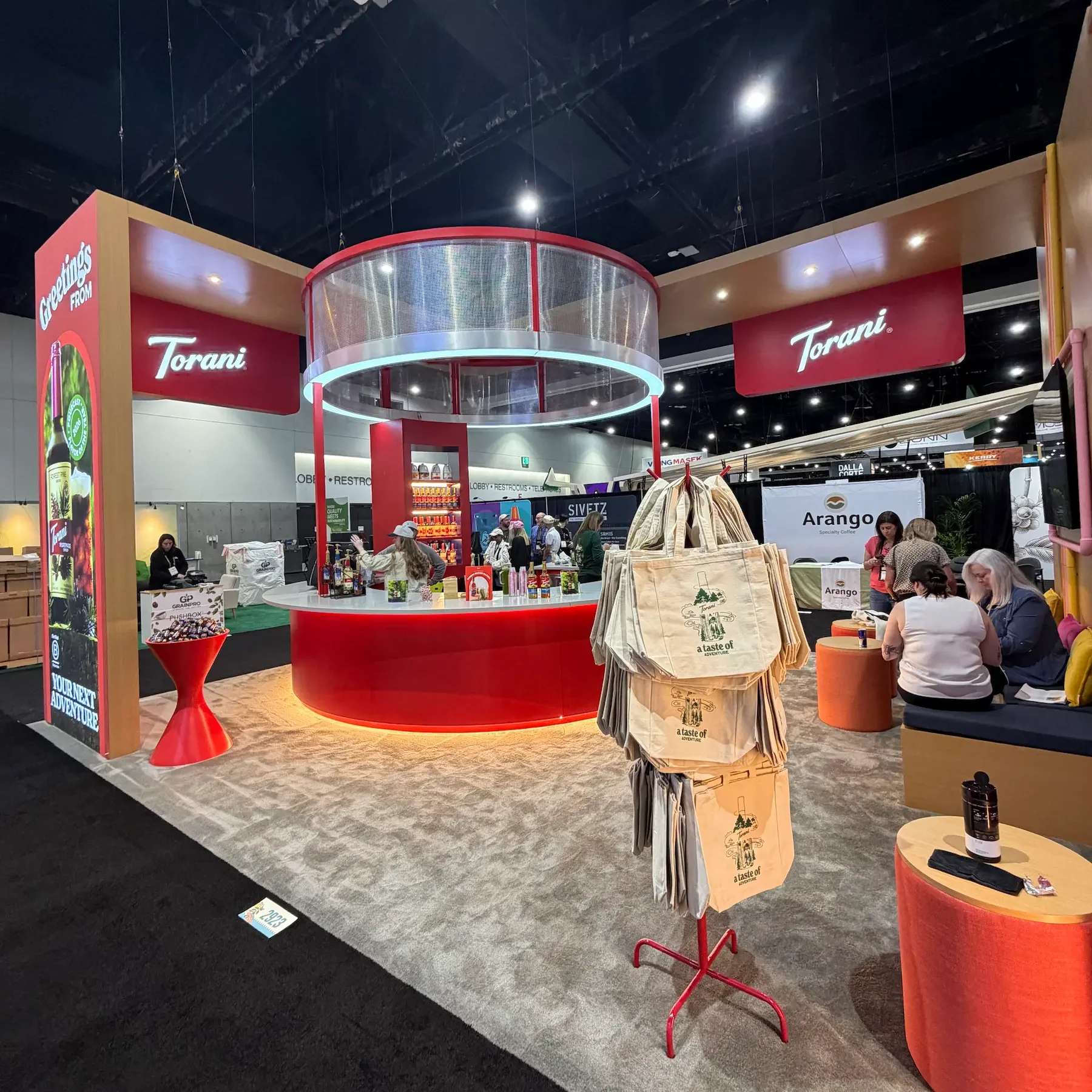
For inline booths, keep the front as open as possible. For island booths, use multiple entry points so traffic can flow from different aisles without creating dead zones. For peninsula booths, pay attention to the main aisle and design the strongest entry point where traffic is heaviest.
The goal is to invite people in without making them feel like they are committing to a sales pitch the second they cross the line. For island booths specifically, the principles covered in island booth design go deeper on how to use open corners and multiple access points to pull traffic from every aisle simultaneously.
Create Zones That Match Attendee Behavior
A booth should not be one big open space where everything happens everywhere. That turns into chaos fast.
Break the layout into zones:
- Attraction zone: The first thing attendees see from the aisle, such as signage, product displays, demos, or a bold visual moment.
- Engagement zone: Where staff start conversations without blocking traffic.
- Demo or product zone: A focused area for deeper interaction.
- Meeting zone: A semi-private space for qualified conversations.
- Storage and staff zone: Hidden or tucked away so clutter does not kill the experience.
Each zone should have a job. If a counter, screen, table, or display does not support the flow or serve a defined purpose, it is probably in the way. This zone-based thinking is what separates a booth that feels intentional from one that feels like a collection of furniture arranged to fill the space. The Experiential Designers and Producers Association recommends zone-based exhibit planning as a standard practice for any booth over 200 square feet, noting that undefined zones are one of the leading causes of poor staff positioning and missed engagement opportunities on the show floor.
Avoid Traffic Killers
Bad booth layouts usually fail for predictable reasons. They put the reception counter right at the entrance. They force people into narrow walkways. They place popular demos in corners. They create awkward dead ends where attendees have to turn around and squeeze past other people.
Do not design for a perfect empty booth rendering. Design for a real show floor with bags, badges, crowds, distracted attendees, tired staff, and people who do not want to feel trapped. The rendering will look clean no matter what. The show floor will not.
Trade Show Booth Traffic Flow Checklist
Use this checklist before approving the layout. If you want a more comprehensive planning tool that covers traffic flow alongside messaging, fabrication, and logistics, download the Highway 85 Trade Show Exhibit Design Checklist before your next exhibit review.
- Can attendees understand the booth from the aisle in three seconds?
- Are entry points visible and wide enough?
- Is the main attraction easy to spot without blocking the entrance?
- Are staff positioned to greet people without forming a wall?
- Can attendees move naturally from interest to conversation to demo?
- Are meeting areas separated from casual traffic?
- Is storage hidden from public view?
- Are screens, counters, and displays placed where they support movement?
- Is there a clear exit path?
- Would the booth still work when it is crowded?
The Bottom Line
Traffic flow is not a finishing touch. It is the backbone of the booth. A smart trade show booth layout pulls people in, moves them with purpose, and gives your team better chances to start the right conversations. Before you build around what looks cool, build around how people move. If you want a fabrication partner who thinks about traffic flow from the first design conversation, explore Highway 85’s trade show capabilities or connect with our team to start planning.