

A multi-show trade show booth is not designed for one event. If your company attends multiple trade shows each year, the booth needs to work as part of a bigger program. That means it should look polished at your largest show, adapt to smaller footprints, and be practical to ship, store, update, and reuse without a full rebuild between events.
The best multi-show booths are planned with flexibility from the start. Instead of rebuilding every time, your team reuses the main structure and refreshes the pieces that need to change. This is one of the key planning decisions covered in what goes into building a large custom trade show booth, where reusability and modularity need to be engineered in from the beginning rather than retrofitted after the first show.
Start With the Full Show Calendar Before Designing Your Multi-Show Trade Show Booth
Before design begins, look at every show the booth may need to support. A booth built only for a 30×30 space may not translate well to a 20×20 or 10×20. Planning ahead helps the booth scale without feeling forced.
Consider:
- Which shows need the biggest brand presence?
- What booth sizes do you typically reserve?
- Which audiences need different messaging?
- What products, demos, or meeting spaces are needed?
- What elements should stay consistent every time?
This gives your exhibit partner the right information to design a booth that works across the full trade show schedule. The Center for Exhibition Industry Research publishes annual exhibitor benchmarks on multi-show program planning that can help teams set realistic expectations for footprint variation, audience differences, and budget allocation across a full show schedule.
Design for Reuse, Not Repetition
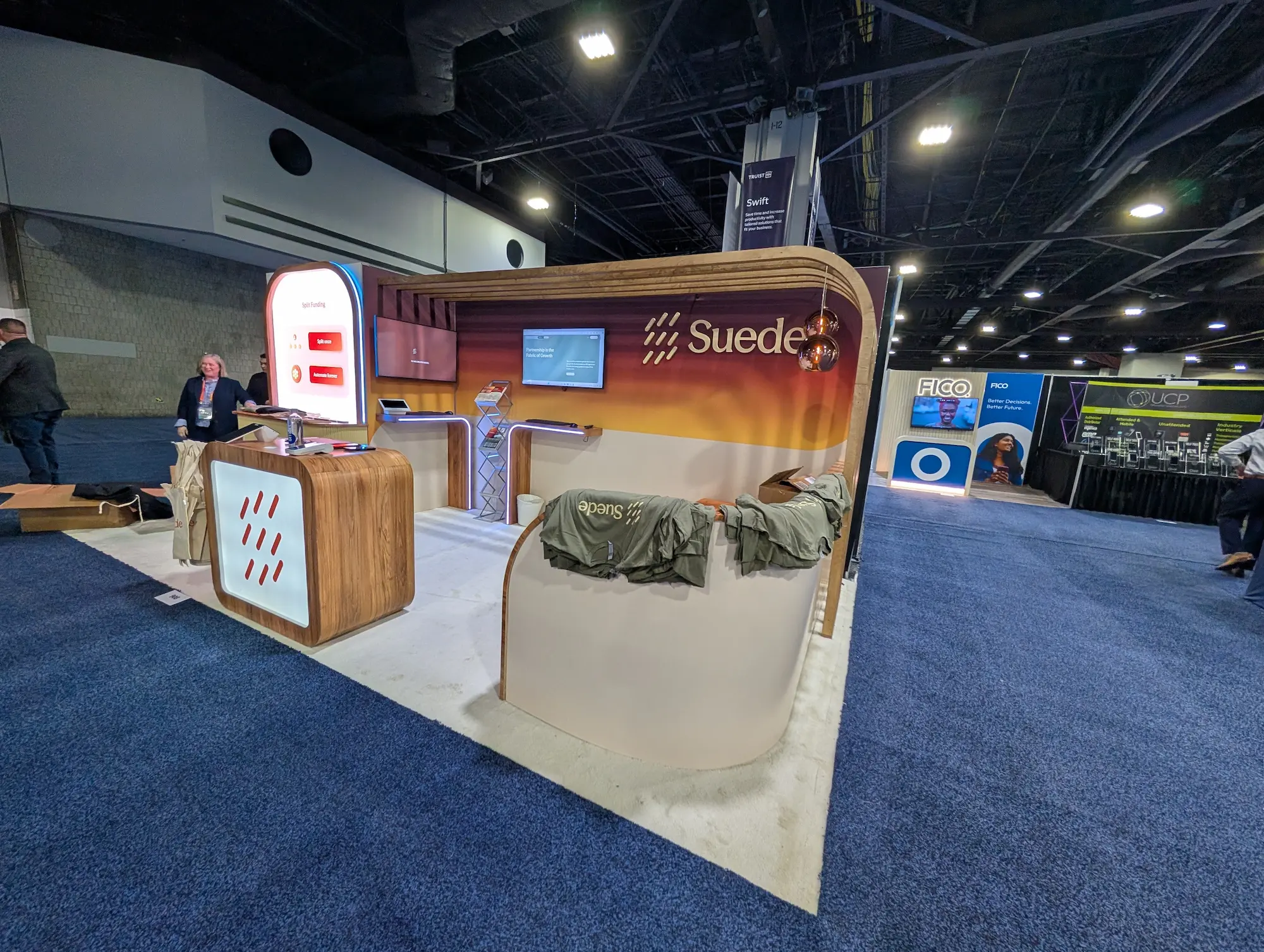
Reusable does not mean generic. A strong custom booth can still feel highly branded while using modular components behind the scenes.
Smart reusable elements may include:
- Interchangeable graphics
- Reconfigurable wall panels
- Product display areas
- Counters that serve multiple purposes
- Lighting that works in different layouts
- Storage built into the booth design
The goal is to keep the core booth consistent while allowing the experience to shift based on the show, audience, or campaign. The trade show booth materials chosen during fabrication play a significant role here, since durability, weight, and finish repairability all affect how well the structure holds up across repeated use.
Make the Changeable Parts Easy to Update
For most multi-show programs, the structure does not need to change every time. Messaging usually does.
That is why the booth should be built around easy refresh points, such as product graphics, demo station signage, digital content, counter wraps, and backlit fabric panels. These updates help the booth feel current without requiring a full redesign.
This is especially helpful for trade show teams managing budgets and year-over-year ROI. Flexibility is what keeps a multi-show trade show booth useful longer and helps teams avoid outgrowing their setup before they have recovered the original investment.
Plan for Shipping, Storage, and Labor
A reusable booth only works if it is practical after the first show. If the booth is difficult to pack, expensive to ship, or slow to install, the long-term value drops fast.
During design, think through:
- Crate efficiency
- Material durability
- Install and dismantle time
- Replacement parts
- Storage between shows
- Freight weight and handling
These details affect the true cost of a multi-show booth program, not just the initial build. They belong in the same planning conversation as what drives custom trade show booth cost, where freight, storage, and install labor can add meaningfully to the total program investment when they are not scoped from the start.
Work With One Partner Who Sees the Whole Multi-Show Trade Show Booth Program
A multi-show booth strategy involves design, fabrication, logistics, graphics, storage, and future updates. When those pieces are planned together, it is easier to avoid surprises on the show floor and keep the program consistent.
The right partner should help connect the big-picture brand goals to the details that make the booth work event after event. When design, fabrication, logistics, graphics, and storage are managed under one roof, it is easier to keep the program consistent and avoid the handoff gaps that create problems between shows.
Quick Checklist for a Multi-Show Booth
Before approving the design, ask:
- Can this booth adapt to multiple footprints?
- Are the graphics easy to update?
- Is the structure durable enough for repeated use?
- Do we understand storage and freight costs?
- Can the booth support different products or teams?
- Will it still feel on-brand two or three shows from now?
A custom trade show booth should do more than look good once. With the right multi-show strategy, it becomes a long-term asset that supports your brand, your sales team, and your event budget across the full trade show calendar. If you want to build a booth designed to last, explore what Highway 85 builds or connect with our team to start planning.