


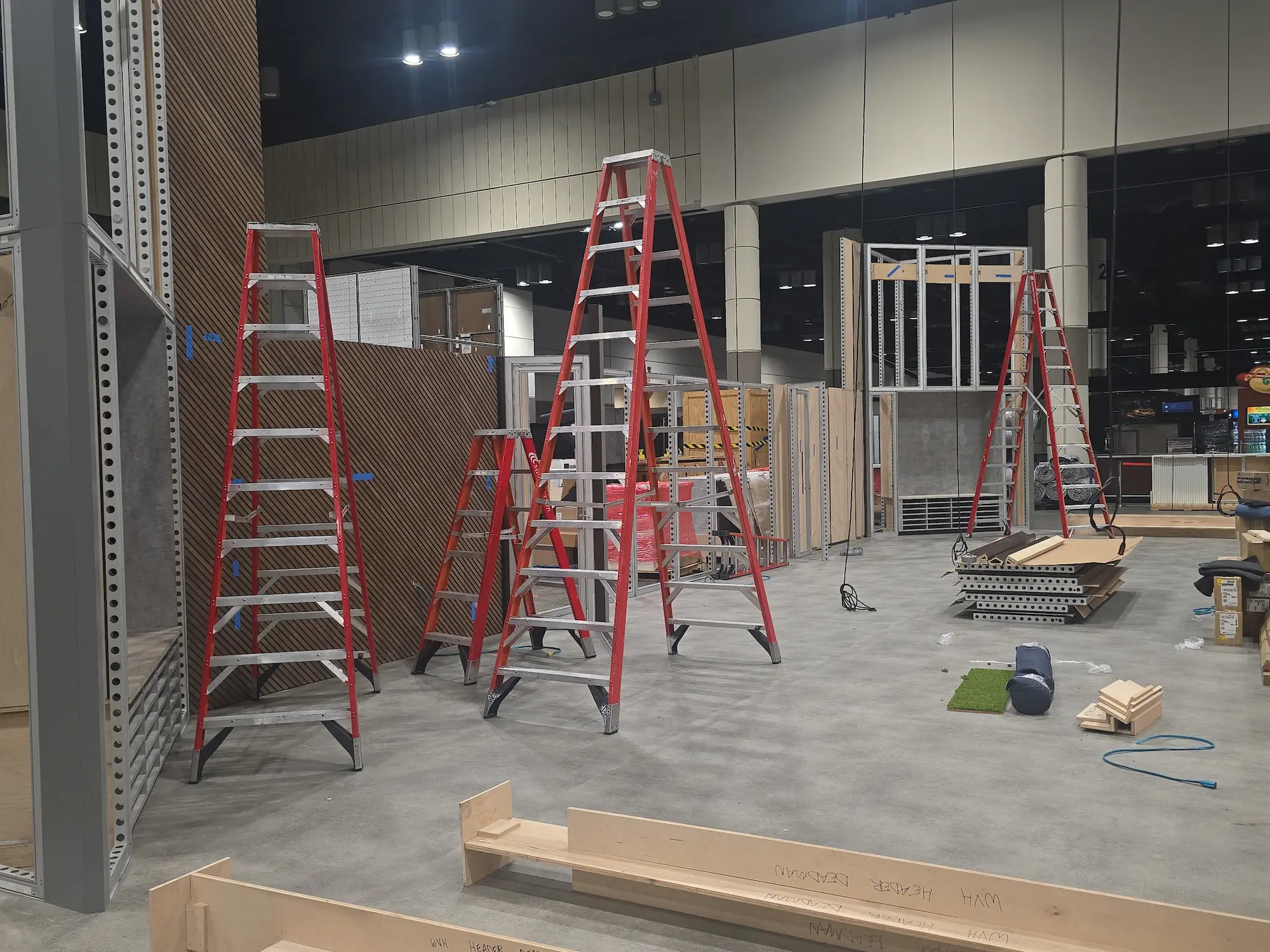
Fabrication quality control for agencies is what protects the client relationship when the sawdust, welding, printing, packing, and install are happening somewhere else. When an agency brings in a fabrication partner, the client may never see the handoff. They see the final booth, branded interior, activation, or event environment. That means the agency’s reputation is still on the line, even when someone else is doing the building.
How do agencies manage fabrication quality control for clients? They protect the work by choosing a fabrication partner with proven communication, engineering, shop standards, schedule discipline, and on-site accountability. The best agencies do not just send it to fabrication. They create a clear process where design intent, budget, materials, approvals, logistics, and install details are managed before anything hits the floor.
For agencies, fabrication quality control is not just about whether something looks good. It is about whether the build protects the client relationship. This matters especially for resellers and agency teams whose reputation depends on work they are not actively building themselves, a key pain point identified in Highway 85’s agency/reseller persona research.
Why Fabrication Quality Control Matters for Agencies
Agency teams are usually trusted for strategy, creative direction, client communication, and big-picture experience design. But once a project moves into fabrication, the risks get very real.
A beautiful rendering can fall apart if the materials do not behave the way everyone expected. A clever dimensional sign can miss the mark if it is too fragile to ship. A custom trade show feature can create a nightmare if it looks great in the shop but cannot install cleanly on-site.
That is where reputation gets vulnerable. The client does not care which vendor cut the acrylic, built the millwork, printed the graphics, or packed the crates. They care that the final result matches what they approved, opens on time, and makes them look good. This is exactly the accountability gap that white label fabrication creates, and why managing it proactively is one of the most important things an agency can do.
Highway 85’s own positioning is built around taking projects from concept to execution, including engineering, fabrication, logistics, and on-site delivery, with close collaboration so details are accounted for before it matters most.
The Best Quality Control for Agencies Starts Before Production
The biggest fabrication issues usually do not start in the shop. They start earlier, when assumptions are left open.
A strong fabrication partner should pressure-test the concept before production begins. That means reviewing drawings, materials, finishes, dimensions, venue rules, install conditions, shipping needs, and how the piece will actually be used. The goal is not to water down the creative. The goal is to make sure the creative survives real-world conditions.
For agency teams, this early review is one of the most important reputation safeguards. It gives them better answers for the client, fewer surprises during approval, and a clearer path from concept to build.
A quality fabrication partner should be able to say:
“This will work, but here is the cost impact.”
“This material gives the right look, but it may not hold up for repeat use.”
“We can hit the deadline, but only if approvals are locked by this date.”
“That detail needs engineering before we price it accurately.”
Those conversations may feel detailed, but they are what keep the project clean later. This kind of early pressure-testing is one of the key things to look for when you evaluate a fabrication partner, because a partner who asks the hard questions before production starts is a partner who will not surprise you when it matters most.
Clear Communication Protects the Client Relationship
For agencies, communication is part of the product. A quiet fabrication partner can create just as much stress as a careless one.
Agencies need updates they can actually use with their clients. Not vague check-ins. Not last-minute surprises. Useful communication includes production milestones, approval needs, finish samples, progress photos, change order details, logistics updates, and honest flags when something could affect budget or timeline.
This is especially important for agencies managing multiple clients at once. Their inbox is full, their client is asking questions, and they may not have deep fabrication expertise in-house. A good partner does not make the agency chase answers. They help the agency stay ahead of the conversation.
That is one reason all-under-one-roof support matters. When design, fabrication, graphics, logistics, and install are connected, fewer details get lost between vendors. It is the same reason every creative agency needs a fabrication partner they can trust rather than just one they can reach.
Practical Fabrication Quality Control Steps Agencies Should Expect
A strong fabrication process should include checkpoints that protect both the agency and the client. These checkpoints do not need to be complicated, but they do need to be consistent.
1. Design intent review
Before production starts, the fabrication team should confirm what matters most visually and functionally. This includes dimensions, finishes, brand colors, focal points, traffic flow, lighting, durability, and any must-have client details.
2. Engineering and build feasibility
If a piece needs to support weight, travel, assemble quickly, meet venue rules, or survive repeat use, engineering needs to happen before the shop is halfway through the build.
3. Material and finish approvals
Samples, swatches, print proofs, paint references, and finish notes reduce interpretation. This is where many “that’s not what we pictured” moments can be avoided.
4. Budget and change order control
Quality control includes financial control. Agencies need to know when a design choice changes the price, and they need enough detail to explain that change to the client.
5. Production progress checks
Progress photos and milestone updates give the agency confidence before final delivery. They also create a record of decisions and approvals.
6. Pre-ship or pre-install review
Before anything leaves the shop, the team should check fit, finish, hardware, graphics, packing, labeling, and install instructions.
7. On-site accountability
A great build can still fail if the install plan is weak. Quality control should extend through delivery, installation, punch list resolution, and dismantle when needed.
The Experiential Designers and Producers Association recommends structured production checkpoints as a standard practice for any agency managing fabrication on behalf of brand clients.
Timelines, Costs, and Tradeoffs Agencies Should Plan For
Fabrication quality control takes time, and that time should be built into the schedule. Rushed projects can still succeed, but they require faster approvals, tighter decision-making, and fewer late-stage changes.
For custom trade show exhibits, events, activations, and branded interiors, the biggest timeline risks usually come from delayed approvals, specialty materials, engineering changes, shipping windows, venue rules, and unclear ownership between vendors.
The same is true for cost. Better fabrication quality control may require more upfront planning, more detailed drawings, material samples, project management time, or shop testing. But those costs are often smaller than the cost of a failed install, overnight reprints, emergency labor, damaged client trust, or a booth that opens late.
The tradeoff is simple: you either spend time controlling the build before production, or you spend energy fixing problems when the client is watching.
What Agencies Should Look for in a Fabrication Partner
The right partner should feel like an extension of the agency, not a vendor hiding behind the curtain. They should understand that the agency owns the client relationship and that every detail affects trust.
Look for a partner that brings practical fabrication knowledge, clear pricing, regional experience, creative problem-solving, and the ability to manage multiple parts of the project in one place. Highway 85 Productions specializes in custom trade show and event production and supports projects through fabrication, engineering, logistics, and on-site delivery, which is exactly the kind of connected execution agencies need when their name is attached to the final result.
A good partner also knows when to push back. If something is risky, expensive, unstable, too heavy to ship, or unlikely to survive install, the agency needs to hear that early. That kind of honesty protects the work. The 10 questions every agency should ask a new fabrication partner are a practical starting point for finding a partner who operates that way.
The Bottom Line
Agencies manage fabrication quality control by building a process around clarity, not hope. When fabrication is out of your hands, control comes from choosing a team that treats your client’s trust like it is their own. That is the difference between outsourcing a build and gaining a fabrication partner. If you are ready to work with a fabrication team that treats quality control as part of the job, not an afterthought, connect with the Highway 85 team to start the conversation.