


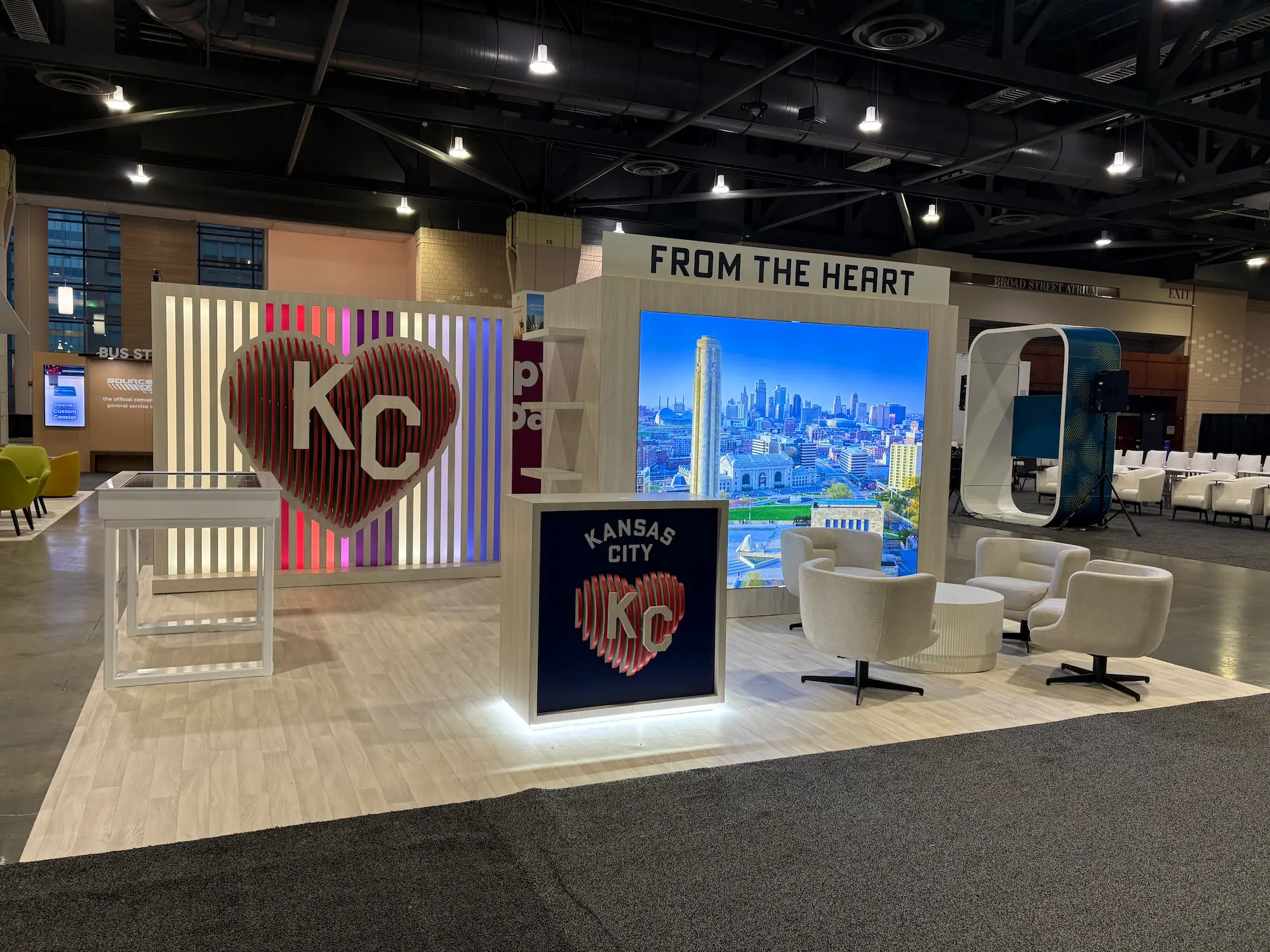
When brands think about trade show booths, design usually steals the spotlight. But behind every booth that lasts, travels well, and doesn’t quietly drain your budget year after year? Trade show booth materials. The stuff your exhibit is actually built from matters more than most people realize—and it’s one of the key factors that separates custom trade show displays from forgettable ones.
So let’s answer the big question right up front: How do material choices impact durability, reuse, and long-term exhibit costs? They directly determine how long your booth lasts, how many times it can be reused or reconfigured, and how much you’ll spend on repairs, replacements, storage, and labor over time.
In short: cheap materials might save money upfront, but they almost always cost more in the long run. On the flip side, durable, modular, and show-ready materials protect your investment and give your booth a longer, more flexible life.
If you’ve ever wondered How do trade show booth materials affect durability and reuse? This is where the answer lives.
Why Trade Show Booth Materials Are the Backbone of Durability
Durability isn’t just about surviving one show. It’s about surviving load-in, teardown, shipping, storage, and repeat installs without looking tired or failing on the floor.
Not All Materials Are Built for the Road
Trade shows are rough environments. Your booth gets packed, unpacked, bumped, lifted, rolled, and stacked over and over again. Materials that aren’t designed for that kind of wear show problems fast.
Common durability issues we see with poor material choices:
- Warping from humidity or temperature changes
- Chipped edges and cracked panels
- Hardware loosening or failing over time
- Graphics that scuff, crease, or fade after one or two shows
Durable booths are built with materials that expect abuse and still show up looking clean.
Reuse Starts with the Right Material Strategy
A reusable booth isn’t just one you can use again, it’s one you want to use again.
Modular Materials = Maximum Flexibility
The most reusable exhibits are built with:
- Aluminum extrusion systems
- Laminated wood or composite panels
- Interchangeable graphic substrates
- Standardized hardware and connection points
These materials allow you to:
- Swap graphics without rebuilding walls
- Reconfigure layouts for different booth sizes
- Replace individual components instead of entire structures
That flexibility means your booth evolves with your brand instead of getting scrapped when messaging changes.
How Material Choices Affect Long-Term Exhibit Costs
This is where things get real. Long-term costs go beyond the initial build and include everything that happens after.
The Hidden Costs of Cheap Materials
Lower-grade materials often lead to:
- Frequent repairs
- Higher labor costs during install
- Replacement parts that don’t match
- Entire rebuilds sooner than planned\
A booth that looks affordable on paper can quietly rack up expenses show after show.
Durable Materials Lower Costs Over Time
Higher-quality materials reduce:
- Maintenance and repair frequency
- Install and dismantle time
- Labor hours on the show floor
- Shipping damage and emergency fixes
Over multiple shows, that savings adds up fast and it’s usually what separates a “one-season booth” from a long-term asset.
Common Trade Show Materials (and How They Perform)
Aluminum Framing Systems
Best for: Durability, reuse, and modular design
Lightweight, strong, and made for repeated assembly. These systems hold up show after show and adapt easily to new layouts.
Laminated Wood & Composite Panels
Best for: Clean finishes with strength
When properly engineered, these materials provide a premium look while resisting warping and surface damage.
Fabric Graphics
Best for: Lightweight durability
Tension fabric graphics travel well, resist creasing, and are easy to replace without rebuilding structures.
Foamcore & Lightweight Boards
Best for: Short-term use only
Great for temporary graphics but not built for repeated handling or long-term durability.
Durability Isn’t Just Materials, It’s How They’re Used
Even the best materials can fail if they’re not engineered correctly.
Smart Engineering Makes Materials Last Longer
- Reinforced stress points
- Proper edge finishing
- Hardware rated for repeated use
- Weight-balanced structures
At Highway 85, we design with reuse in mind from day one, not as an afterthought.
Sustainability and Durability Go Hand in Hand
Reusable materials aren’t just better for your budget, they’re better for the planet.
Long-lasting booths mean:
- Less waste
- Fewer rebuilds
- Fewer materials sent to landfills
Durability is sustainability in action and it’s something more brands are prioritizing every year.
The Bottom Line on Materials & Durability
So, how do material choices impact durability, reuse, and long-term exhibit costs? They define whether your booth is a short-term expense or a long-term investment.
The right materials:
- Hold up under pressure
- Adapt as your brand evolves
- Save money over multiple shows
- Deliver consistent, professional results
And that’s exactly why material strategy should never be an afterthought.
Let’s Build Something That Actually Lasts
If you’re planning a new booth or rethinking an existing one, now’s the time to talk materials before mistakes get baked into the build.
At Highway 85 Productions, we design and build exhibits with durability, reuse, and real-world trade show conditions in mind. No fluff. No shortcuts. Just smart materials and solid execution.
Ready to build a booth that works harder and lasts longer? Let’s talk about your next exhibit and make sure it’s built to go the distance.