

Complex trade show exhibits leave very little room for guesswork. Tight install windows, high labor costs, and strict show rules mean there is no time to “figure it out onsite.” Once freight hits the dock, everything has to work exactly the way it was planned. Pre-builds for trade show exhibits make sure it does.
So why are pre-builds and shop testing critical for complex trade show exhibits? Because they remove uncertainty. Pre-builds and testing confirm that the exhibit fits together, installs efficiently, meets engineering requirements, and functions the way it is supposed to before it ever reaches the show floor. They turn assumptions into facts and reduce risk where it matters most.
That is why the question Why are pre builds important for trade show exhibits? comes up so often. At Highway 85, pre-builds and shop testing are not optional steps for complex exhibits. They are how we protect install schedules, labor budgets, and brand performance on show day.
What Is a Pre-Build for Trade Show Exhibits?
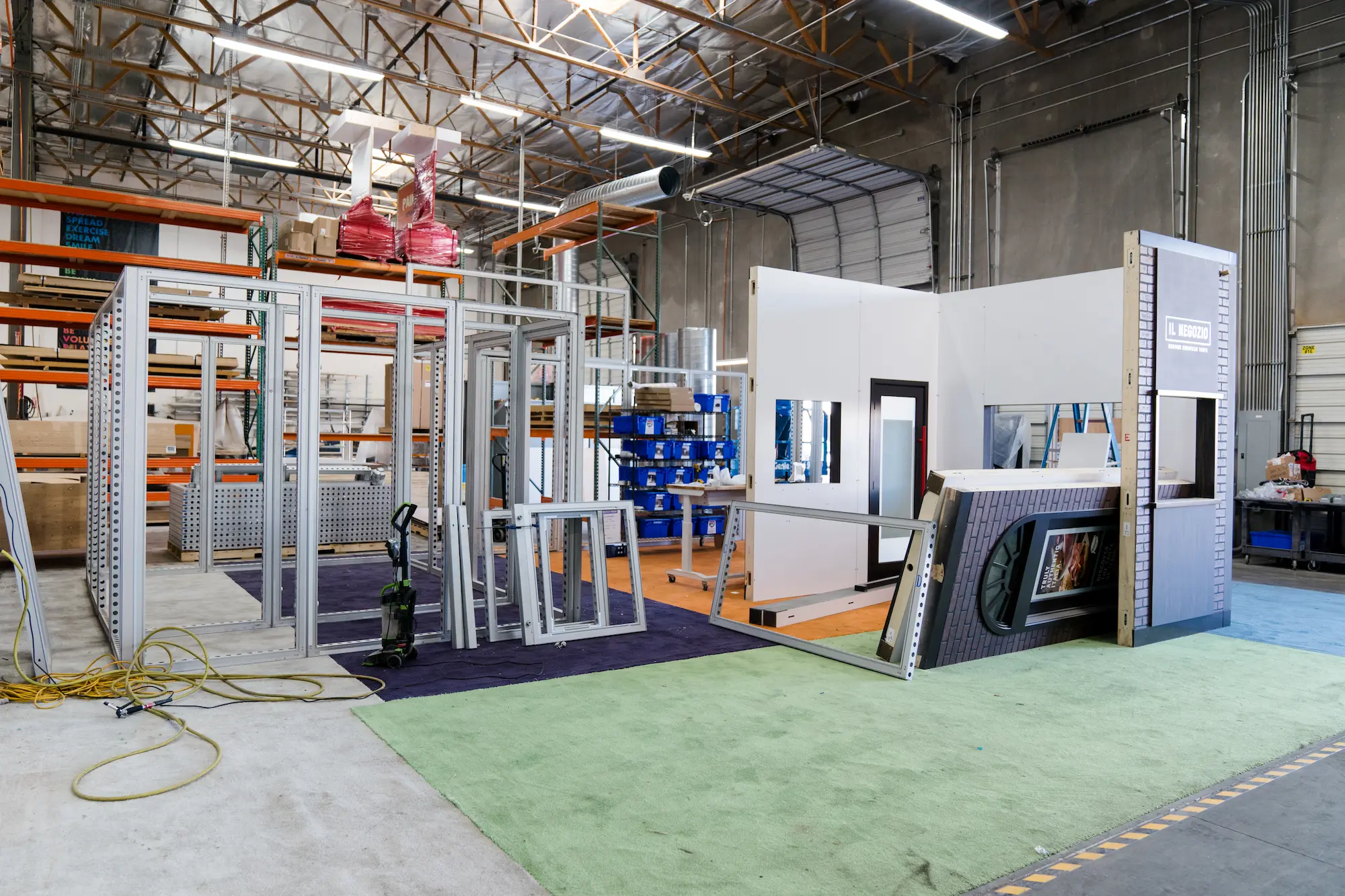
A pre-build is exactly what it sounds like. The exhibit is assembled in the shop before it ships to the show.
More Than a Quick Check
This is not a visual inspection or partial mockup. A proper pre-build involves assembling major structures, connecting systems, testing fit and finish, and walking through the actual install process.
For complex exhibits, this step is where issues are discovered early instead of becoming problems onsite.
Pre-Builds Confirm the Engineering Works
Drawings and renderings can only tell you so much.
Verifying Fit, Alignment, and Tolerances
Even with strong engineering, real-world assembly can reveal small alignment issues or tolerance conflicts. A pre-build allows those details to be adjusted in the shop where time and tools are available.
Fixing these issues onsite costs more and puts the entire install at risk.
Stress-Testing Connections
Pre-builds allow teams to test connection points under real conditions. That ensures structural stability and confirms that everything goes together as intended.
Install Time Is Proven, Not Estimated
Install time is one of the biggest cost variables in trade show production.
Walking Through the Install Sequence
During a pre-build, teams can walk through the actual install order step by step. This confirms how long each phase takes and whether the sequence makes sense.
If something slows the process down in the shop, it will slow it down even more on the show floor.
Reducing Labor Guesswork
By testing the install in advance, labor requirements become clearer. Crew size, install hours, and labor classifications can be planned with more accuracy.
Pre-Builds Improve Logistics and Crating
Pre-builds are not just about the exhibit. They improve how it ships.
Packing With Install in Mind
Once an exhibit is pre-built, components can be packed in the order they will be installed. This keeps install crews from unpacking unnecessary parts and reduces wasted time onsite.
Identifying Fragile Components Early
Testing reveals which elements need extra protection during shipping. This reduces damage risk and protects the quality of the exhibit when it arrives.
Technology and Interactive Elements Need Testing
Complex exhibits often include technology.
Testing Power, Lighting, and AV Systems
Pre-builds allow teams to test lighting, power distribution, and AV components together. This confirms that systems work as expected and avoids surprises during install.
Avoiding Onsite Troubleshooting
Troubleshooting tech onsite eats up install time fast. Shop testing allows issues to be resolved early, keeping show setup focused and efficient.
Graphics and Finishes Get a Real-World Check
Graphics rarely look the same on a screen as they do in real life.
Confirming Fit and Visual Impact
A pre-build allows teams to see how graphics align across seams, corners, and transitions. Adjustments can be made before final production.
Catching Finish Issues Early
Paint, laminates, and specialty finishes can be evaluated under real lighting conditions. That helps avoid last-minute fixes or visual compromises.
Pre-Builds Reduce Onsite Stress
The show floor is not the place to problem-solve.
Fewer Surprises During Install
When an exhibit has already been built once, install crews know what to expect. That confidence keeps the install moving and reduces the chance of delays.
Better Communication Across Teams
Pre-builds give project managers, fabricators, and install teams shared knowledge. Everyone understands how the exhibit goes together, which improves execution onsite.
Why Pre-Builds Matter Most for Complex Exhibits
The more complex the exhibit, the more important pre-builds become. Multi-level structures, large hanging elements, integrated technology, and custom details all increase risk.
Pre-builds and shop testing turn complexity into something manageable. They allow teams to refine details, confirm performance, and eliminate unknowns before the clock starts ticking onsite.
That is the real answer to why pre-builds and testing are critical for complex trade show exhibits.
Ready to Build It Before You Build It?
If you are planning a complex custom trade show exhibit, pre-builds and shop testing should be part of the process from day one. Highway 85 uses pre-builds to reduce risk, control install time, and make sure every exhibit shows up ready to perform.